

Heavy Brass Handles
Heavy brass handles bring substantial weight and tactile presence to doors, pans and furniture across Georgian, Victorian and Edwardian interiors.
Heavy Brass Handles
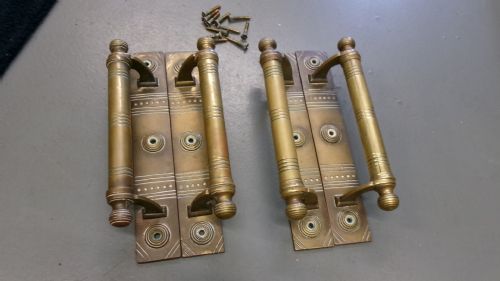
When searching for heavy brass handles, buyers encounter hardware designed for functional daily use, alongside related domestic items sharing solid metal construction. The selection spans door handles, finger plates and door pull handles originating from Victorian, Edwardian, Georgian and Art Deco periods.
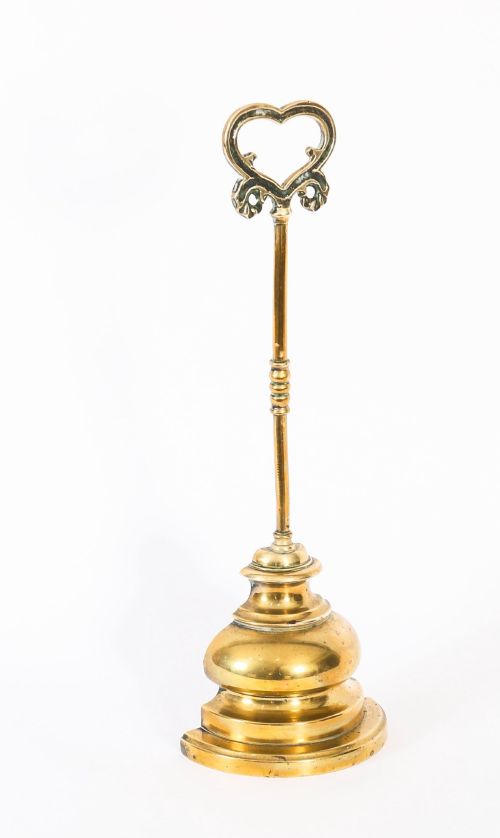
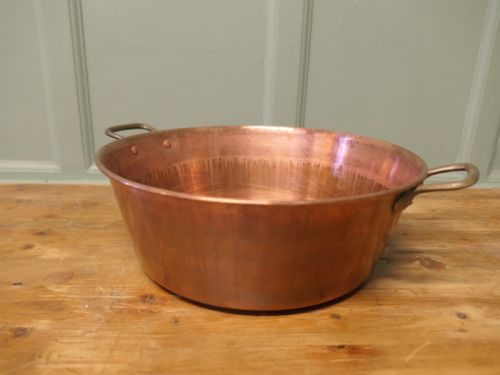
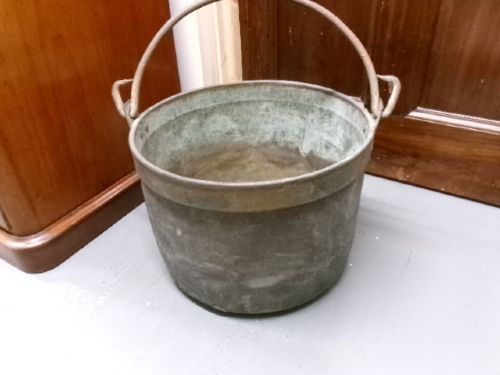
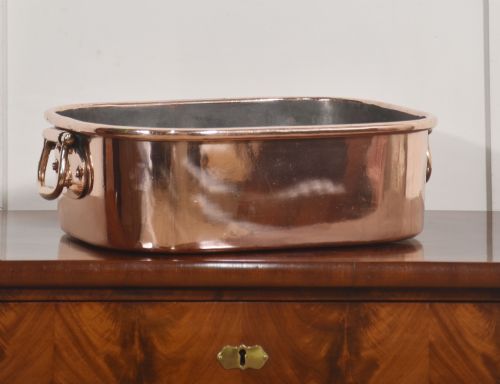
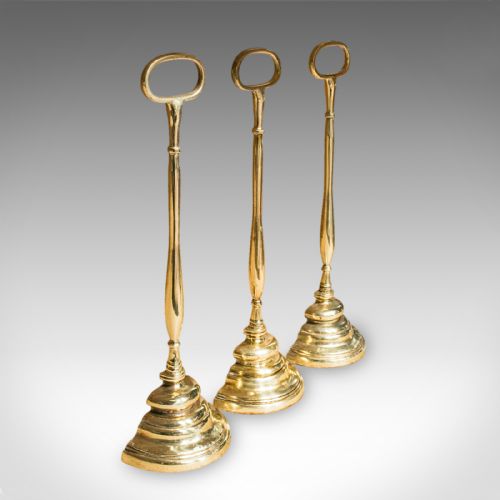
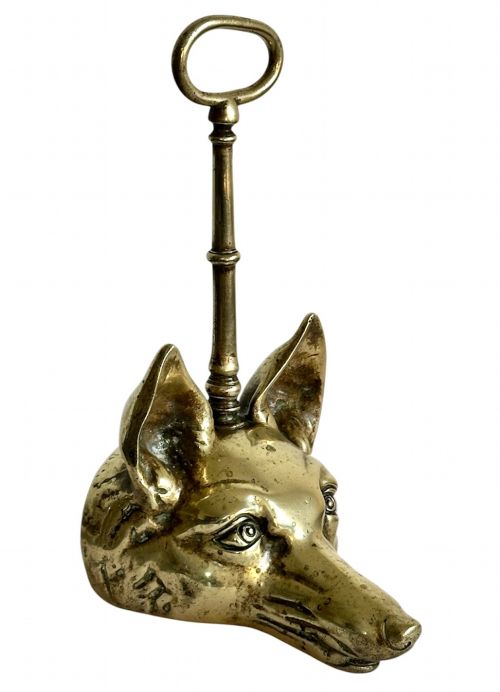
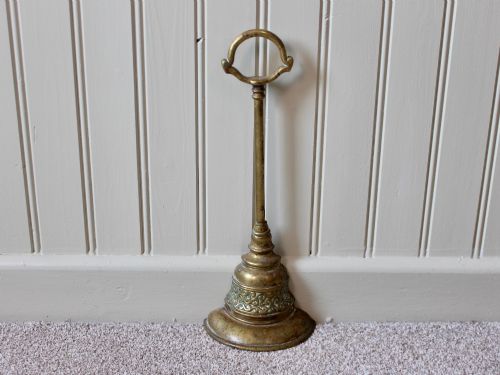
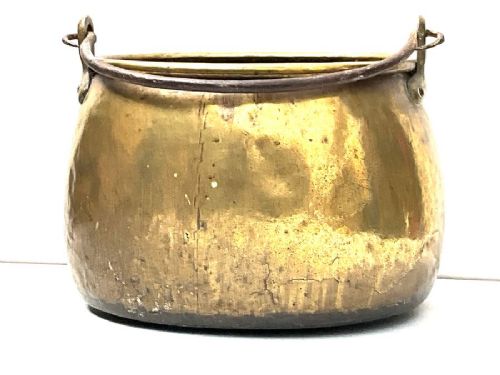
Beyond standard door hardware, the category incorporates heavy brass doorstops, porters and cookware featuring robust handles, such as saucepans, preserve pans and jam pales. Pieces emerge primarily from British workshops, alongside continental European examples in bronze and brass.
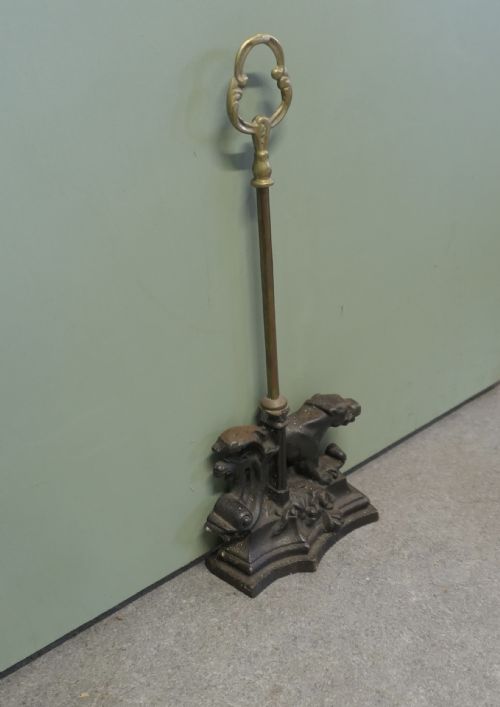
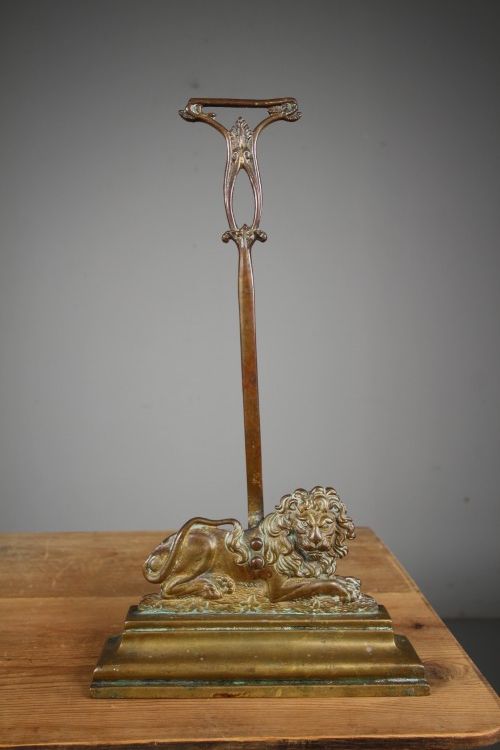
Victorian and Edwardian iterations dominate the current selection, ranging from plain utility designs to decorative models incorporating animal figures, lions and floral motifs. Simpler Georgian formats and later Art Deco styles appear alongside these standard nineteenth-century forms.
Materials and Technique
Makers utilised cast brass, cast iron and bronze to achieve the substantial weight demanded by domestic hardware and large cookware. Sand casting methods left distinct textural signatures on the reverse of plates and the bodies of pans, requiring subsequent hand-finishing and polishing.
Composite construction frequently pairs heavy brass or bronze gripping components with iron, copper or wooden elements, particularly in door porters and swing-handled cauldrons. Fasteners and fixing plates were robustly engineered to withstand continuous friction and mechanical stress.
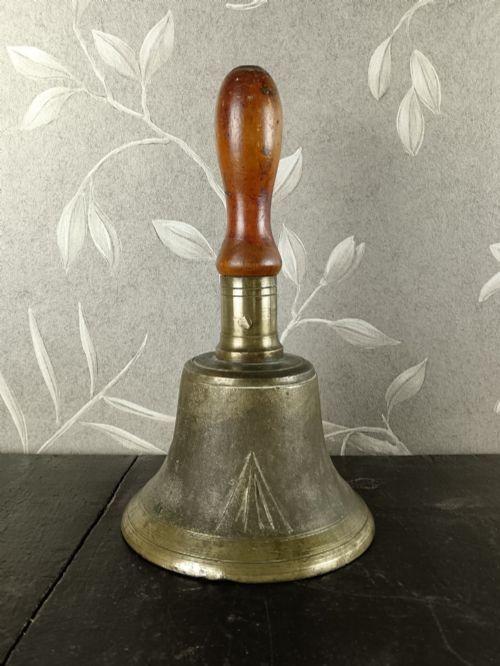
Town criers and school children once answered to the exact same clear ring of a solid brass hand bell.
The Measure of Quality
Quality rests upon the crispness of the casting and the retention of clean detail in relief-moulded motifs, lion heads or foliate patterns. Superior examples display thick-gauge metal with minimal porosity, ensuring the handle maintains structural integrity and a substantial hand-feel.
The degree of original surface preservation and integrity of mounting points distinguish finer survivals from heavily worn replacements. Maker attribution, through stamped registry marks or foundry stamps, elevates an item beyond anonymous utility hardware.
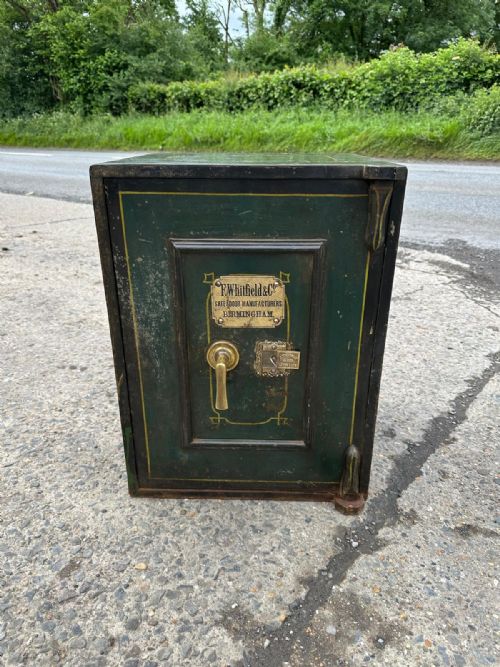
William Tonks·William Soutter & Sons·F. Whitfield & Co.
The Heavy Brass Handles Glossary
- Door porter
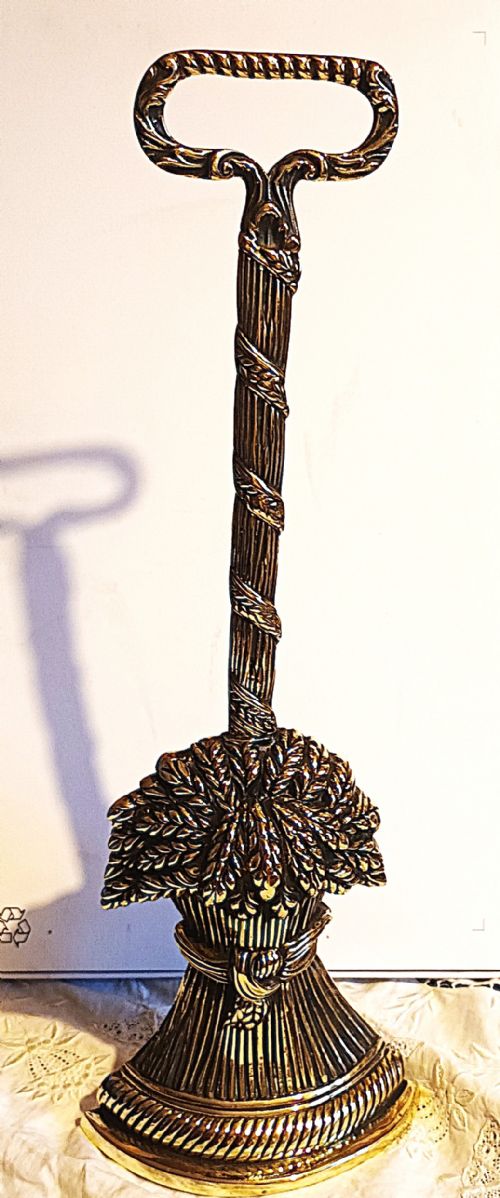
- A heavy portable doorstop designed to prop open interior doors by sheer weight rather than floor fixings. These items frequently incorporate integrated carrying handles or sculptural finials.
- Finger plate
- A protective metal plate mounted to a door adjacent to the handle to prevent surface staining and wear from frequent touching. They are commonly encountered in matched pairs from the late nineteenth century onwards.
- Sand casting
- A traditional manufacturing process where molten brass or bronze is poured into compacted sand moulds. This technique creates the characteristic slightly textured surfaces seen on older metal hardware.
- Jam pale
- A deep metal cooking vessel fitted with a sturdy swinging handle, typically forged from copper or brass for preserving fruit. Surviving examples often display heavy gauge walls and reinforced rims.
- Art Deco
- A design style spanning the interwar decades characterised by streamlined geometric shapes, stylised symmetry and industrial influences. Hardware from this period favours clean lines and smooth bronze or brass finishes.
Heavy Brass Handles: Frequently Asked Questions
How do I mount antique door handles safely?
Antique door handles often require original spindle sizes and matching screw gauges that differ from modern metric standards. Careful alignment ensures the mechanism operates without binding in the mortice.
Pre-drilling pilot holes into older timber prevents splitting when securing heavy brass plates to period doors.
What is the difference between a door stop and a door porter?
A door stop is typically a wedge or low-profile fixture placed on the floor or skirting board to limit a door's swing. A door porter is a tall, heavy upright object with a handle at the top, moved about by hand to keep doors open.
Both items utilise significant weight to hold heavy interior doors in place without permanent floor installation.
How should I clean antique brass hardware?
Gentle washing with warm soapy water and a soft brush removes accumulated dirt and grease without destroying the underlying metal. Aggressive chemical polishing strips away historical surface patination that collectors prefer to retain.
Applying microcrystalline wax provides a protective barrier against future tarnishing and handling marks.
How can I tell Victorian brass from later reproductions?
Victorian cast pieces generally exhibit hand-filed edges, slight casting irregularities and traditional slot-head fixing screws rather than modern cross-head screws. The alloy composition often shows a warmer, deeper golden hue due to higher copper content.
Examining the rear of the hardware reveals tool marks and patination consistent with decades of genuine domestic service.