



Edwardian Door Pulls
Edwardian door pulls bring tactile weight and architectural character to an entrance, spanning brass, bronze, and nickel designs.
Edwardian Door Pulls
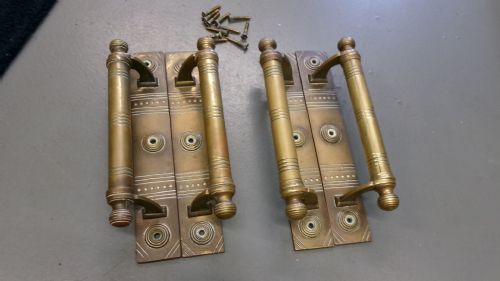
Edwardian door pulls comprise robust hardware fixtures designed for domestic and commercial thresholds, appearing alongside Victorian and Arts and Crafts examples on this page. These pieces range from simple single handles to matched pairs, including shop door pulls, centre door knobs, and combination letter box pull handles.
The selection here encompasses materials such as brass, bronze, cast iron, nickel, copper alloy, and lead crystal, occasionally paired with black china. While some items bear specific Edwardian dates, others emerge from surrounding periods like the Victorian era, 1890, 1900, 1910, and 1920.
Stylistic influences span classical revival, Victorian Gothic revival, and art nouveau alongside the primary Edwardian and Arts and Crafts designs. Buyers frequently encounter door handles, boot scrapers, and door hardware fittings that reflect the functional demands of townhouses and commercial premises.
Materials and construction
Foundry work dominates the construction of these items, utilising cast brass, bronze, and cast iron to achieve durable architectural forms. Metal components are shaped through traditional casting methods, resulting in substantial plates and gripping surfaces.
Mixed media assembly joins metalwork with other elements, incorporating lead crystal or black china inserts into brass and nickel mountings. Surface finishes rely on the natural properties of copper alloys, polished brass, and patinated bronze rather than applied synthetic coatings.
Edwardian Door Pulls Retail Price Guide 2026
Typical asking prices for edwardian door pulls among the pieces listed under this phrase on Sellingantiques today, from the lower quarter to the upper quarter. They describe what is for sale here now, not the wider market.
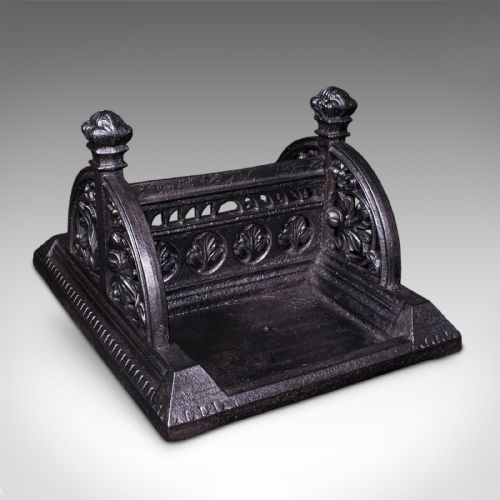
An antique townhouse boot scraper complete with a shoe pull offers a practical solution for muddy Edwardian footwear.
Assessing quality and execution
The distinction between standard utility hardware and superior examples lies in the crispness of the casting and the weight of the metal. Finer pieces display clean lines, well-defined stylistic motifs, and substantial material thickness that withstands heavy daily use.
Completeness of sets and matching components also elevates a piece, such as paired handles sharing identical patination or hardware accompanied by original push plates. The integration of decorative elements, whether cut lead crystal or sculpted bronze art nouveau tendrils, demonstrates the maker's attention to detail.
The Edwardian Door Pulls Glossary
- Edwardian
- Pertaining to the reign of King Edward VII, characterised by lighter, more refined architectural details than the preceding Victorian period.
- Cast bronze
- An alloy of copper and tin poured into a mould to create strong, corrosion-resistant hardware with a rich, dark patination.
- Push plate
- A protective metal plate mounted on a door opposite the handle to prevent wear from hands.
- Centre door knob
- A stationary handle placed in the middle of a front door, often functioning as a pull or knock.
- Lead crystal
- Glass containing lead oxide, known for its high refractive index and weight, used here for decorative handle grips.
Edwardian Door Pulls: Frequently Asked Questions
What materials are Edwardian door pulls made from?
These hardware pieces predominantly utilise metals such as brass, bronze, cast iron, nickel, and copper alloy.
Secondary materials also appear, including lead crystal and black china, which are integrated into metal mountings for decorative grip sections.
How do I distinguish Edwardian hardware from Victorian pieces?
Edwardian designs tend to favour lighter proportions and cleaner lines compared to the heavier, more ornate styles of the Victorian era.
However, both periods share crossover aesthetics, and hardware from the late nineteenth century frequently appears alongside Edwardian examples.
Can I install these antique handles on modern doors?
Most of these pieces function as physical door pulls or handles and can be fitted to contemporary doors with appropriate fixings.
Buyers should check spindle sizes, fixing hole alignments, and the weight of the hardware to ensure compatibility with modern door structures.
What styles are common among these door pulls?
The selection includes Arts and Crafts, Art Nouveau, Classical Revival, and Victorian Gothic Revival styles.
These varied aesthetic movements reflect the transition of design tastes from the late nineteenth century through to the 1920s.