
Large Brass Handles
Large brass handles denote substantial hardware found on campaign chests, heavy trunks, and large copper vessels spanning the eighteenth, nineteenth, and early twentieth centuries.
Large Brass Handles
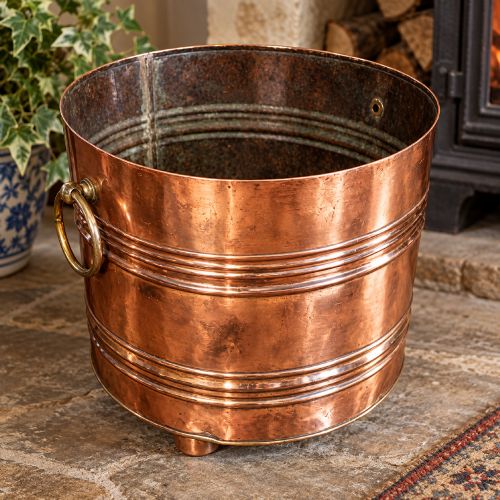
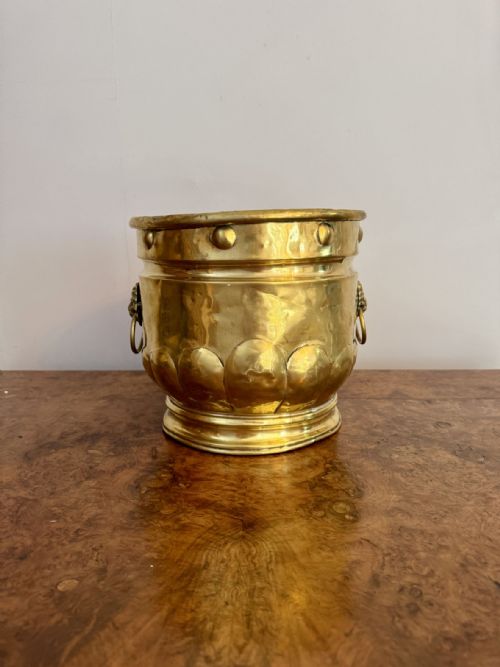
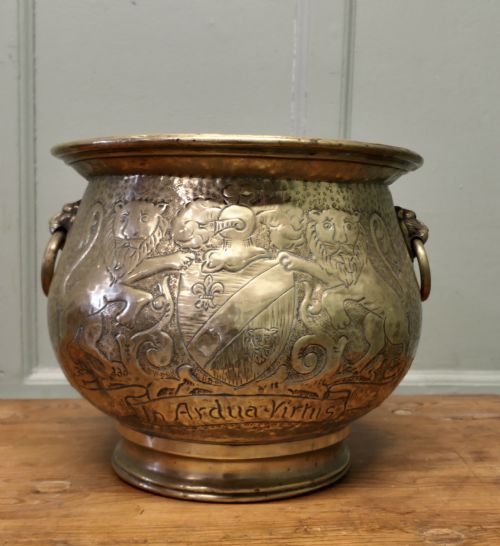
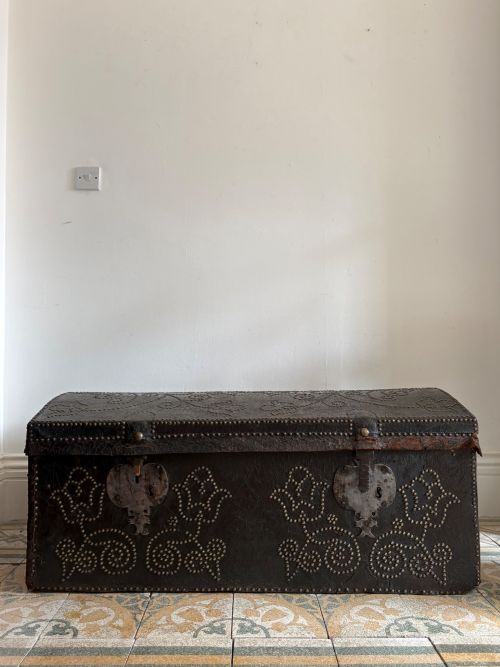
Large brass handles appear on a variety of functional domestic and campaign furnishings, predominantly observed on large brass handles seen on nineteenth-century campaign chests, trunks, and substantial planters. These elements serve a purely practical purpose for lifting heavy wooden or metal containers.
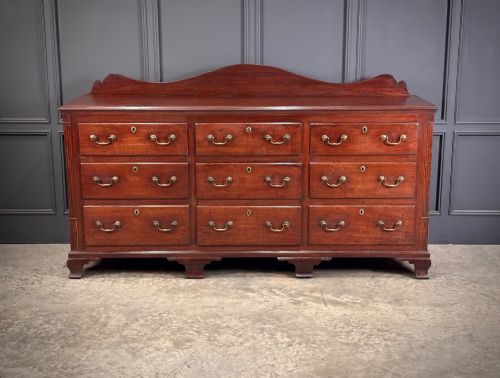
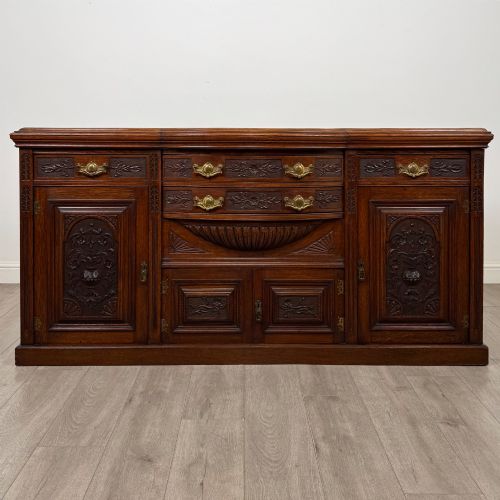
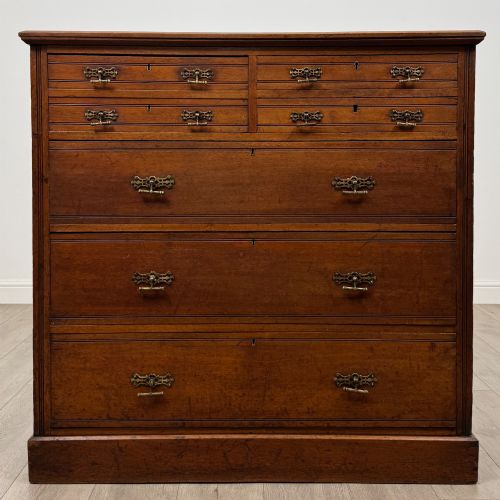
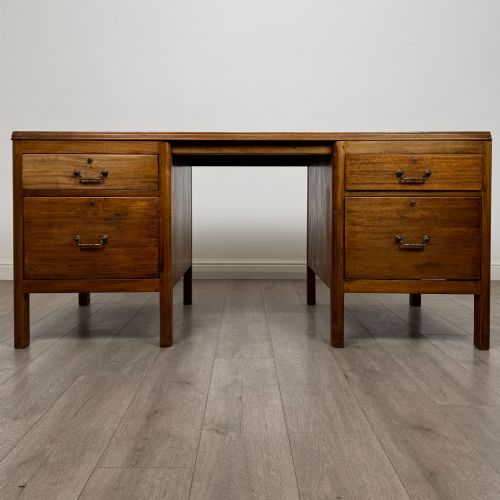
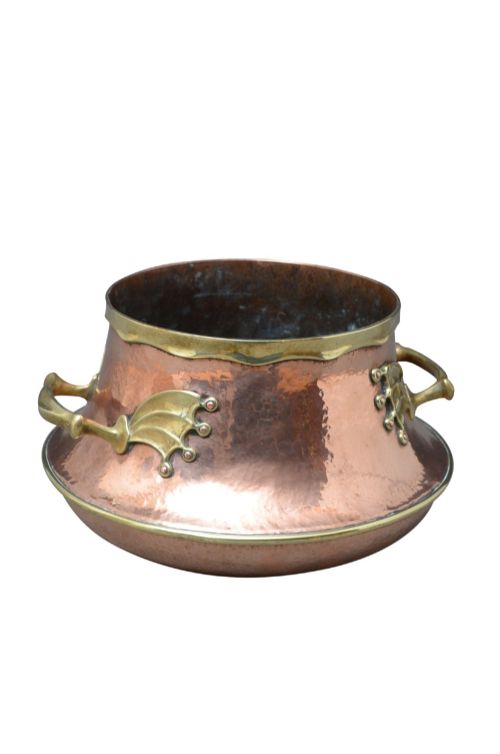
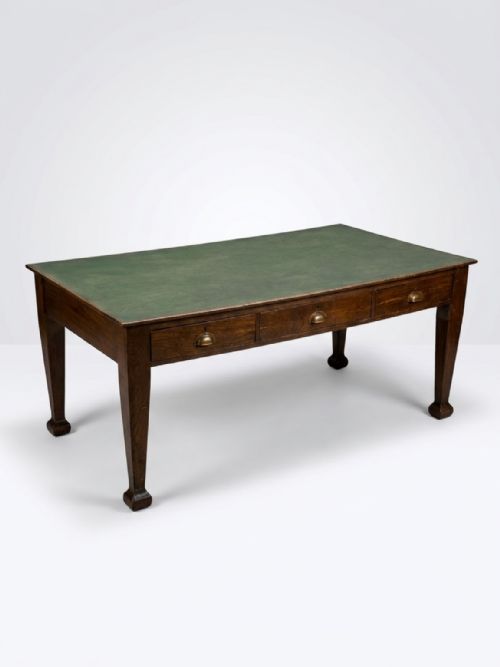
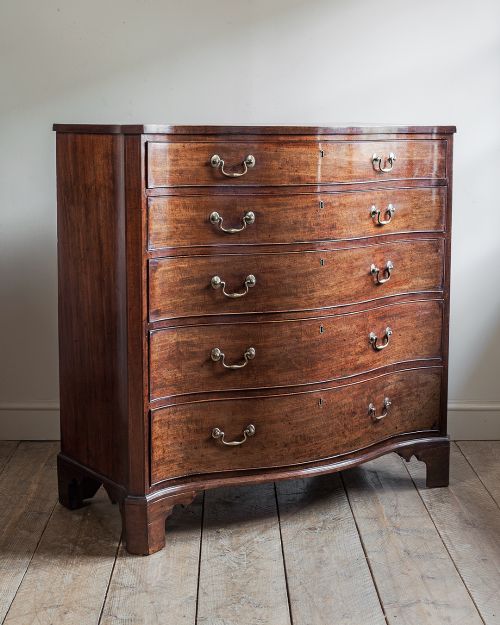
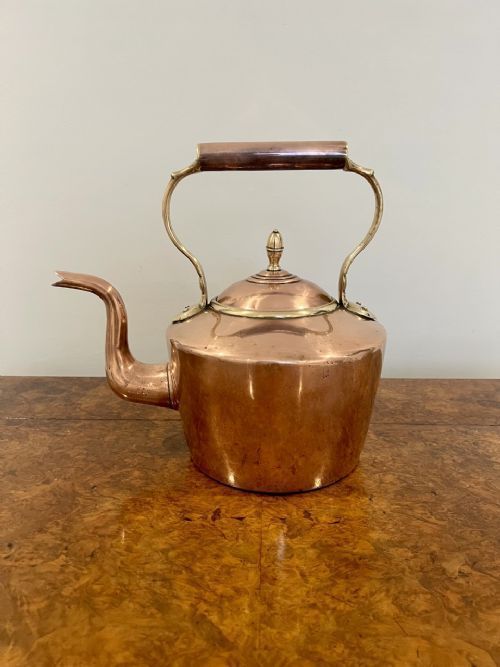
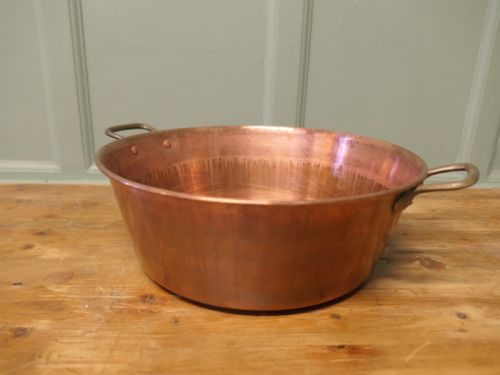
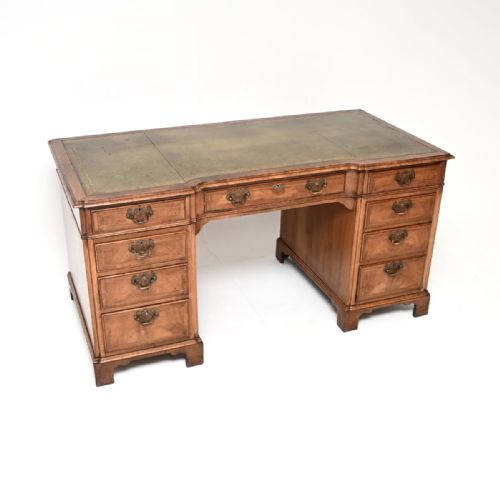
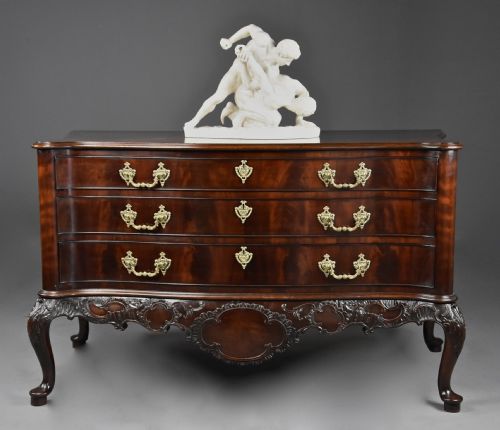
The selection ranges from George III mahogany chests and Edwardian oak desks to Victorian copper jam pans and log bins fitted with robust metal grips. Buyers encounter these pieces across Georgian, Victorian, and Edwardian periods.
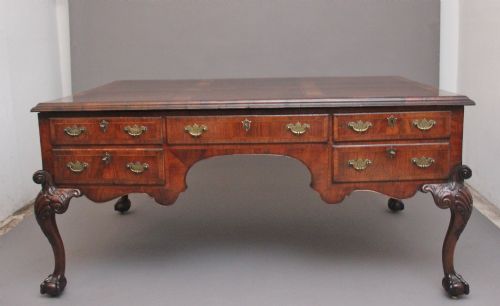
Many examples integrate brass hardware directly into furniture design, such as partners desks and walnut chests of drawers. Others appear on heavy cookware, water barrels, and decorative jardinieres.
How they were made
Makers utilised durable metals and heavy timbers, combining solid mahogany, oak, walnut, and teak with cast brass, wrought iron, and copper. Metal components were frequently hammered, cast, or hand-engraved depending on the origin and period of the object.
Construction techniques involve traditional joinery for the wooden chests and desks, whilst metal vessels display riveted seams and soldered joints designed to hold liquids or heavy fuel securely.
What varies in quality
Quality rests upon the weight and thickness of the brass fittings relative to the body of the piece, alongside the integrity of the primary timber or metal vessel. Heavier, solid brass elements attached securely to dense hardwoods like mahogany or oak denote superior manufacture.
Artisanal detail also dictates the standard, separating plain utilitarian items from pieces featuring hand-engraving, lion mask mounts, or Gothic shields. The crispness of the casting on the handles themselves reveals the maker's underlying skill.
Jas Shoolbred·WMF Jugendstil
The Large Brass Handles Glossary
- Campaign chest
- A modular chest of drawers built in sections with recessed brass handles to facilitate transport by military officers.
- Jardiniere
- An ornamental pot or stand for holding plants and flowers, frequently rendered in copper or brass.
- Partners desk
- A large double-sided writing table designed for two people to work opposite one another, often featuring substantial drawers.
- Serpentine
- A curved furniture front with a convex centre flanked by concave ends, typical of fine Georgian and Victorian cabinet-making.
- Jam pan
- A wide, shallow metal vessel with sturdy handles, historically used for boiling fruit and sugar.
Large Brass Handles: Frequently Asked Questions
What periods do these pieces date from?
The selection spans from the eighteenth century through the Victorian and Edwardian eras into the early twentieth century. These periods encompass George III designs alongside later revival styles.
Craftsmen across these eras produced heavy brass hardware for domestic furniture and utilitarian metal vessels alike.
How were large brass handles used?
They provided essential leverage for lifting and transporting heavy items such as campaign chests, sea trunks, and large wooden coffers. On planters and coal buckets, they allowed safe repositioning around the hearth or room.
Their robust construction was engineered to withstand the strain of carrying dense contents like coal, water, or personal belongings.
Are the handles always original?
Most surviving pieces retain their period hardware, particularly items like campaign chests where recessed brass handles are integral to the design. However, replacement handles do occur on older furniture.
Examining the fixings and the impression left in the wood helps determine whether the metalwork matches the age of the piece.
How do I care for brass hardware?
Regular dusting with a soft cloth preserves the surface without stripping the natural historic patina that develops over decades. Avoid harsh chemical cleaners that can permanently damage the surrounding wood or copper.
Gentle maintenance keeps the metal stable while respecting the age and history of the object.