

Hearth Log Bucket
Hearth log buckets are functional fireside containers designed to hold fuel, uniting utility with period metalwork.
Hearth Log Bucket
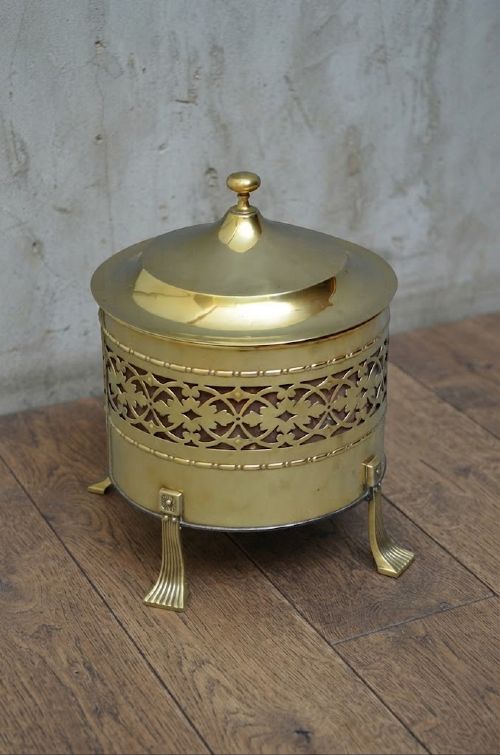
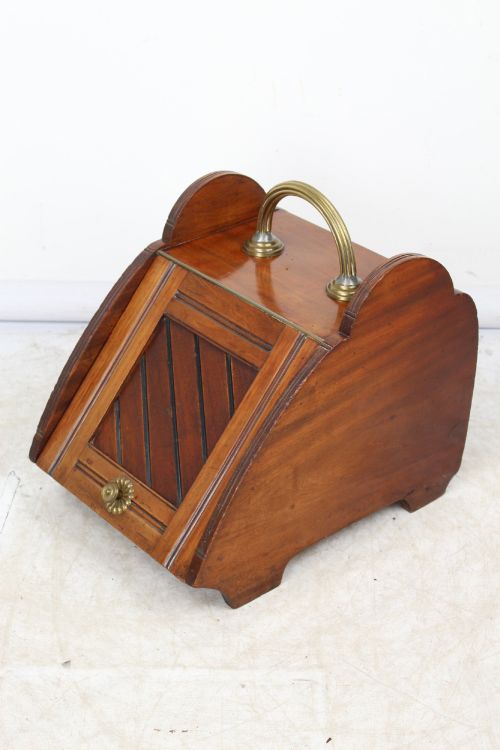
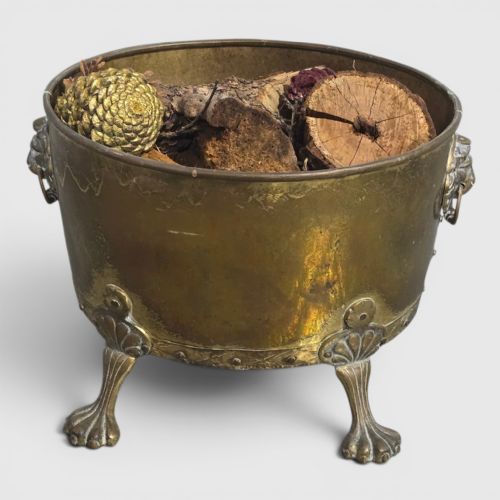
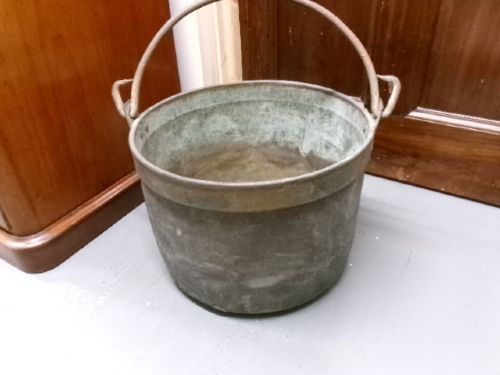
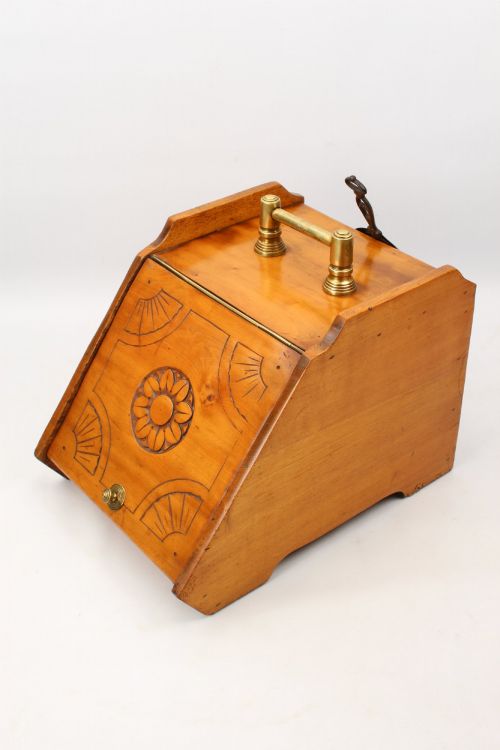
Hearth log buckets include open coal scuttles, lidded bins and swing-handled cauldrons used to store timber and fuel beside the fireplace. The selections span the Georgian, Victorian and Edwardian eras, reflecting changes in domestic heating.
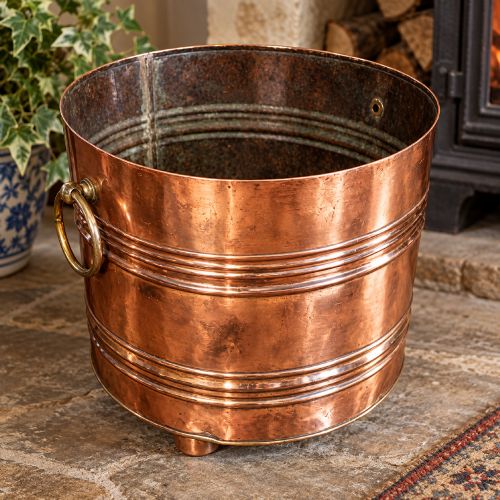
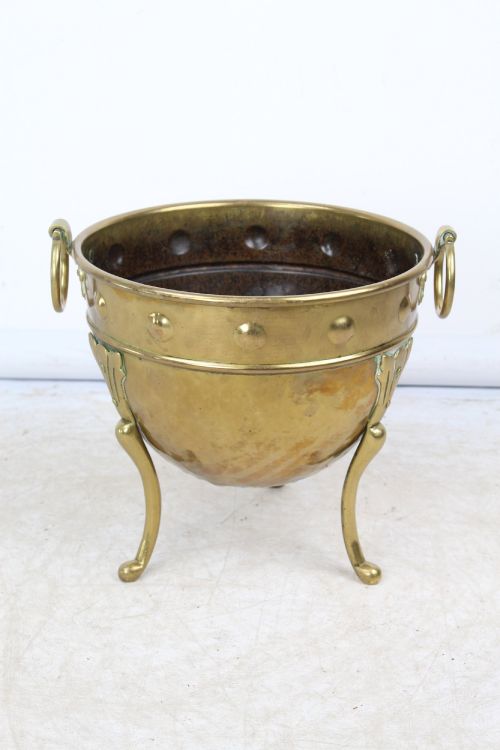
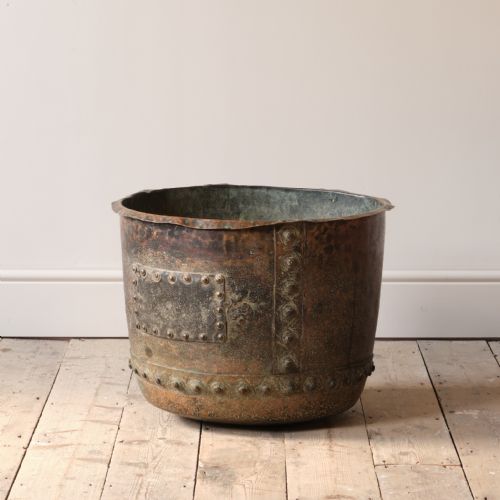
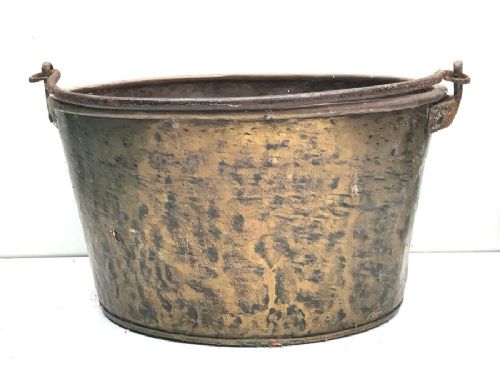
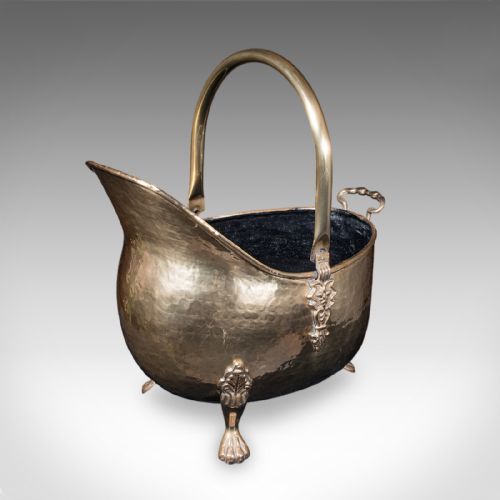
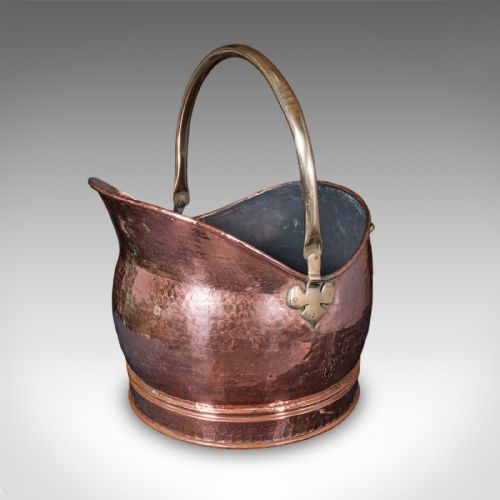
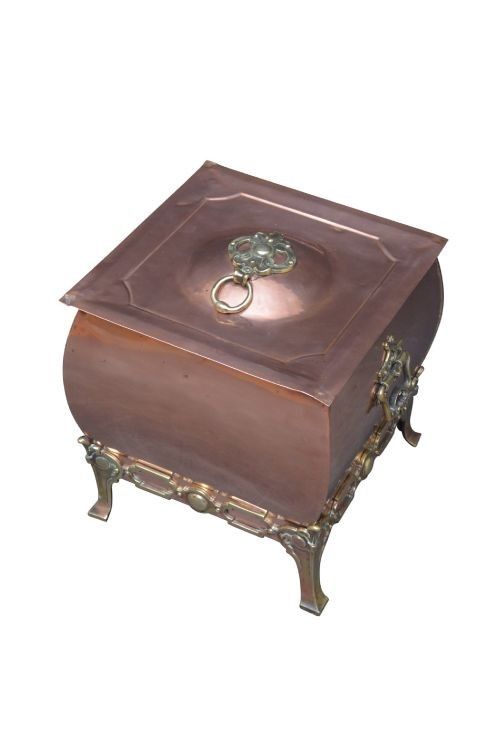
Metal vessels in copper and brass dominate the available stock, frequently augmented by iron fittings or wooden staves. Form follows function closely, resulting in cylindrical bins, riveted pots and helmet-shaped scuttles.
Country house pieces sit alongside urban examples, incorporating materials such as oak, mahogany and leather alongside traditional sheet metals. Many serve multiple historical functions, doubling as planters, grain measures or jam pails.
Materials and Construction
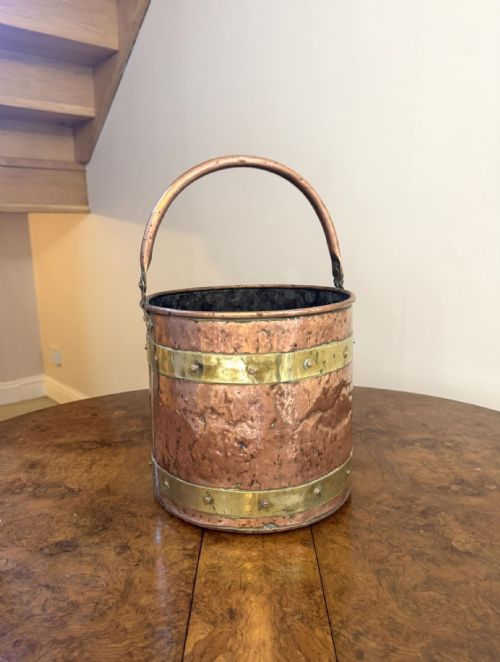
Metalworking techniques define the category, utilising beaten sheet copper and heavy brass joined by visible rivets or brass banding. Iron frames and handles provide structural support for heavier vessels holding dense timber.
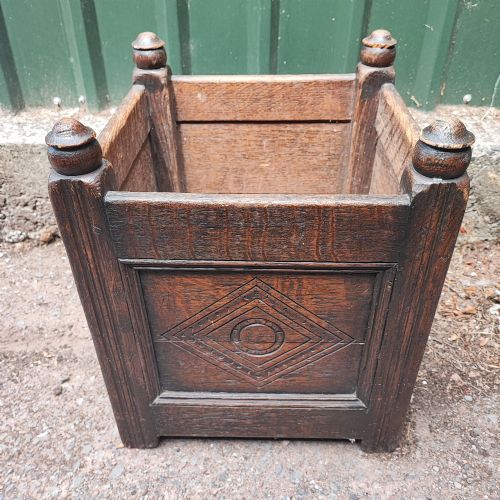
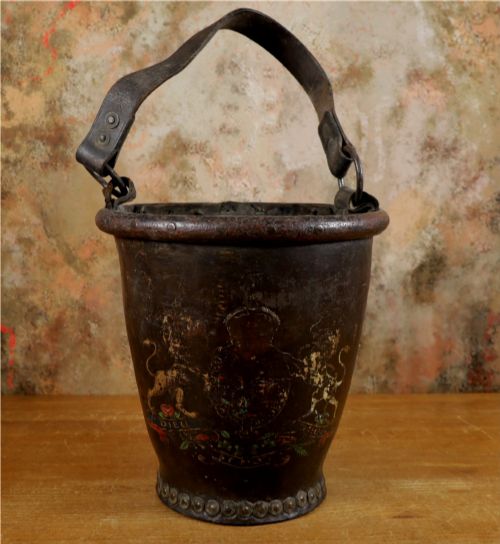
Woodworking traditions appear in coopered oak and mahogany log bins, utilising tight stave construction held by metal hoops. Leather examples employ stiffened hides decorated with brass studs and hand-painted coats of arms.
Object forms recorded on this page range from traditional coal scuttles and helmet buckets to coopered peat bins and grain measures.
Assessing Quality
Quality rests on the weight of the metal and the integrity of the original construction, distinguishing heavy-gauge hand-hammered bodies from lighter stamped alternatives. Original handles, rims and fixings retain the structural honesty of the piece.
Patina and surface finish set finer examples apart, showing unpolished historical oxidation rather than modern over-cleaning. The presence of matching shovels, liners or original iron frames elevates a piece above standard utilitarian gear.
Henry Loveridge·Petrus Ramus
The Hearth Log Bucket Glossary
- Coal Scuttle
- A domestic container designed for carrying and storing coal near a fireplace. These often feature a sloped opening or a hinged lid.
- Coopered
- A method of wooden construction utilising curved staves bound by metal hoops, traditionally used for barrels and peat buckets.
- Helmet Scuttle
- A specific brass or copper coal container shaped with a flared rim resembling a classical helmet, equipped with a swing handle.
- Riveted
- Joined with metal pins hammered flat to secure overlapping sheets of copper or brass, common in heavier nineteenth-century vessels.
- Planter
- A secondary use for many historic metal bins, where waterproof properties make them suitable for holding large potted plants.
Hearth Log Bucket: Frequently Asked Questions
How do I clean a copper log bucket?
Maintenance requires mild soapy water and a soft cloth to preserve the historical oxidation and accumulated surface age.
Avoid aggressive chemical polishes that strip away the dark patination valued by collectors.
Were these buckets used only for logs?
Original domestic functions included holding coal, peat, kindling or household grain depending on the scale and period.
Many metal vessels served interchangeably as preserving pans, jam pails or indoor plant containers.
How do I distinguish Georgian from Victorian examples?
Georgian pieces from the eighteenth century typically display heavier hand-beaten copper construction with distinctive early brass banding.
Victorian and Edwardian items often incorporate machine-rolling, riveted seams and stylistic influences from the Arts and Crafts or Art Nouveau movements.
Can I use an antique leather bucket for logs?
Historic leather fire buckets feature stiffened hides and pitch linings intended for carrying water rather than heavy timber.
These delicate survivors function best as decorative display pieces or dry umbrella stands rather than active hearth accessories.