



Hanging Leaded Glass Light
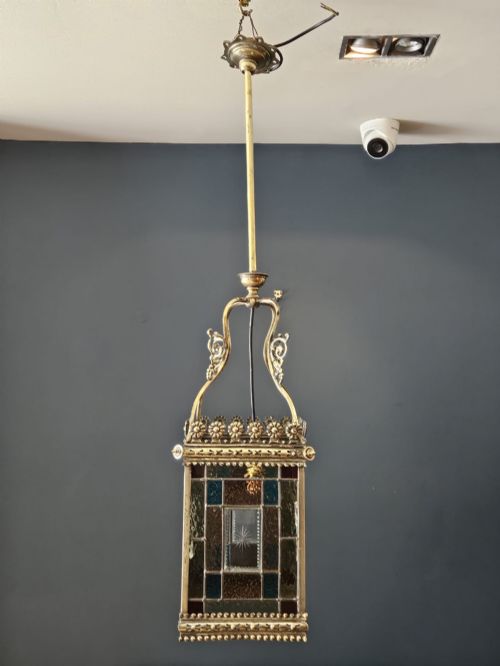
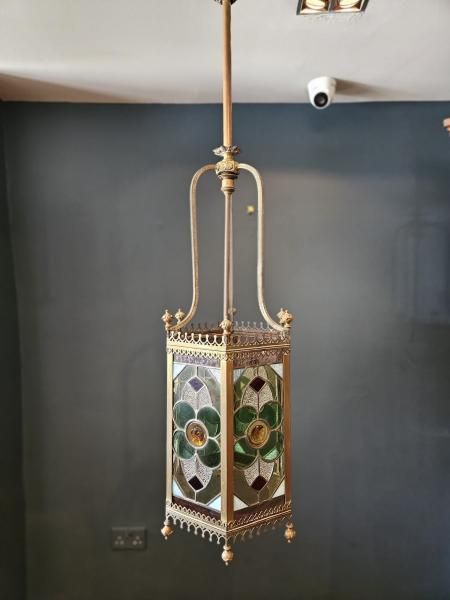
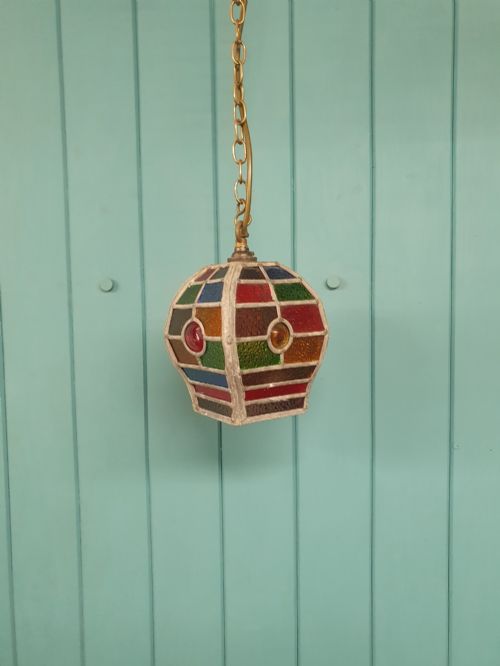
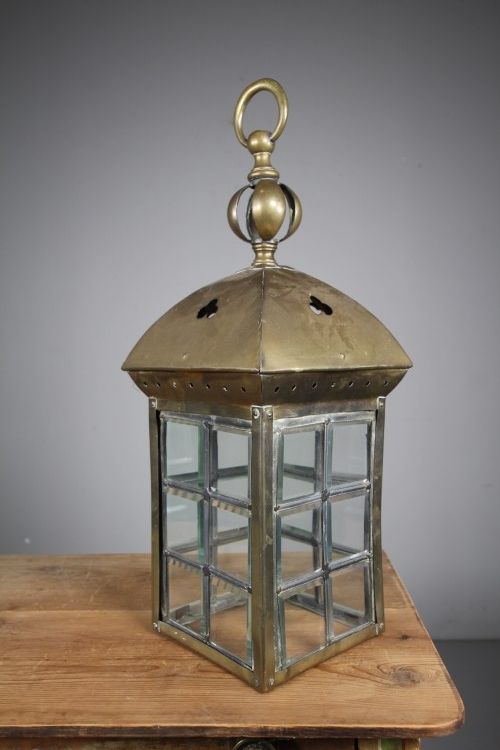
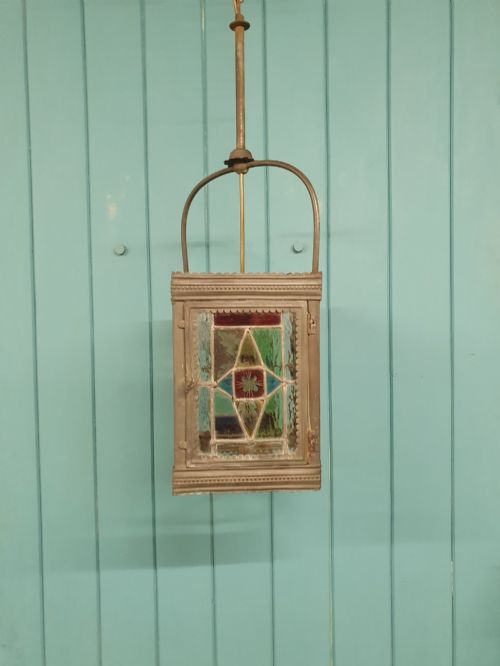
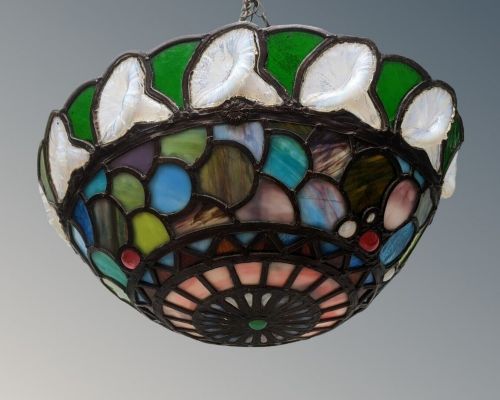
A hanging leaded glass light brings rich colour and linear geometry to a hallway, constructed from segments of glass held together within a robust metal framework.

Hanging Leaded Glass Light
When searching for a hanging leaded glass light, you are looking at lantern pendants, hall lights, and ceiling fixtures designed to illuminate entranceways and principal rooms. These pieces originate from the Victorian and Edwardian eras, spanning the nineteenth and early twentieth centuries, alongside architectural salvage panels.
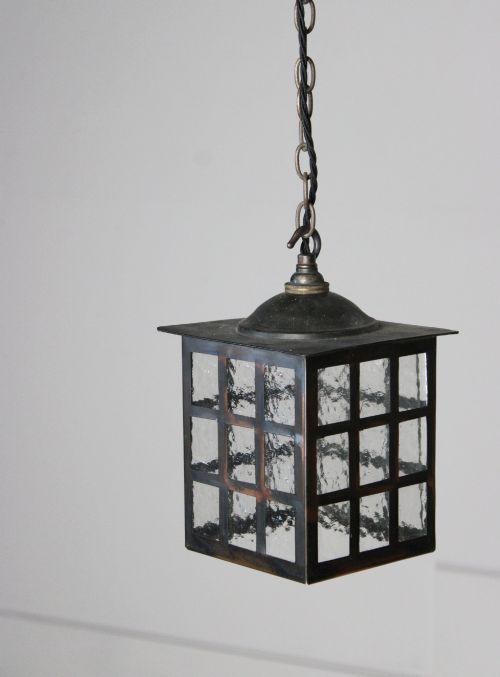
The versions you are most likely to meet on this page take the form of brass framed lanterns, porch lights, and pendant lamps. Styles range from straightforward Victorian and Edwardian designs through to Gothic Revival and Arts and Crafts pieces.
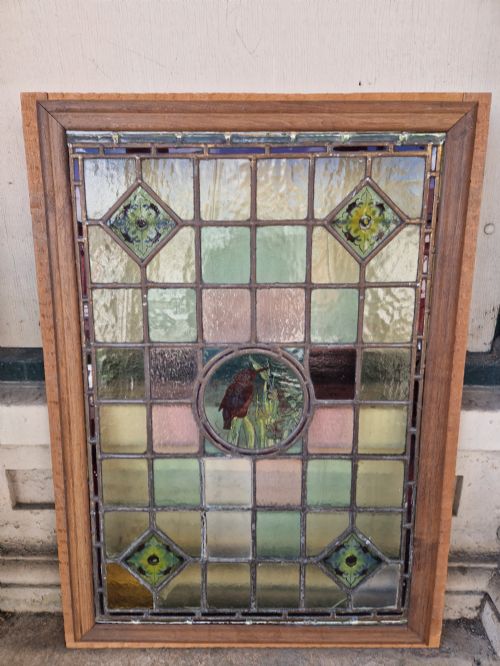
Beyond pendants, the selections include architectural elements such as stained glass windows and panels. These items share the characteristic leaded construction, whether configured for suspension from a ceiling or adapted from window placement.
How they were made
The primary construction method relies on joining individual pieces of glass with lead came, forming intricate linear patterns and geometric or pictorial designs. Coloured, amber bullseye, and cobalt blue glasses feature prominently across these assemblies.
Structural support is provided by metal frames fashioned from brass, copper, and wrought iron. Wood also appears in specific elements, combining with the soldered metal matrix to secure the glass panels safely within the hanging fixture.
Listings feature pieces spanning the Victorian and Edwardian periods, utilising materials including brass, copper, wrought iron, and stained glass.
What varies in quality
Quality separates along the precision of the lead work and the selection of the glass itself. Pieces incorporating textured, coloured, or specialised bullseye glass demonstrate higher ambition than standard clear panels.
The calibre of the metal framing, whether cast brass, beaten copper, or heavy wrought iron, dictates the durability and structural integrity of the fixture. The architectural context, such as a Gothic Revival influence or a named stylistic direction, also defines the tier of the piece.
The Hanging Leaded Glass Light Glossary
- Leaded glass
- Glass pieces joined together with lead cames to form a window or lampshade. This technique creates strong linear patterns that divide the light.
- Came
- A slender strip of cast lead, copper, or zinc with a grooved channel on each side, used to hold pieces of glass together. It forms the structural grid of the design.
- Bullseye
- A small, circular centre piece of blown glass with a thick button in the middle, often incorporated into windows and lanterns for texture. They add distinct optical distortion.
- Gothic Revival
- An architectural and decorative style drawing on medieval forms, featuring pointed arches and ecclesiastical motifs. Pieces in this style often display heavier ironwork or religious imagery.
- Arts and Crafts
- A design movement valuing handcraftsmanship and simple, honest construction over mass production. Objects from this tradition frequently showcase bold cobalt blue glass and exposed metalwork.
Hanging Leaded Glass Light: Frequently Asked Questions
How are hanging leaded glass lights hung?
These fixtures typically suspend from ceilings using matching metal chains or rods attached to a sturdy brass, copper, or iron frame.
Weight varies according to the quantity of glass and the thickness of the metal, requiring secure fixings into ceiling joists.
Where should a hall lantern be placed?
Hall lanterns suit entranceways, stairwells, and corridors where vertical hanging space allows the light to pass through coloured or textured glass.
They serve as focal points in transition spaces, casting patterned shadows across walls and ceilings.
What periods do these lights come from?
The pieces span the Victorian and Edwardian eras, alongside nineteenth and early twentieth century examples.
Design styles shift from ornate Victorian brass frames to robust Arts and Crafts pendants and Gothic Revival architectural lanterns.
Can stained glass windows be used as lights?
Stained glass windows and panels appear alongside hanging pendants and can be adapted for interior display or architectural integration.
Their heavy leaded construction requires careful framing to support the weight of the glass safely.