
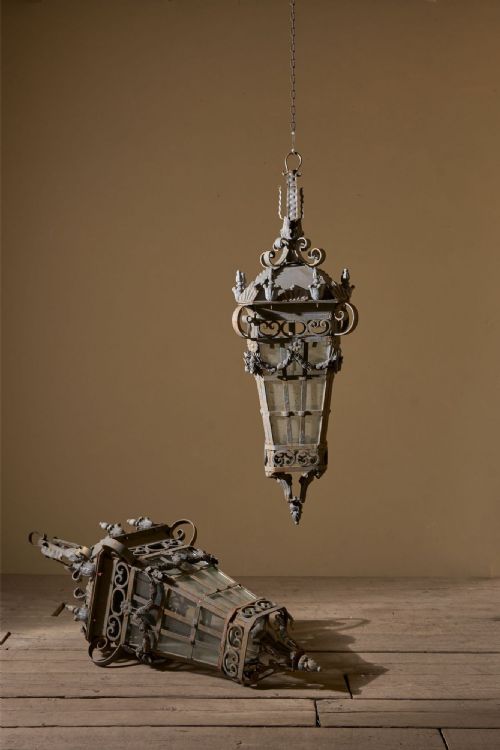
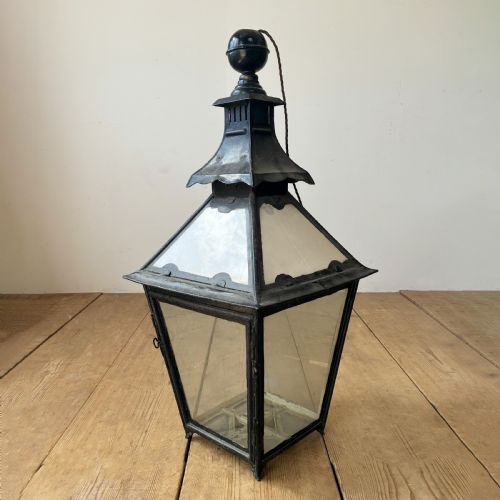


Wrought Iron Porch Lantern
These wrought iron porch lantern examples bring period character to an entrance, combining sturdy metalwork with glass panels to light a threshold.

Wrought Iron Porch Lantern
A wrought iron porch lantern provides functional entrance illumination while establishing a distinct historical presence on an exterior wall or ceiling. When searching for a wrought iron porch lantern, buyers encounter forms ranging from wall-mounted fixtures to hanging pendants designed for outdoor or sheltered hall use.
The pieces listed here draw primarily from the nineteenth century, the Edwardian era, and the nineteen-twenties, reflecting architectural tastes of those periods. Wall lanterns and hanging lanterns dominate the selection, often appearing in matched pairs suitable for framing a doorway.
Stylistic influences span Arts and Crafts simplicity, Gothic Revival verticality, and French architectural traditions such as Beaux-Arts and chateau designs. Simpler vernacular pieces share space with more elaborate decorative examples featuring motifs like shamrocks or octagonal geometries.
Materials and construction
Makers constructed these lanterns using wrought iron and steel frameworks to provide structural rigidity and weather resistance for exterior use. Blacksmiths shaped the metal by hand, incorporating scrolls and brackets that supported the weight of the fixture.
Glazing materials include clear, frosted, and leaded glass panels held securely within the metal armature to diffuse light effectively. Secondary metals such as brass, copper, and zinc appear in trims, fixings, and hoods, offering subtle colour contrast against the dark iron.
Object forms on this page include wall-mounted lights, ceiling-hung pendants, and large octagonal porch fixtures.
Factors of quality
Quality in these lanterns rests upon the dexterity of the smithing work and the integrity of the assembly. Finer examples display hand-forged detailing with clean lines and balanced proportions, whereas simpler pieces rely on standard commercial fabrication methods.
The integration of materials also dictates the calibre of a piece, particularly the precision of the leaded or cut glass panels within the iron frame. Heavier gauges of metal and substantial hardware distinguish substantial country house or civic fixtures from lighter domestic iterations.
The Wrought Iron Porch Lantern Glossary
- Wrought iron
- Iron that has been heated and worked with tools by a blacksmith, producing a fibrous structure and textured surface. This material resists rust better than cast iron and allows for hand-shaped scrolls.
- Leaded glass
- Individual pieces of glass joined together with cames of lead to form a patterned window pane within the lantern. This technique creates geometric or decorative designs that diffuse the light.
- Arts and Crafts
- A design movement valuing traditional craftsmanship, simple forms, and visible hand-working over industrial mass production. Objects from this style often feature honest construction without excessive ornamentation.
- Gothic Revival
- An architectural and decorative style drawing inspiration from medieval buildings, characterised by pointed arches, tracery, and vertical emphasis. Lanterns in this taste often mimic ecclesiastical metalwork.
- Hanging lantern
- A light fixture suspended from a ceiling bracket, chain, or rod rather than fixed directly to a vertical surface. These pieces typically illuminate entrance halls or covered porches from above.
Wrought Iron Porch Lantern: Frequently Asked Questions
Are these lanterns suitable for outdoor use?
Most of these pieces were originally built for exterior environments, utilising robust iron and sealed glass construction to withstand weather. However, historical wiring and weatherproofing should be inspected and updated by a professional before exterior installation.
Sheltered porch locations generally offer better protection for antique metalwork and older glass panels than entirely exposed positions.
How do I determine the period of a lantern?
Dating relies on stylistic clues, construction methods, and materials recorded in the evidence such as Edwardian proportions or Arts and Crafts simplicity. Nineteenth-century examples often display heavier hand-forging, while nineteen-twenties pieces might incorporate steel or specific regional French vernacular traits.
Comparing the decorative motifs, such as Gothic tracery or shamrock appliqués, helps align the fixture with known manufacturing eras.
Can I find matching pairs?
Several listings on this page consist of matched pairs of wall or hanging lanterns, which historically flanked grand entrances or large double doors. These matched sets provide symmetrical lighting for architectural facades.
Single lanterns also appear frequently, offering distinct character as standalone feature lights for smaller porches.
What glass types should I expect?
The listings feature clear glass, frosted glass, and leaded glass panels designed to protect the internal light source while modifying brightness. Leaded and frosted variants soften the illumination and obscure the bulb, while clear glass maximises light output.
These panels are held within the metal frame and reflect the aesthetic preferences of their respective periods.