


French Porch Light
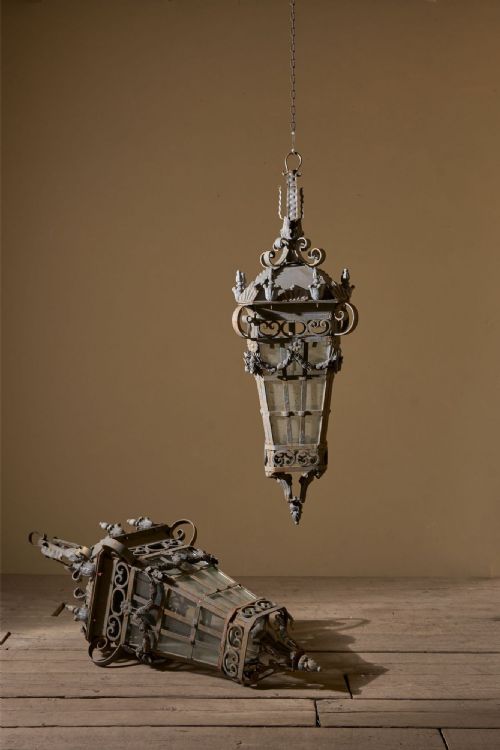
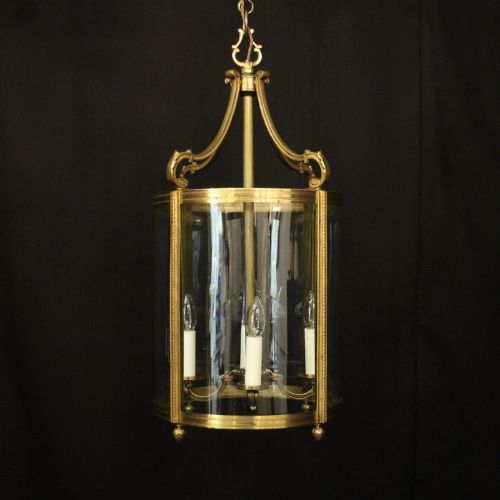
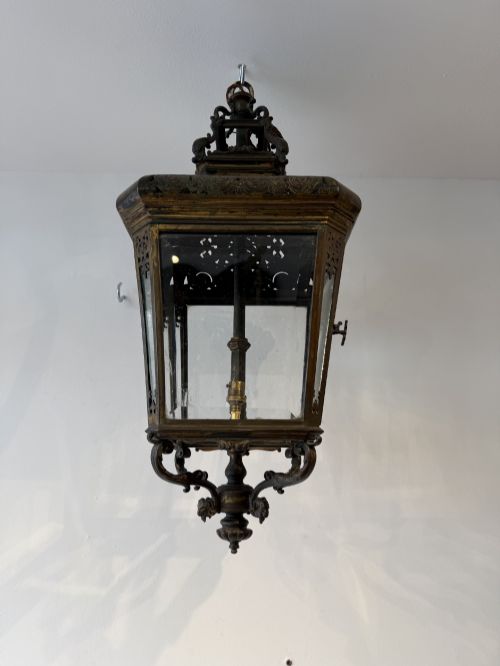
A French porch light brings distinct continental illumination to an entrance, combining robust metalwork with clear glass panels.

French Porch Light
A French porch light is primarily found as a hanging lantern, a hall lantern, or a wall-mounted light suitable for exterior or semi-covered entryways. These fixtures span periods from the late nineteenth century through the 1930s, including Edwardian examples.
The versions most likely to be met on this page include bronze, brass, and iron hanging lanterns, alongside paired wall lights and half lanterns. Styles range from French Empire and Beaux-Arts to Arts and Crafts and Gothic Revival.
Materials and construction methods
Construction relies heavily on durable metals such as bronze, brass, iron, copper, and zinc, often paired with leaded or plain glass panes. Wrought iron and gilt bronze are also utilised to shape structural frames and decorative mounts.
Metal components are cast, forged, or soldered together to form secure housings for interior bulb fittings. Glass panels are fitted tightly into metal channels to protect the light source from weather.
Some carriage lights still retain traces of soot from the days before electricity took over the front porch.
Determining quality in antique lighting
Quality rests in the weight and substance of the metal frame, the crispness of casting detail on bronze or brass elements, and the integrity of the glass panels. Substantial gauge metals and hand-forged ironwork indicate superior manufacture.
Finishes and patination develop naturally over time, showing depth where oxidation has occurred uniformly. The structural soundness of the hanging loops and wall brackets dictates how securely a fixture bears its own weight.
The French Porch Light Glossary
- Hall lantern
- An enclosed hanging light designed specifically for corridors, vestibules, or entrance porches. These fixtures hang from a single chain or rod and distribute light through glass sides.
- Gilt bronze
- Bronze that has been coated with a thin layer of gold or gold-coloured alloy. This treatment provides a bright, lasting finish that resists tarnishing in damp environments.
- Leaded glass
- Individual panes of glass held together by lead cames to form a patterned window or lantern side. This technique allows for complex geometric or curved designs.
- Carriage light
- A style of wall lantern originally designed to illuminate the sides of horse-drawn carriages or entranceways. They feature bracket mounts and durable box frames.
French Porch Light: Frequently Asked Questions
Where should a French porch light be hung?
These lanterns suit covered exterior porches, entrance halls, and vestibules where they receive some shelter from direct weather. Hanging heights depend on ceiling clearance and door swing.
Ensure the mounting surface can support the weight of bronze or iron frames safely.
How do I identify the period of a lantern?
Dating relies on stylistic markers such as cast brass ornamentation, Arts and Crafts ironwork, or Edwardian leaded glass patterns. Materials like zinc and gilt bronze also point to specific manufacturing decades.
Comparing construction techniques with documented examples helps narrow down the era.
What is the difference between a hall lantern and a porch light?
Hall lanterns are typically designed for interior corridors, whereas porch lights often feature weather-resistant construction like heavy iron or sealed glass. In practice, many sturdy hanging lanterns serve both spaces.
Original placement often dictated the metal gauge and finish applied by the maker.