
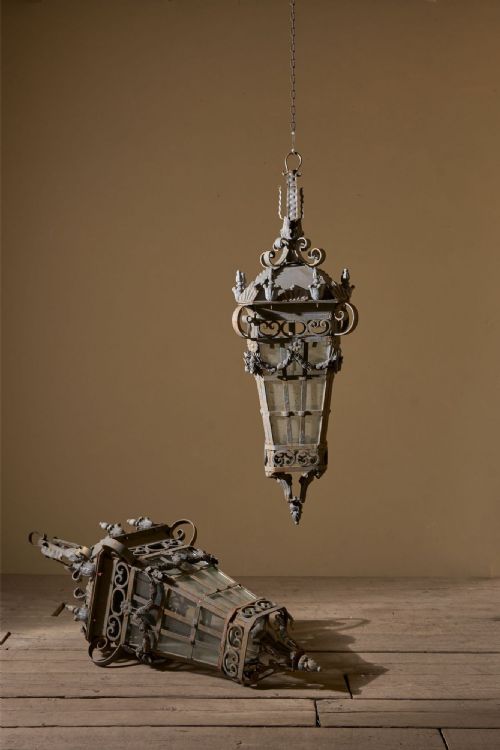
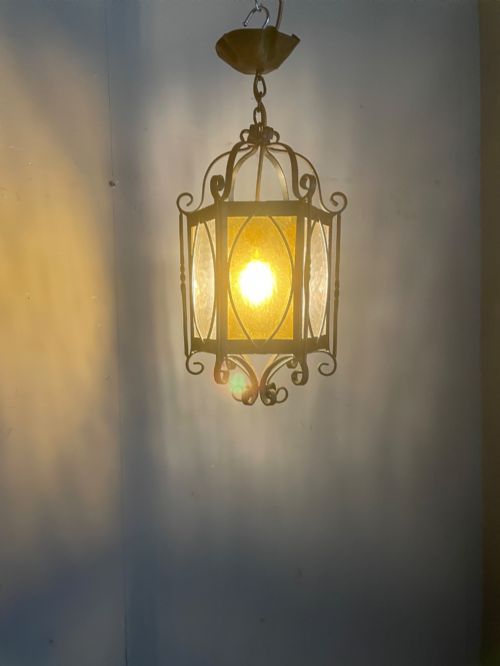
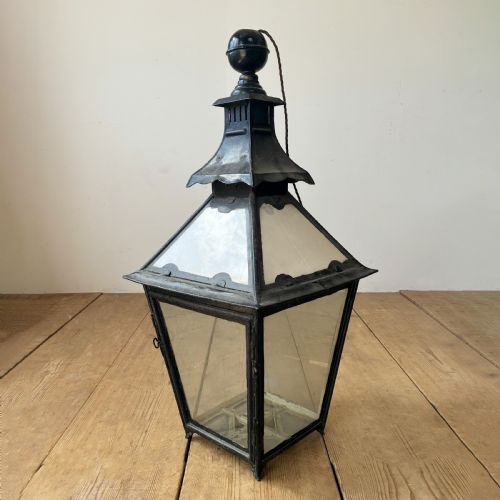


Gothic Wrought Iron Lantern
These gothic wrought iron lantern pieces combine heavy metalwork and glass to illuminate halls and porches with medieval revival character.

Gothic Wrought Iron Lantern
A gothic wrought iron lantern brings architectural weight and ecclesiastical style to domestic interiors and porches. You will frequently encounter hall lanterns, hanging lanterns, and wall lights spanning the nineteenth century through the nineteen-thirties.
The designs draw heavily on Gothic Revival, French Chateau, and Arts and Crafts traditions. Pieces range from simple glazed hexagonal hall lanterns to massive castle wall lights and tall lantern stands.
Many examples originate from French workshops, favouring large proportions and decorative metal framing. English interpretations also appear, often showing straightforward blacksmith construction and single-light configurations.
How they were made
Blacksmiths forged wrought iron bars by hand, twisting and riveting the metal to form rigid structural cages and decorative scrollwork. Cast iron and steel also appear in certain pieces, providing alternative weights and surface textures.
Glazing is integral to the construction, utilising clear glass, frosted glass, or stained glass panels held securely within the metal framework. Supplementary materials such as copper, zinc, and gilt metal often provide contrasting trim or protective hoods.
Listings feature wrought iron, cast iron, copper, zinc, and various forms of glass across the nineteenth and early twentieth centuries.
What varies in quality
The finesse of the blacksmith's handwork dictates the distinction between standard production and exceptional output. Look for clean riveted joints, purposeful scrollwork, and balanced proportions rather than crude assembly.
The choice and integration of materials elevate certain examples above others. Substantial gauge iron paired with leaded or stained glass panels demonstrates superior construction compared to lighter sheet metal alternatives.
The Gothic Wrought Iron Lantern Glossary
- Wrought iron
- Iron that has been heated and worked with tools by a blacksmith. This material allows for hand-forged scrolls and structural frames that resist bending.
- Gothic Revival
- An architectural and decorative style popular during the nineteenth century. It borrows pointed arches, tracery, and heavy vertical lines from medieval buildings.
- Hall lantern
- An enclosed hanging light designed specifically for entranceways and corridors. These fixtures usually feature glazed sides to protect the flame or bulb from drafts.
- Stained glass
- Glass coloured by the addition of metallic oxides during its manufacture. Pieces often use these coloured panels within the iron framework to create atmospheric coloured light.
- Arts and Crafts
- A design movement valuing traditional craftsmanship and visible construction methods. Lanterns from this tradition often emphasise honest metalwork over applied ornament.
Gothic Wrought Iron Lantern: Frequently Asked Questions
How do I hang a heavy iron lantern safely?
Heavy iron fixtures require direct attachment to ceiling joists or wall studs using rated fixings. A professional electrician should check that the structural support can bear the weight of the metal and glass.
Position the lantern at a height that clears head traffic while remaining visible from primary angles in the hall or porch.
Can these antique lanterns be used outdoors?
Many of these pieces served originally as porch or outside lights exposed to weather. However, surviving electrical wiring and delicate glass panels require assessment before exterior installation.
Protecting antique iron from standing moisture helps prevent active corrosion on older surfaces.
How do I clean historic wrought iron?
Remove surface dust using a dry, soft-bristled brush to protect the underlying metal finish. Avoid harsh chemical cleaners that can strip historic wax or accelerate oxidation.
Applying a microcrystalline wax preserves the dark surface tone of the iron without leaving a sticky residue.
Are these lanterns wired for modern electricity?
Most pieces have been adapted at various points for modern electrical standards. Rewiring allows safe integration into contemporary domestic lighting circuits.
Consulting an electrician ensures that lamp holders and internal wiring match current safety regulations.
How do I identify a French gothic lantern?
French pieces often display distinctive proportions, decorative zinc or copper hoods, and elaborate scrollwork associated with chateau architecture. The framing technique frequently reflects continental blacksmith traditions of the late nineteenth and early twentieth centuries.
Comparing the rivet placement and glass retention methods helps distinguish regional workshops.