


Early 20th Century Lantern
An early 20th century lantern brings architectural presence to a hallway or porch through disciplined metalwork and glass.

Identifying an early 20th century lantern
The early 20th century lantern category spans hanging hall lights, exterior porch fixtures, and maritime pieces from 1900 to 1920. Buyers searching for an early 20th century lantern encounter styles ranging from restrained Edwardian brass designs to decorative French Beaux-Arts and Arts & Crafts pendants.
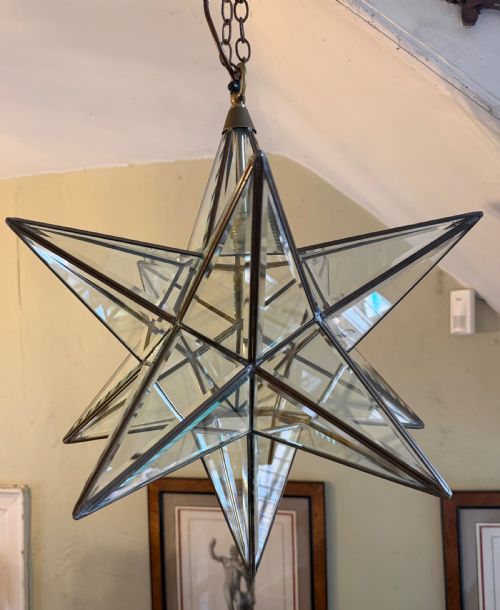
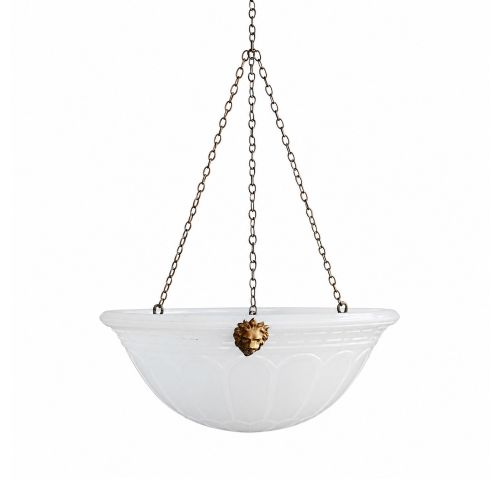
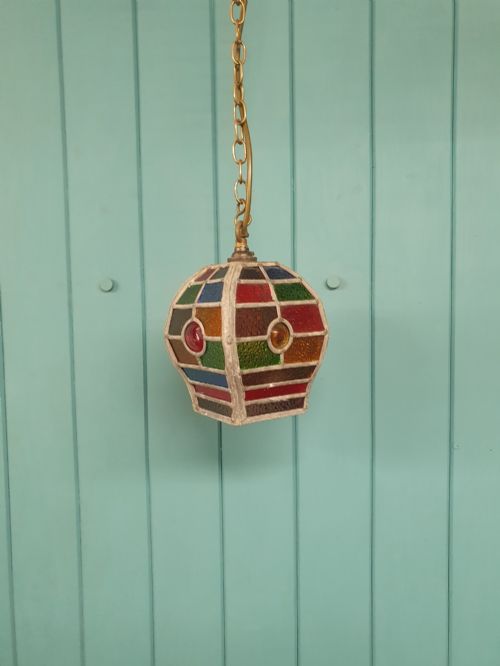
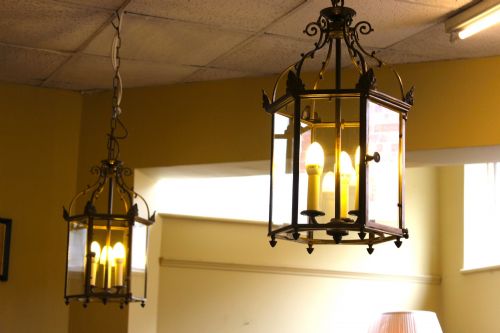
Most examples function as ceiling lights or pendants, configured for interior hallways or sheltered exterior entryways. Common architectural forms include multi-sided hexagons, bell jars, and distinctive multi-point stars reminiscent of Moroccan Damascus or Moravian work.
Materials and construction
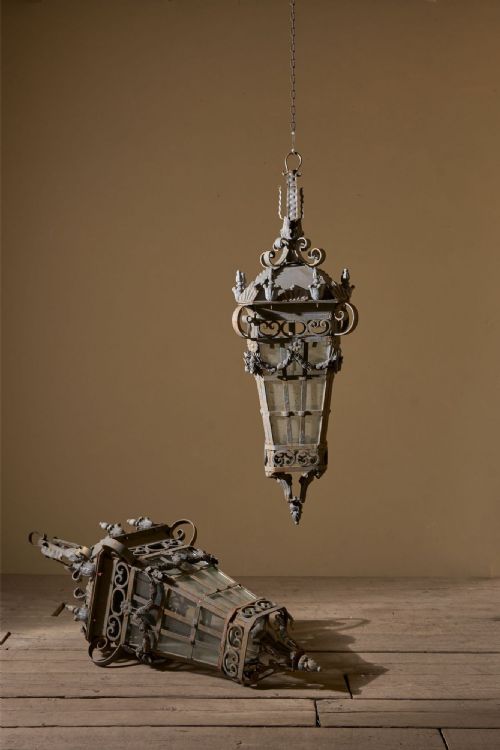
Construction relies heavily on structural metals such as brass, copper, iron, zinc, steel, and lead, which provide rigid framing for glazed panels. Frames are assembled through soldering, riveting, or leaded cames that hold individual panes securely in place.
Glazing varies from clear cut glass and frosted bell jars to bevelled plates and coloured or stained leaded glass. Exterior iterations incorporate weather-resistant combinations like iron and zinc, while interior hallway pieces favour polished brass, silver plating, or gilt brass.
Retail Price Guide 2026
Typical UK retail prices for early 20th century lantern, calculated from the Sellingantiques database of over a million retail prices indexed since 2003. This retail price guide relies exclusively on Sellingantiques data; no external sources or auction records are used, so the figures do not describe the wider market.
Some maritime survivors spent decades on the rails as authentic railway lanterns before finding quiet retirement in domestic hallways.
Assessing quality and build
Quality reveals itself in the weight of the metal frame and the precision of the glazing, particularly where bevelled or cut glass meets the metal ribs. Substantial gauge brass, heavy cast iron, and complex leaded stained glass point to higher craftsmanship than thin, pressed sheet metal.
Detailing differentiates standard production from finer output, seen in decorative fretwork, matched pairs, and distinct stylistic accents like Louis XV bows or multi-point stellar geometries. The integration of period-appropriate wiring methods also distinguishes pieces intended for functional interior display.
George F Pennington
The Early 20th Century Lantern Glossary
- Bevelled Glass
- Glass panes featuring angled, ground edges that refract light and add decorative depth to the lantern frame.
- Lead Came
- A slender rod of lead with a grooved profile used to hold individual pieces of stained or clear glass together in windows and light fixtures.
- Bell Jar Lantern
- A hanging light fixture enclosed within a curved, bell-shaped glass shade that diffuses illumination evenly.
- Arts & Crafts
- A design movement emphasising handcraftsmanship, simple structural forms, and local materials, often seen in geometric metal lanterns.
Frequently Asked Questions
Where should an early 20th century lantern be hung?
These fixtures suit high-ceilinged entrance halls, stairwells, and covered porches where their architectural proportions can be appreciated.
Smaller models work well in restricted corridors, while larger multi-light or paired pieces anchor expansive reception spaces.
Are these lanterns suitable for outdoor use?
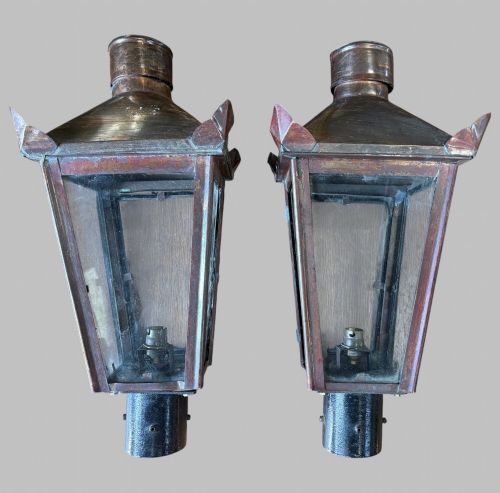
Many survive from exterior locations like porches or railway settings, constructed in robust metals such as iron, zinc, and copper.
Weather exposure varies by build, so exterior suitability depends on the specific sealing and metal treatment of each individual piece.
How do Edwardian and Arts and crafts styles differ?
Edwardian examples often display formal brass or silver-plated framing suited to refined interior hallways and formal reception rooms.
Arts and crafts versions prioritize honest metalwork, geometric hex shapes, and straightforward construction reflecting a distinct design philosophy.
Can these lights be wired for modern electrical systems?
Most surviving examples adapt readily to contemporary wiring standards while retaining their original exterior metal and glass housings.
Rewiring often incorporates authentic corded flex and modern safety testing to ensure reliable daily operation in a home.