
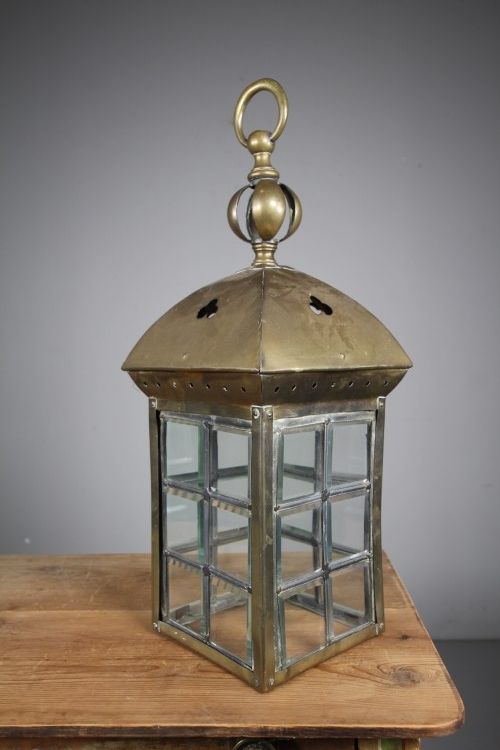
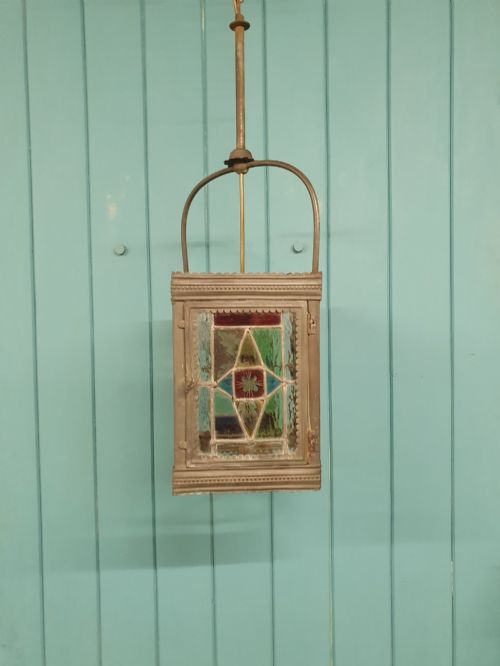


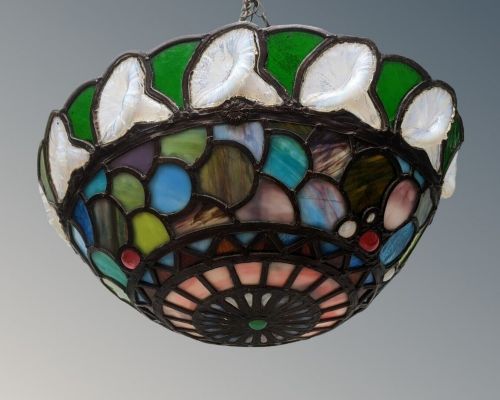
Leaded Glass Pendant Light
These leaded glass pendant light fixtures bring warmth and colour to high-ceilinged spaces through soldered panels and metal frames.

Leaded Glass Pendant Light
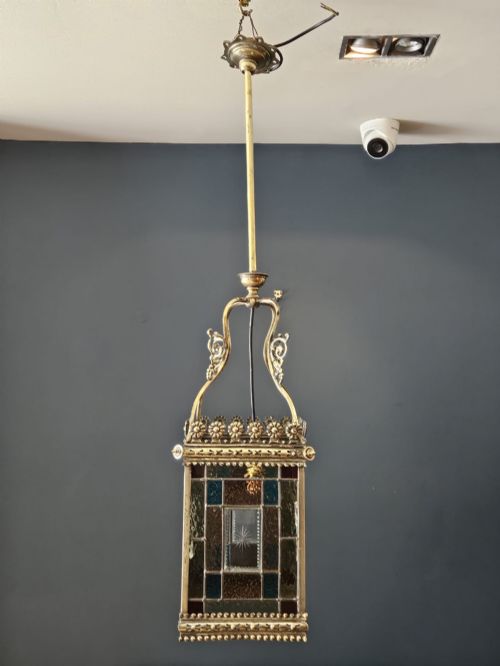
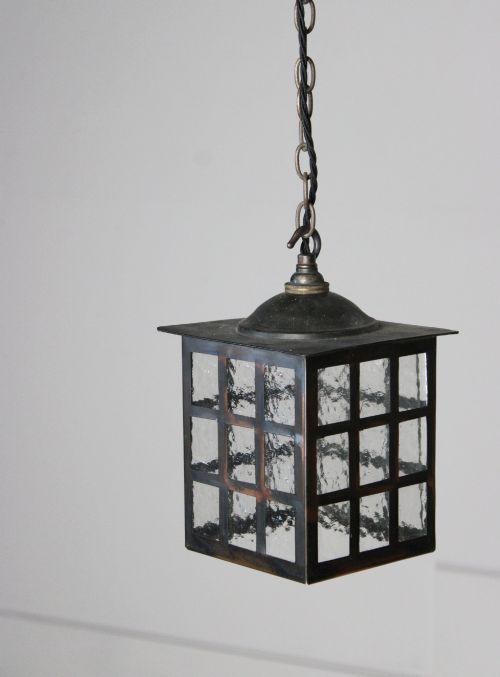
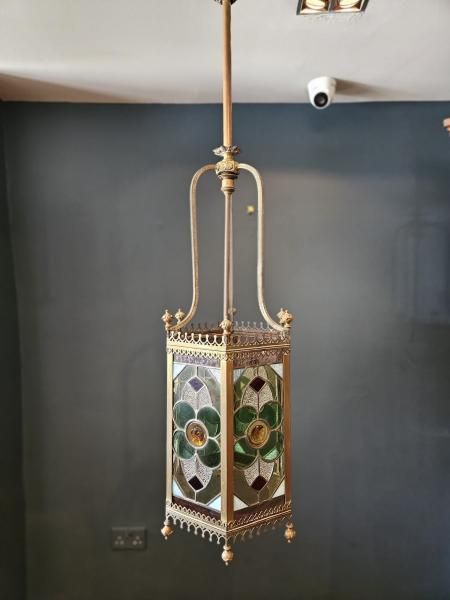
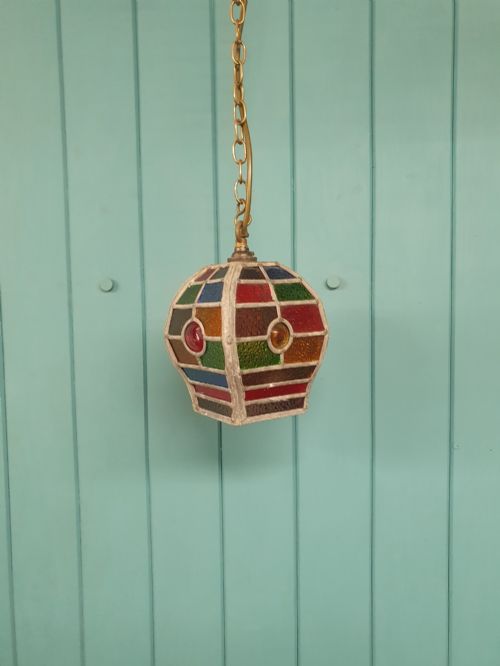
A leaded glass pendant light hangs from a ceiling chain or bracket, illuminating hallways and porches with patterned panes. Buyers searching for a leaded glass pendant light encounter hanging lanterns and ceiling fixtures dating from the nineteenth and early twentieth centuries. The selection includes Victorian, Edwardian, and Arts and Crafts examples designed to cast colourful light in entranceways.
Victorian and Gothic Revival pieces dominate the styles, often featuring brass, copper, or wrought iron frameworks. Smaller porch lanterns sit alongside larger cobalt blue lamps and French chateau designs, reflecting diverse domestic lighting needs of the past.
How they were made
Craftsmen joined individual panes of stained or clear glass using strips of lead, solder, and copper foil to form rigid geometric or pictorial shades. These glazed segments were then fitted into sturdy metal frames of brass, iron, or wrought copper.
Frames incorporated suspension loops and decorative brackets suited for hanging from ceilings, while metalwork techniques ranged from simple folded sheet brass to forged iron and elaborate Gothic revival tracery.
A solitary nineteenth-century English Gothic lantern arrives styled directly in the manner of Pugin.
What varies in quality
Quality rests on the weight and rigidity of the metal framework, the precision of the lead cames, and the depth of colour in the glass panels. Heavier cast brass and hand-forged wrought iron structures offer superior longevity compared to lighter gauge sheet metal.
The artistry of the glass selection also dictates value, with deeply saturated stained glass and complex soldering patterns representing finer workshop production than plain clear leaded panes.
The Leaded Glass Pendant Light Glossary
- Came
- The H-section lead strip used to hold individual pieces of glass together in a leaded window or shade. Thicker cames provide greater structural stability to larger pendant lanterns.
- Stained glass
- Glass coloured by the addition of metallic oxides during its manufacture. It forms the vibrant panels seen in Victorian and Arts and Crafts hanging lights.
- Hall lantern
- An enclosed ceiling pendant traditionally hung in entrance passages or stairwells. These fixtures protect the candle or bulb from drafts while casting decorative illumination.
- Wrought iron
- Iron that has been heated and hammered into shape by hand. This material appears frequently in French and Gothic revival ceiling fixtures for its strength and texture.
Leaded Glass Pendant Light: Frequently Asked Questions
Where should I hang a leaded glass pendant light?
These fixtures suit hallways, porches, and high-ceilinged rooms where their colourful glass panels can catch direct view. Their enclosed design protects the light source while casting patterns across surrounding walls.
Ensure adequate ceiling height for hanging models, particularly when placing them above walkways or entrance passages where clearance matters.
How do I date a leaded glass pendant?
Examine the metal frame, suspension hardware, and glass type to estimate the period of manufacture. Victorian and Gothic revival pieces often feature heavy brass or cast iron, while Edwardian and later Arts and Crafts examples utilise lighter copper or simpler geometric glass arrangements.
Archival pieces frequently point to specific decades between the mid-nineteenth century and the nineteen-twenties based on stylistic cues.
What is the difference between a hall lantern and a pendant?
A hall lantern specifically describes an enclosed, box-shaped or cylindrical hanging light designed for entrance spaces. Pendant lights represent a broader category that includes open shades and various ceiling-hung fixtures.
Both types rely on chains or rigid rods to suspend the light source from the ceiling.
Are these lights suitable for modern electrical systems?
Most antique hanging fixtures require professional rewiring to meet contemporary safety standards before installation. Electricians can adapt older brass and copper frames to accept modern bulb fittings without altering the exterior appearance.
Checking the internal wiring ensures the fixture safely handles standard household voltage.