




Hanging Glazed Display Cabinet
A hanging glazed display cabinet lifts your collection off the floor, securing treasured items behind glass against the wall.
Hanging Glazed Display Cabinet
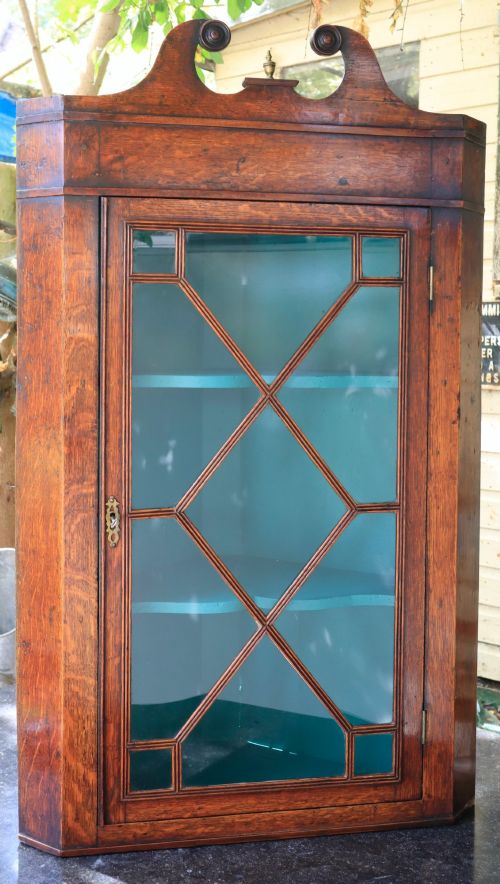
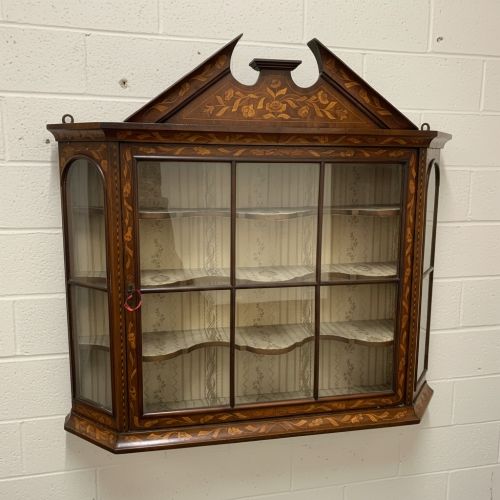
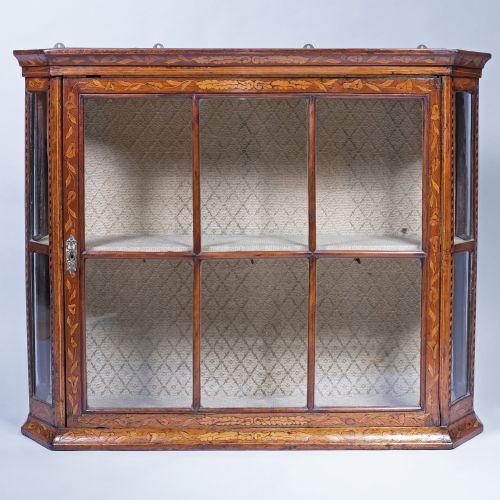
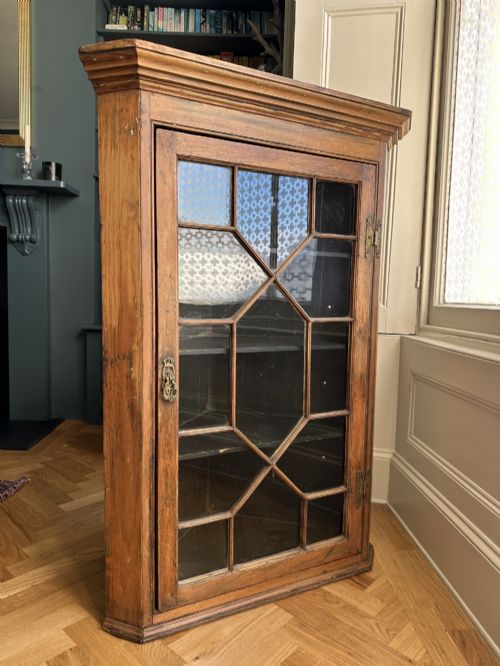
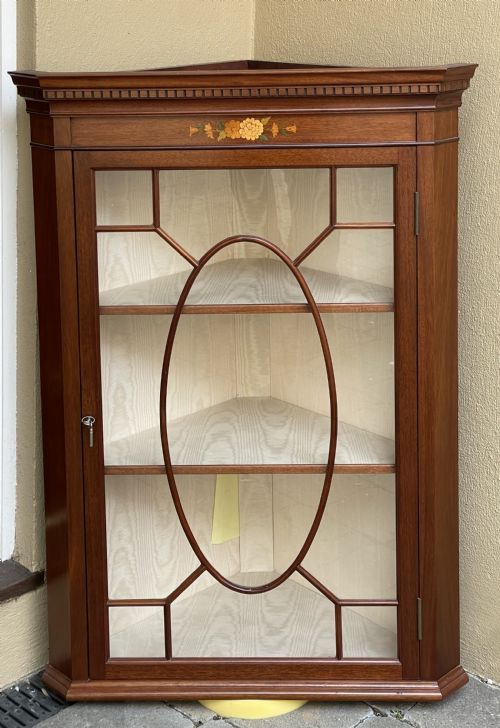
A hanging glazed display cabinet is a wall-mounted storage piece designed to showcase small objects safely behind glass panels. These pieces generally take the form of corner cupboards or flat-backed wall cabinets intended to save floor space while displaying contents at eye level.
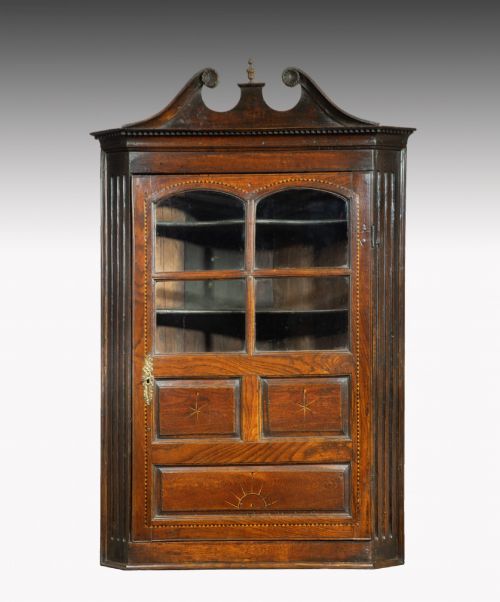
Most examples encountered here originate from the Georgian, Victorian, and Edwardian periods. Timber choices across these eras span mahogany, oak, walnut, and pine, frequently paired with single or multiple glazed doors.
Materials and construction
Cabinet makers utilised solid hardwoods such as mahogany, oak, and walnut for structural stability, occasionally applying satinwood inlay or marquetry for surface decoration. Glass panels were hand-fitted into wooden doors using wooden glazing bars, whilst brass fixtures provided hinges and locks.
Interior arrangements commonly relied on fixed or adjustable wooden shelves, sometimes accompanied by small drawers or painted backings. Construction techniques prioritised wall-mounting strength, employing sturdy top cornices and secure back panels to bear the weight of the timber and glass.
Distinctions in quality
Quality reveals itself in the selection of timber figures and the precision of inlaid details like satinwood stringing. Superior cabinets display meticulous joinery in the door frames and glazing bars, whereas simpler utilitarian versions rely on plain pine or basic oak construction.
The sophistication of the hardware, including original brass locks, working keys, and hand-blown glass panes, separates standard workshop production from finer bespoke commissions.
The Hanging Glazed Display Cabinet Glossary
- Glazing bar
- A wooden strip that holds individual panes of glass within a cabinet door. These bars form geometric patterns that define the period style.
- Corner cabinet
- A storage unit built with an angled back to fit directly into the corner of a room. This form maximises space utilisation in smaller chambers.
- Marquetry
- Decorative veneer work arranged in pictorial patterns using various coloured woods. This technique appears on high-status 18th-century pieces.
- Bow front
- A convex, outwardly curved front facade common on later cabinets. This shape softens the room's angles while expanding internal display depth.
Hanging Glazed Display Cabinet: Frequently Asked Questions
How do I hang a heavy antique cabinet safely?
Secure the cabinet directly into wall studs using appropriate heavy-duty fixings through the back panel. Distribute the weight evenly across the mounting points to protect old timber joints.
Check that the wall structure can support both the weight of the hardwood and the items placed inside the glass display area.
Are these cabinets suitable for damp rooms?
Antique timbers like mahogany and oak react poorly to excessive moisture and fluctuating humidity. Placing them in damp environments risks warping the wood and rusting original brass hinges.
Keep these wall units in stable, dry interior spaces to preserve the integrity of the glass seals and interior linings.
How do I identify a Georgian corner cabinet?
Look for traditional proportions, architectural cornices, and timber choices such as rich mahogany or figured oak. Many Georgian examples feature panelled lower sections or multi-pane glazed doors.
Examine the construction methods inside, where hand-cut dovetails and pegged joints indicate period craftsmanship.
Can I adjust the shelves inside?
Most antique cabinets feature fixed wooden shelving integral to the original structural support of the hanging carcass. Altering these fixed interiors is generally not recommended as it compromises historical fabric.
Review the internal dimensions beforehand to ensure your specific collection fits the existing shelf spacing.