





Victorian Mahogany Wall Shelves
Victorian mahogany wall shelves offer practical display space and architectural timber character for any room.
Victorian Mahogany Wall Shelves
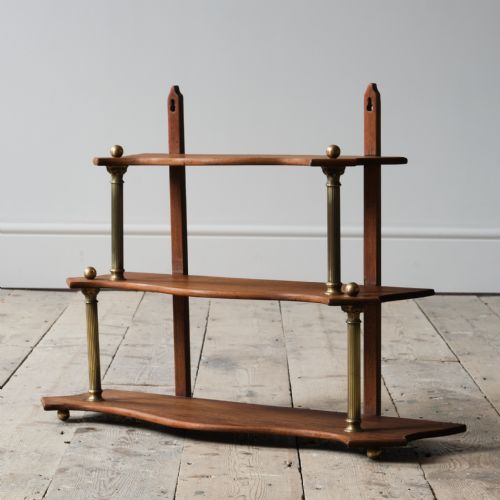
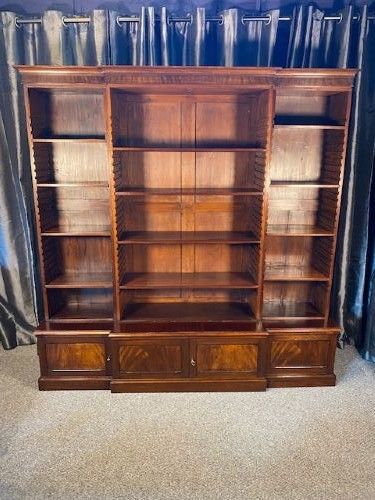
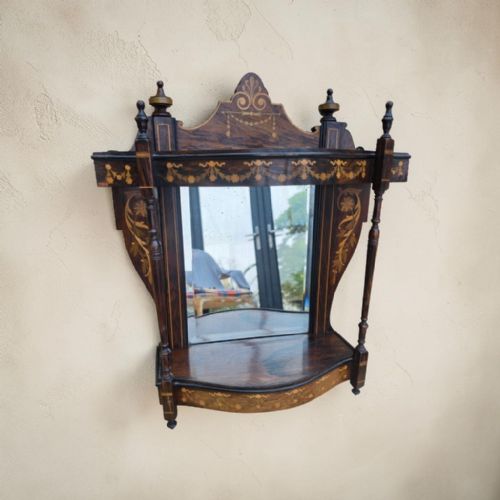
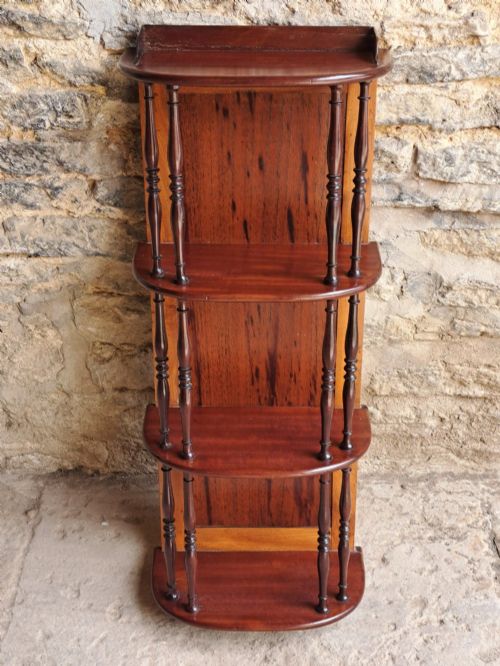
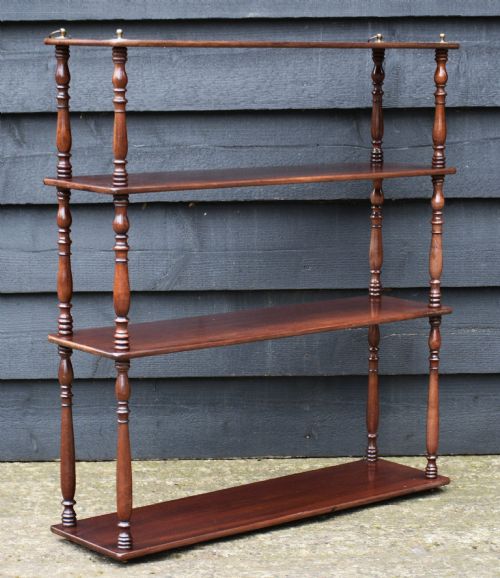
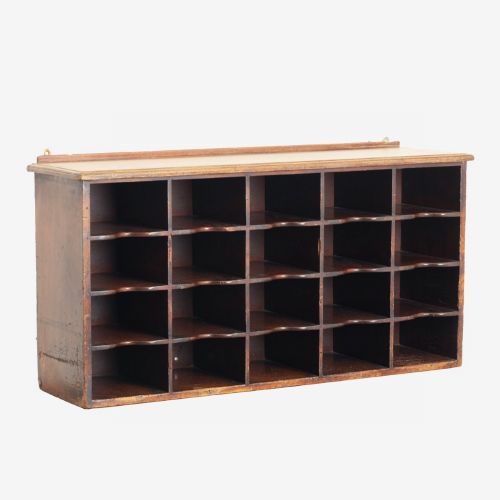
Victorian mahogany wall shelves include hanging shelves, tiered bookcases, and wall-mounted display units designed to save floor space while displaying books and ornaments. These pieces range from simple two-tier open shelves to elaborate three-tier hanging units with fretwork, mirrors, and shaped supports.
The selection on this page shows numerous examples originating from the nineteenth century, alongside related items such as wall brackets, mirrors, and bookcases. Buyers frequently encounter standard rectangular wall shelves as well as specialised corner units, waterfall designs, and galleried whatnots.
Most items reflect the Victorian period and surrounding decades, utilising solid timbers and rich veneers to create functional wall storage. These pieces combine utility with decorative carving, turning ordinary wall surfaces into focal points for small collections and display objects.
Judging quality
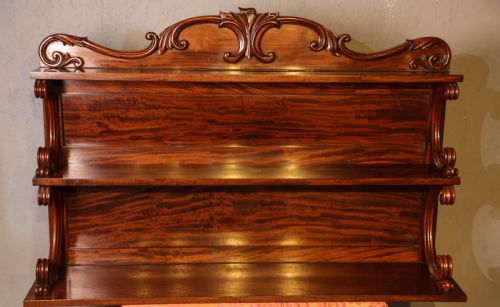
Quality rests upon the selection of timber grain, the crispness of carved fretwork, and the integrity of glued joints on hanging structures. Pieces utilising figured flame mahogany or fine boxwood inlay demonstrate greater workshop ambition than plain softwood-backed alternatives.
Construction methods also separate standard production items from finer work, visible in the neatness of turned bobbin supports, well-fitted brass galleries, and secure mounting brackets. Original glass mirrors and intact fretwork panels further elevate a piece.
Some shelves include chunky brass galleries designed specifically to stop shipboard cups from sliding off during rough weather.
The Victorian Mahogany Wall Shelves Glossary
- Whatnot
- A set of open shelves for displaying small objects or books. These tiered wall units were popular for organising ornaments.
- Fretwork
- Ornamental perforated wood cutting created with a scroll saw. This technique produced intricate pierced patterns on shelves and mirror frames.
- Gallery
- A raised rim or rail bordering the edge of a shelf. It kept items from sliding off floating display tiers.
- Bobbin turning
- A type of furniture turning shaped like a string of bobbins or spools. This rhythmic detail appeared frequently on nineteenth-century upright supports.
- Veneer
- A thin layer of figured wood applied to a stable underlying timber. Flame mahogany veneer added dramatic grain patterns to flat surfaces.
Victorian Mahogany Wall Shelves: Frequently Asked Questions
How do I hang antique wall shelves safely?
Wall shelves require secure fixings anchored directly into wall studs or masonry using appropriate wall plugs and screws. The weight of heavy timber and displayed books demands robust hardware to prevent pulling away from the plaster.
Checking the original hanging loops or adding modern brackets behind the frame ensures the piece remains stable under load.
Were these shelves meant for books or ornaments?
Makers constructed these hanging units for both small libraries and decorative ornaments depending on the shelf depth and overall strength. Shallower tiers suited cabinet porcelain, small statues, and curiosities.
DeEper or sturdier three-tier formats accommodated portable bookshelves and heavier volumes in studies or parlours.
How do I clean mahogany wall shelves?
Dusting with a soft, dry cloth removes everyday grit without disturbing the aged polish of the wood. Avoiding harsh chemical sprays preserves the antique patina accumulated over generations.
Applying a traditional beeswax polish occasionally maintains the moisture and natural glow of the mahogany grain.
How can I tell a Victorian shelf from a later reproduction?
Nineteenth-century pieces show period construction traits including hand-cut joinery, older fixings, and natural timber shrinkage over time. The patination on the wood develops a deep, mellow tone difficult to replicate on modern items.
Examining the backing boards and secondary woods often reveals the age and manufacturing methods used by period workshops.