



Victorian Glazed Wall Cabinet
These Victorian glazed wall cabinets bring functional storage and display to tight spaces, using glass and timber to showcase small possessions.
Victorian Glazed Wall Cabinet
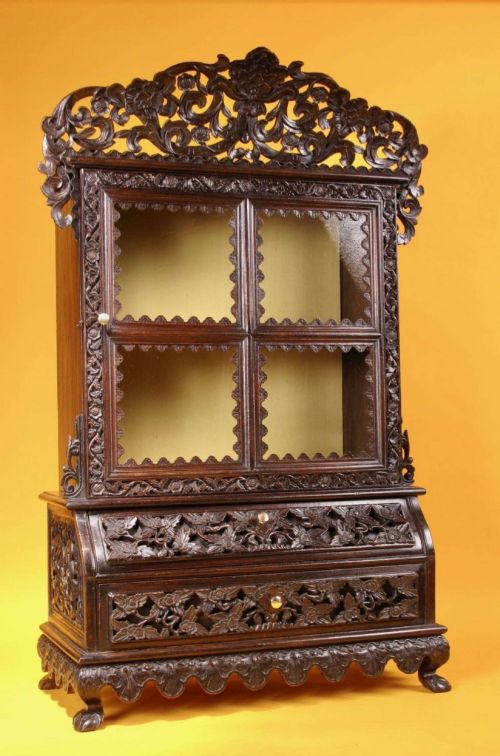
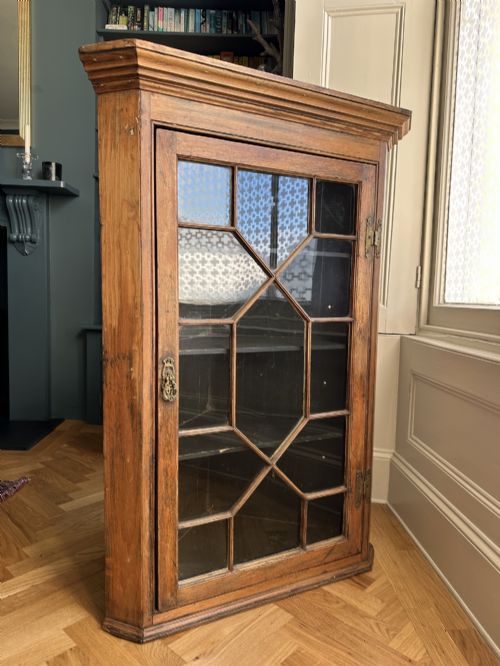
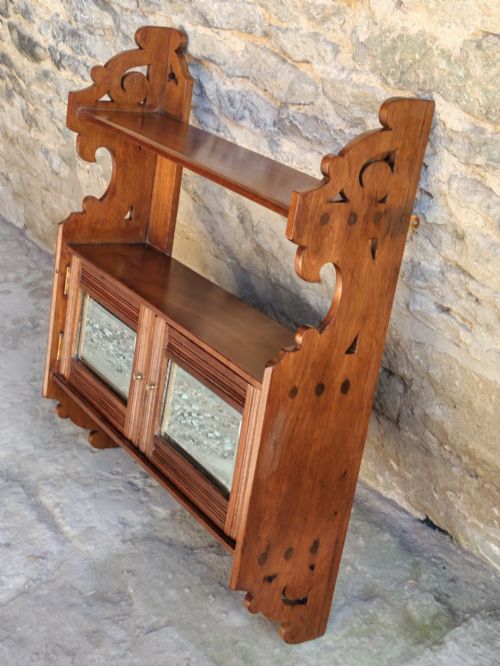
A victorian glazed wall cabinet is a compact hanging or corner storage piece designed to keep small items visible behind glass doors. The pieces seen here span the nineteenth century into the Edwardian period, appearing in both flat-wall and corner formats.
Most examples utilise timbers such as mahogany, walnut, oak, and pine. They serve as display spaces for ceramics, small books, or decorative objects, utilising wall space rather than floor space in the home.
How They Were Made
Cabinet makers constructed these pieces using solid hardwoods like mahogany and walnut alongside softer timbers like pine and oak. Brass hardware such as hinges and escutcheons secured the doors and added functional detail.
Glazing techniques framed panes of glass within timber doors, sometimes incorporating mirrors at the back to reflect light through the interior. Painted finishes, inlaid veneers, and carved elements appear across various styles from Gothic Revival to Aesthetic Movement.
Victorian Glazed Wall Cabinet Retail Price Guide 2026
Typical asking prices for victorian glazed wall cabinet among the pieces listed under this phrase on Sellingantiques today, from the lower quarter to the upper quarter. They describe what is for sale here now, not the wider market.
One unexpected survival is a night porter's lined key cupboard.
What Varies in Quality
Quality rests on the choice of timber and the precision of the joinery rather than mere age. Finer pieces display carefully matched wood grains, tight dovetail joints, and well-fitted doors that hang true.
The sophistication of decorative details sets apart better examples, such as inlaid veneers, original brass fixtures, and intricate glazing bars. Simpler pine cupboards rely on utilitarian construction and painted surfaces.
John Ridgway·Minton
The Victorian Glazed Wall Cabinet Glossary
- Astragal glazed
- A method where wooden bars divide glass panes within a door frame. This technique is frequently seen on corner cupboards from the nineteenth century.
- Bow front
- A convex curved cabinet front that projects outward from the corners. This shape softens the profile of wall-mounted and corner units.
- Breakfront
- A piece where the central section projects forward from the flanking wings. It adds architectural depth to larger wall cabinets and bookcases.
- Inlaid
- The insertion of contrasting woods or materials into recesses cut into the primary surface. This ornament elevates plain timber panels on Victorian furniture.
- Hanging cabinet
- A storage unit built with brackets or fixings intended to be suspended directly from a wall. These pieces maximise room space by avoiding the floor.
Victorian Glazed Wall Cabinet: Frequently Asked Questions
Where should I hang a wall cabinet?
These cabinets suit hallways, kitchens, or living spaces where floor area is limited. They need secure fixings into wall studs or masonry to support the weight of timber and glass.
Placing them at eye level allows the contents behind the glass door to be easily seen and accessed.
How do I care for the timber?
Dust the wood regularly with a dry cloth and avoid placing the cabinet in direct sunlight or damp areas. Environmental shifts can cause older timbers and veneers to warp or crack.
Apply a suitable wax polish occasionally to nourish the surface without building up excessive residue over time.
Are corner cabinets practical?
Corner units utilise awkward room angles that standard flat furniture cannot occupy. They fit snugly into wall junctions while offering useful enclosed shelf space.
The triangular interior shape suits smaller collections of plates, glassware, or books.
How do I spot a Victorian piece?
Examine the timber, construction methods, and hardware for signs of nineteenth-century manufacture. Dovetailed joints, hand-cut screws, and native hardwoods like mahogany or walnut point toward the period.
Styles such as Gothic Revival or the Aesthetic Movement provide further stylistic clues to dating.