


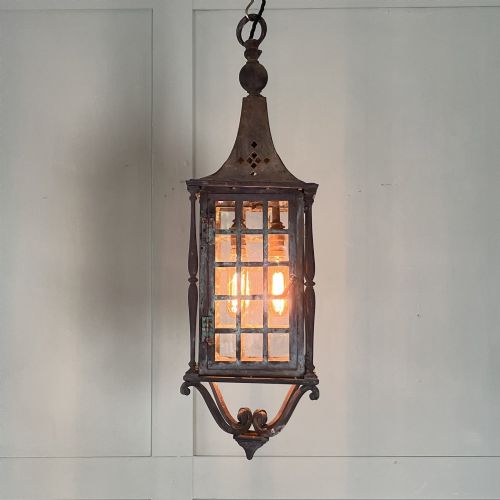
Hanging Glass Light
When you search for a hanging glass light, you enter a world of suspended illumination shaped by brass, crystal, and decades of decorative style.
Hanging Glass Light
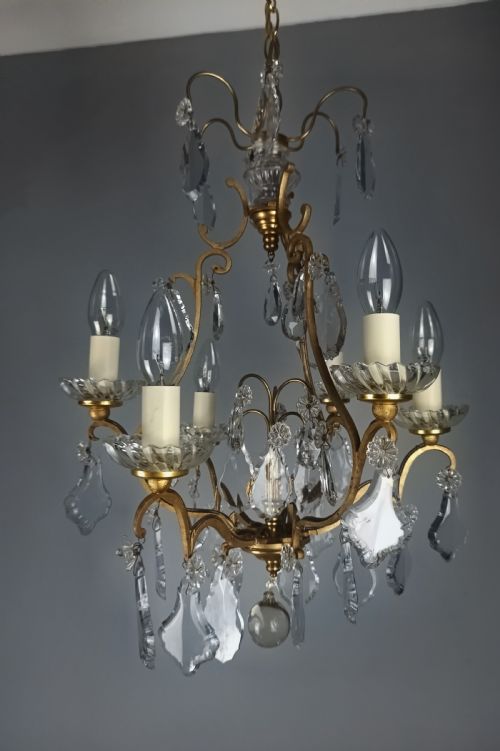
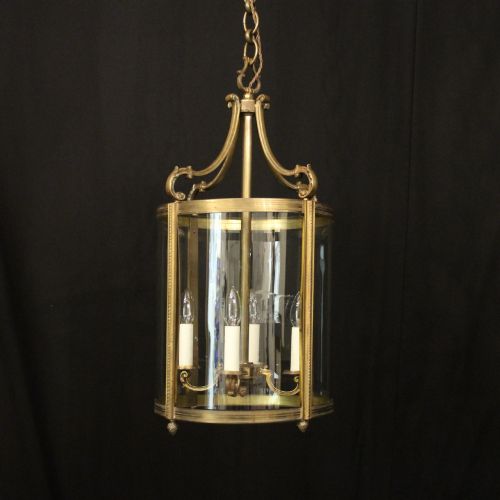
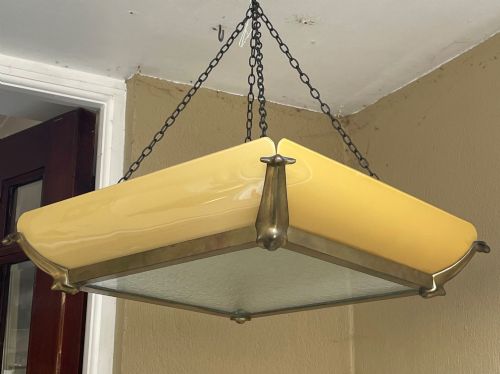
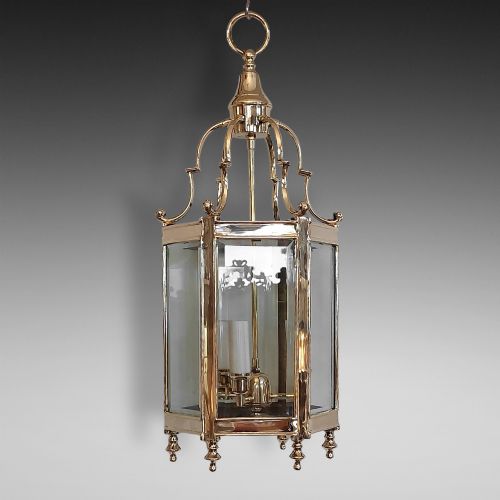
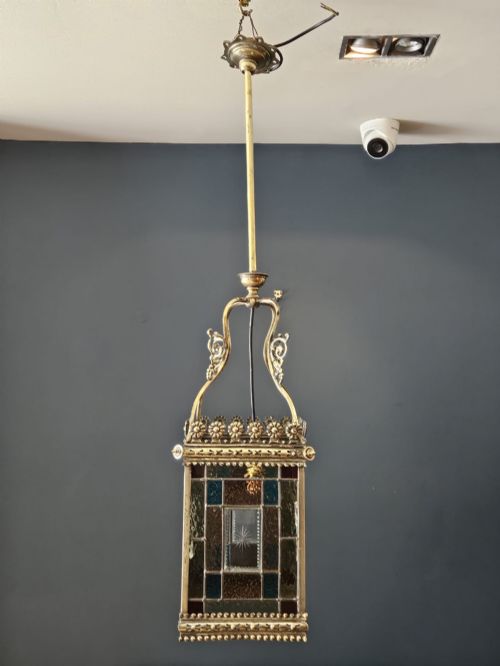
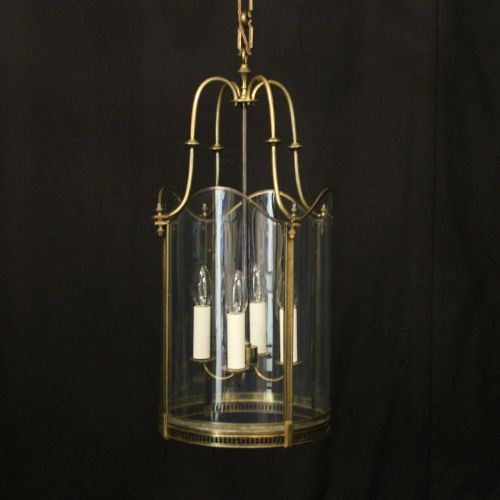
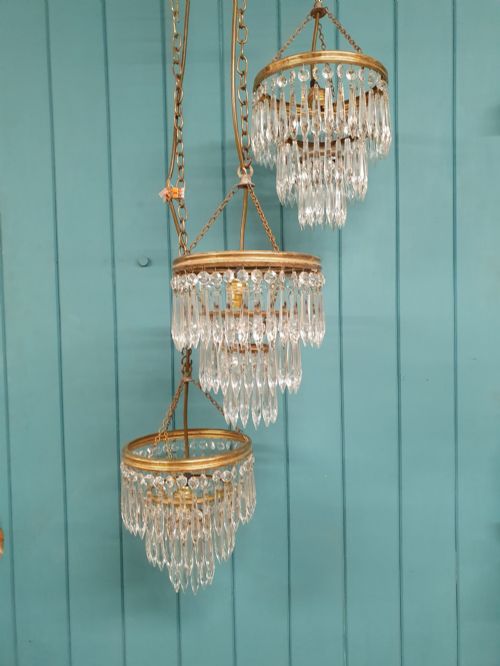
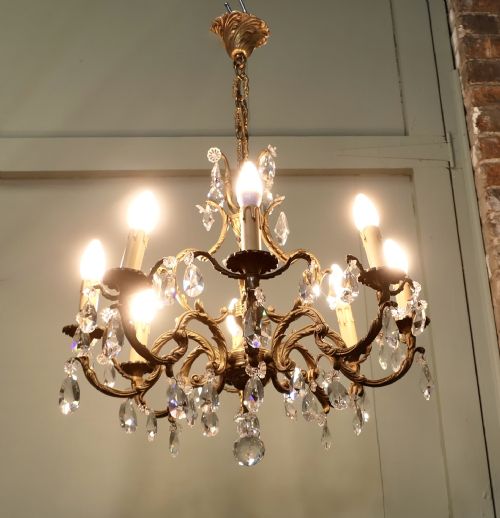
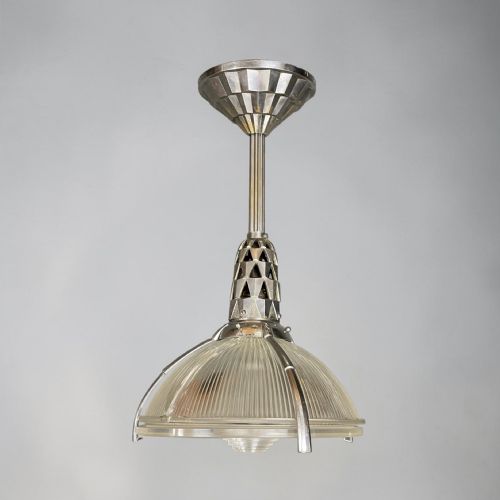
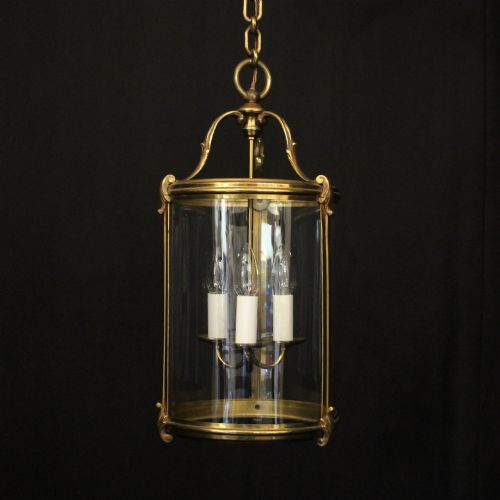
A hanging glass light comprises overhead illumination fixtures suspended from ceilings to cast light downwards through transparent, frosted, or coloured panes and shades. The selection ranges from robust Victorian leaded lanterns to sleek Art Deco opaline globes and multi-armed French chandeliers. You will frequently encounter brass-framed hall lanterns and simple glass pendants designed to brighten corridors and reception rooms.
The origin of these fixtures spans British workshops, French salons, and Italian studios across the nineteenth and early twentieth centuries. Forms shift from ornate Gothic revival and Rococo frames to clean geometric lines of the 1920s and 1930s. They serve both practical illumination and architectural punctuation in domestic spaces.
How they were made
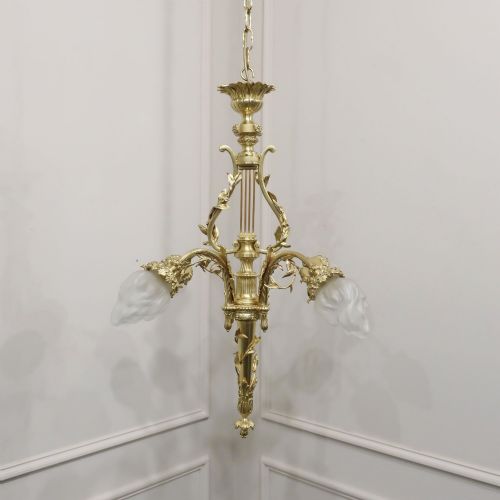
Makers constructed the structural frames of these hanging glass lights using cast and spun brass, gilt bronze, copper, and iron. Metal components were often pierced, chased, or gilded before securing delicate glass elements within their framework.
The glass itself required specialised handling, utilising techniques such as mould-blowing opaline and milk glass, hand-cutting lead crystal, and assembling stained or bevelled panes into lead cames. Etched and opalescent panels demonstrate the era's proficiency in surface ornamentation.
The listings span from the 1860s through the 1930s, encompassing Victorian, Edwardian, Arts and Crafts, and Art Deco styles.
What varies in quality
The distinction between tiers rests upon the weight of the cast metal frame and the clarity of the glass. Superior examples feature heavy gilt bronze or solid brass armature paired with hand-cut, bevelled, or heavily lustred glass that refracts light cleanly.
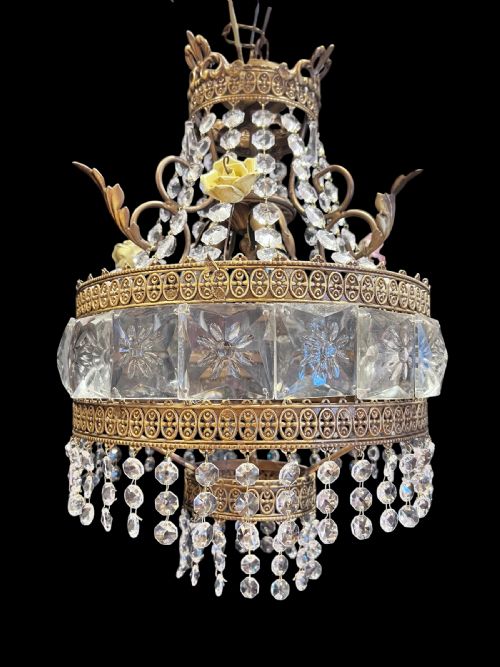
Subtlety of detail separates fine output from standard commercial production, visible in the crispness of chased brass motifs, the precise joining of leaded panels, and integrated decorative touches like porcelain flowers or etched flora.
Émile-Jacques Ruhlmann
The Hanging Glass Light Glossary
- Plafonnier
- A ceiling-mounted or shallow hanging bowl light made of glass or porcelain. It sits close to the ceiling plane.
- Opaline glass
- An opaque, milky-white glass popular in nineteenth and early twentieth-century lighting. It diffuses light into a soft glow.
- Ormolu
- Finely chopped or ground gold applied in a mercury amalgam to bronze. It creates a rich, lasting metallic lustre on period frames.
- Leaded glass
- Individual pieces of glass joined together by strips of lead called cames. This technique creates geometric or pictorial patterns.
Hanging Glass Light: Frequently Asked Questions
Where should I hang a glass pendant?
These fixtures suit entryways, stairwells, and dining tables where direct, downward illumination is required. They create a focal point while providing functional height.
Ensure adequate ceiling clearance for lower-hanging chandeliers and lanterns, particularly in high-traffic hallways.
How do I date a glass lantern?
Examine the metal construction and the fastening methods used on the glass panels. Victorian pieces often use heavy leaded construction, whilst 1930s examples lean towards chrome and opaline globes.
Stylistic cues such as Arts and Crafts hand-hammering or Art Deco geometric symmetry also point to specific decades.
Are these lights compatible with modern wiring?
Most antique fixtures can be professionally re-wired to meet current electrical standards. Standard bulb holders are usually fitted inside the original frame during restoration.
Consult a qualified electrician to ensure the ceiling mount safely supports the weight of bronze and crystal fittings.
How do I clean antique glass shades?
Remove delicate shades and glass panels from the metal frame where possible to prevent accidental damage. Wash them gently in lukewarm water with mild soap.
Dry thoroughly with a soft cloth before reassembling to maintain the clarity of cut crystal or opaline surfaces.