




Handwoven Turkmen Textile
Handwoven turkmen textile pieces are tribal weavings from Central Asia created for nomadic life and domestic utility by specific tribal groups.
Handwoven Turkmen Textile
A handwoven turkmen textile is a tribal artefact originating from Central Asia, produced across the nineteenth and early twentieth centuries by groups such as the Tekke, Yomut, Saryk, and Ersari tribes.
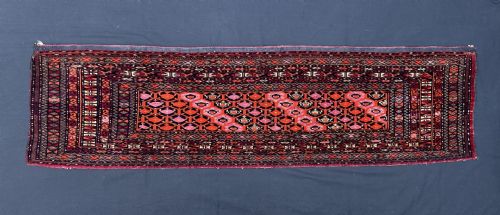
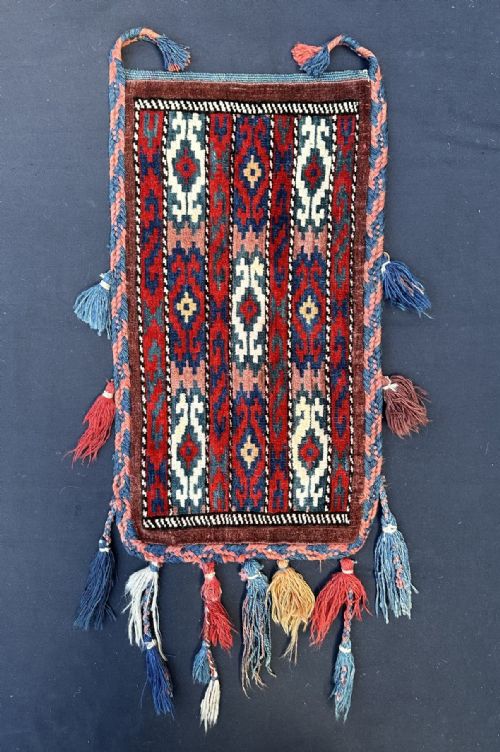
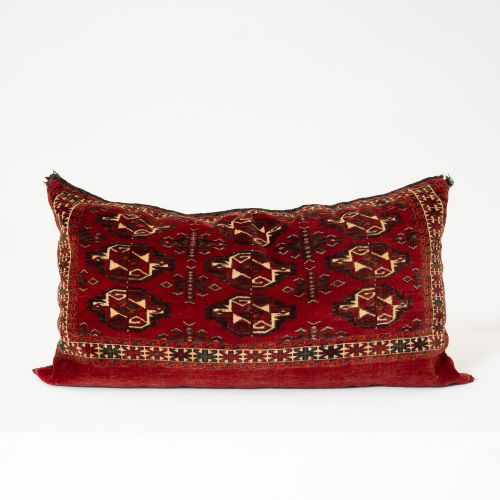
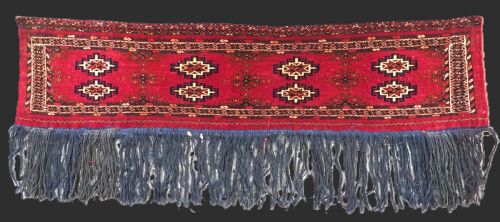
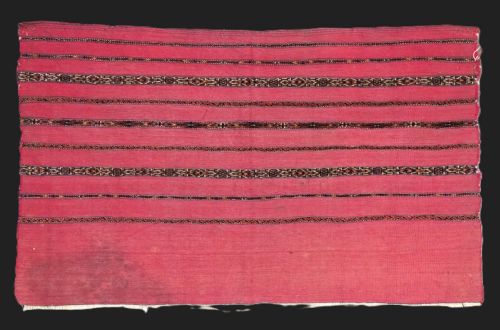
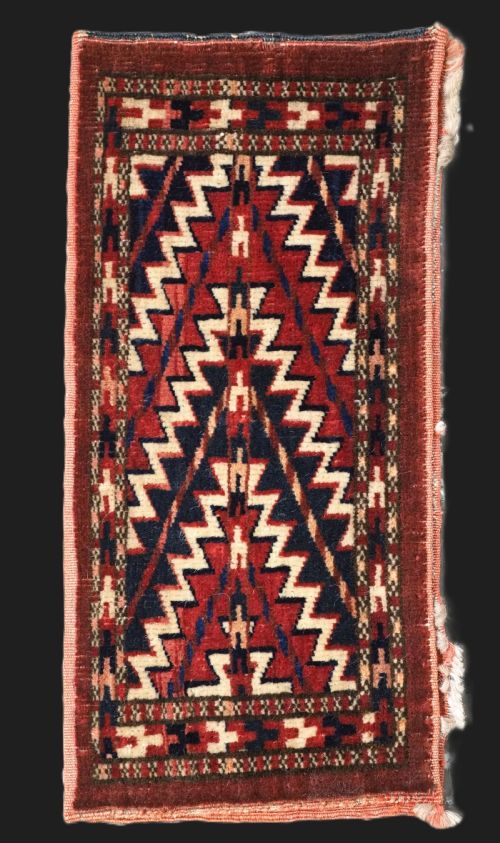
The most common forms encountered on this page are functional domestic and ceremonial items, including torbas, chuvals, storage bags, and tent trappings.
These pieces served practical roles in nomadic settlements, functioning as storage containers, horse covers, and tent decorations rather than purely decorative pictures.
How They Were Made
Makers utilised hand-spun wool and cotton foundations, dyed primarily with natural colourants to achieve deep red and brown grounds characteristic of the region.
Weavers employed tight knotting and fine weave techniques, occasionally incorporating glass beads or plain weave wool backs for structural durability.
Materials recorded across the inventory include hand-spun wool, cotton, natural dyes, and glass beads.
What Varies in Quality
The density of the knotting and the fineness of the weave separate standard utilitarian examples from exceptional dowry pieces created with greater care.
Clarity of design execution, such as the precision of the gul motifs and the saturation of the natural dyes, determines the visual impact of each weaving.
The Handwoven Turkmen Textile Glossary
- Gul
- A medallion motif repeated across tribal rugs and trappings. Different tribal groups developed distinct variations of these primary octagonal forms.
- Torba
- A small storage bag used inside nomadic tents. These pieces frequently display intricate field designs and were often produced as part of dowry groupings.
- Chuval
- A large storage bag utilised for bedding and household possessions. They typically feature multiple rows of guls on the face.
- Asmalyk
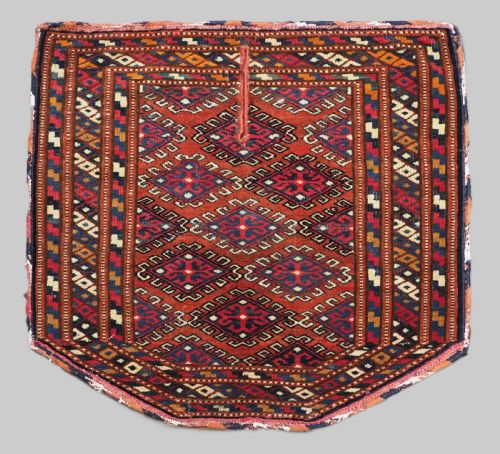
- A pentagonal ceremonial trapping hung on the flanks of a camel during wedding processions. These are scarce nomadic items.
- Kapunuk
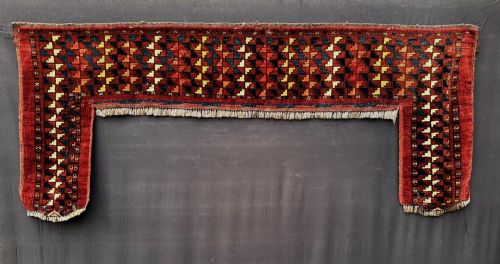
- A doorway hanging placed around the entrance of a yurt. They display specific structural shapes designed to frame tent openings.
Handwoven Turkmen Textile: Frequently Asked Questions
What is a torba used for?
Torbas served as small storage sacks inside nomadic tents, holding personal items or household goods.
They were often woven as part of a bride's dowry, displaying the specific tribal motifs of her group.
How do I identify a Yomut weaving?
Yomut pieces originate from the Trans-Caspian steppes and frequently utilise distinct motifs like the kepse or ashik gul.
Their palette often incorporates deep browns and rich reds combined with precise geometric field arrangements.
What are camel trappings?
Camel trappings are large ceremonial textiles created for wedding processions and festive tribal events.
Items like asmalyks were draped over the animal during these rituals to display the status and weaving skill of the family.
How should I care for a textile?
Keep textile pieces out of direct sunlight to protect natural wool dyes from fading over time.
Gentle vacuuming with a low suction setting helps remove dust without damaging the hand-spun fibres.