
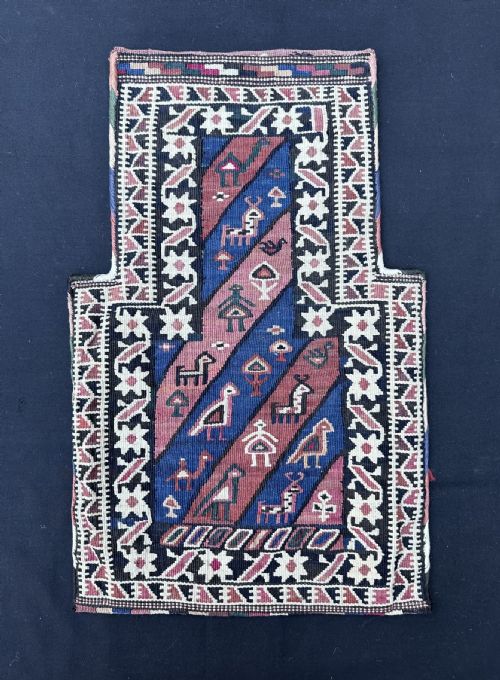
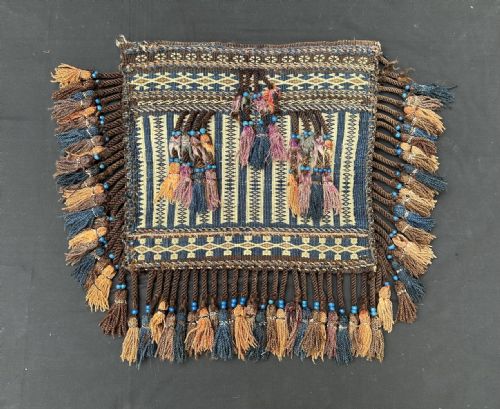
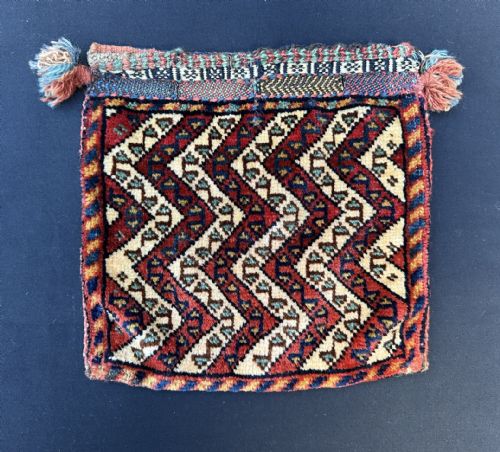




Handwoven Tribal Storage Bag
These handwoven tribal storage bag examples are nomadic textiles from Persia, Afghanistan, and Central Asia, prized for their durable utility and rich wool pile.
Handwoven Tribal Storage Bag
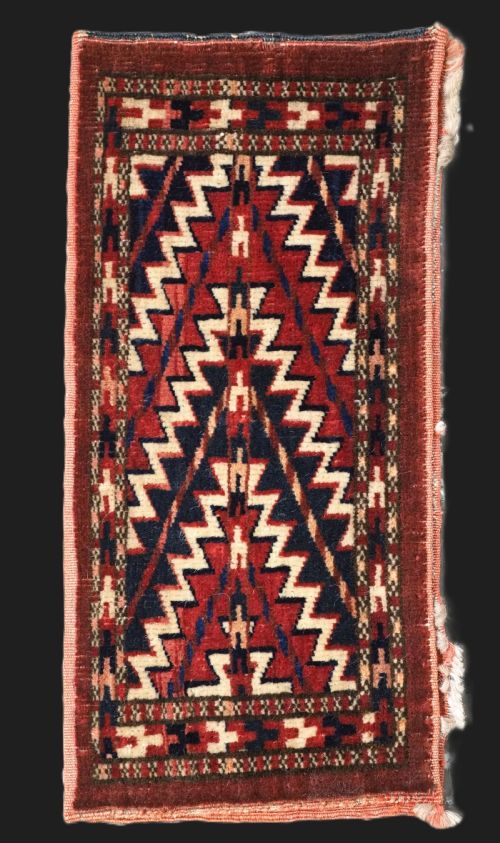
When you search for a handwoven tribal storage bag, you encounter utilitarian nomadic textiles created by various tribal groups across Persia, Afghanistan, and Turkmenistan. These pieces include salt-bags, vanity-bags, spindle-bags, tent-pole bags, and larger storage bagfaces or torbas produced throughout the nineteenth and early twentieth centuries.
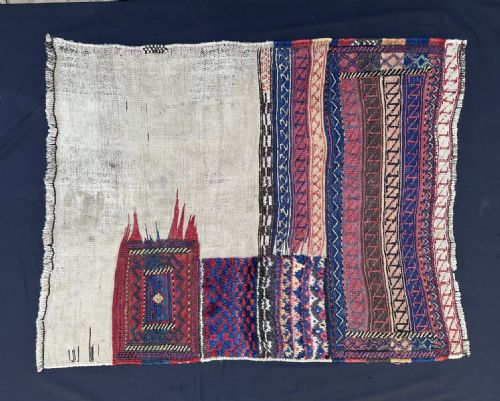
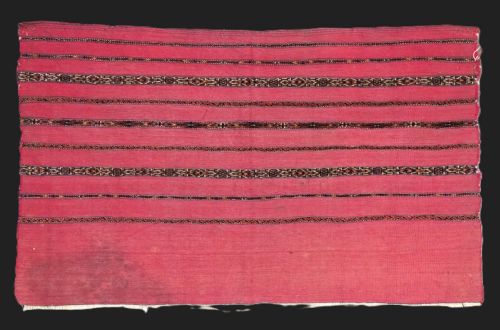
The version you are most likely to meet on this page is a Turkmen chuval or torba, alongside Persian tribal pieces from Baluch, Lori-Bakhtiari, Qashqa'i, and Afshar makers. Many retain their plain-weave backs, showing how they functioned as practical containers inside tents and dwellings before entering the antiques market.
What Varies in Quality
The finesse of the weave sets apart exceptional examples, visible in the density of the knots and the crispness of traditional gul or geometric motifs. Handling finer materials elevates certain pieces above standard utilitarian items.
Completeness also dictates standing among these bags, particularly the presence of an original plain-weave back or intact side cords. Preservation of the natural dye saturation over generations distinguishes the finest specimens.
The listings on this site span production dates from the mid-nineteenth century through the early twentieth century, focusing on wool and natural dyes.
The Handwoven Tribal Storage Bag Glossary
- Chuval
- A large storage bag traditionally used by Turkmen tribes for household goods and bedding. These pieces often feature multiple rows of guls across the face.
- Torba
- A smaller Turkmen storage bag, typically wider than it is tall, used for hanging inside a nomadic tent. They frequently display intricate secondary motifs along the borders.
- Mafrash
- A rectangular storage bag or valise used in sets for transporting belongings during tribal migrations. They employ banded flatweave or pile techniques.
- Gul
- A primary medallion or repeating floral-like octagonal motif found extensively in Turkmen weaving. Each tribe utilised distinct variations of these primary designs.
- Balisht
- A small rug-faced pillow or storage bag originating from Baluch weaving traditions. These items served functional roles within nomadic living spaces.
Handwoven Tribal Storage Bag: Frequently Asked Questions
What were these storage bags used for?
Nomadic tribes utilised these bags to store salt, grain, spindle wool, personal items, and household goods inside tents. Their sturdy construction allowed them to withstand the rigours of seasonal migration and daily camp life.
Many bags doubled as containers loaded onto pack animals during moves. Once inside the dwelling, they hung from tent poles or stacked against walls to keep belongings organised.
How do I live with a tribal storage bag?
These textiles adapt well to modern interiors as small wall hangings, table runners, or accent pieces on benches. Their robust wool and flatweave backs make them resilient for everyday display.
Keep them away from direct, harsh sunlight to protect the natural dyes. Gentle vacuuming without a rotating brush helps maintain the wool pile over time.
How can I tell different tribal groups apart?
Tribal attribution relies on distinctive design structures, specific colour palettes, and structural weaving habits. Turkmen pieces frequently feature repeating guls, whilst Persian tribal bags show varied geometric and pictorial layouts.
Materials also offer clues, such as the goat hair edges on Baluch pieces or the specific depressed warps in certain Persian workshops. Comparing secondary borders helps confirm regional origins.
Are these bags complete with their backs?
Many surviving examples retain their original plain-weave wool backs, which show how the containers were constructed. Some pieces exist only as bagfaces where the back has worn away or was removed.
Listings specify whether a bag is complete with its back. Those retaining the full structure command distinct interest from collectors seeking original formats.