





Handwoven Tribal Bag Face
A handwoven tribal bag face brings nomadic heritage into a modern room through rich wool and expressive symbols.
Handwoven Tribal Bag Face
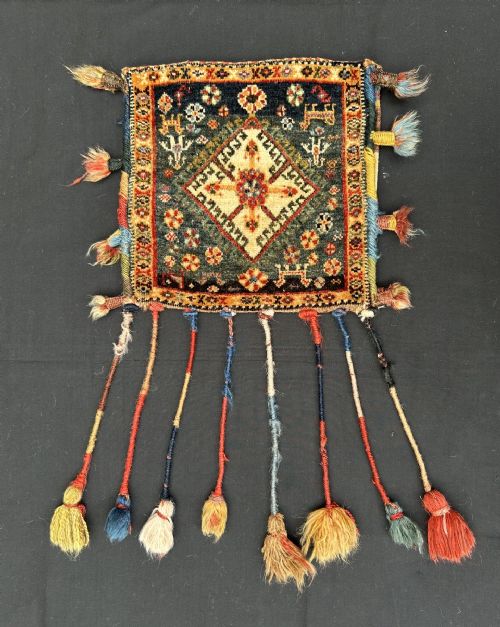
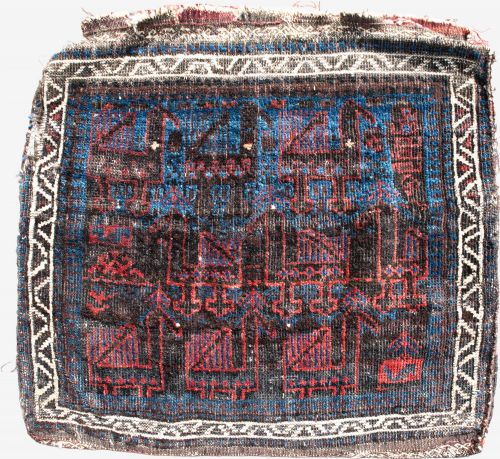
A handwoven tribal bag face represents the surviving front panel of a utilitarian nomadic container, such as a saddlebag, storage sack, or personal pouch. These textiles were produced by tribal groups across Persia, Central Asia, and Afghanistan during the nineteenth and early twentieth centuries.
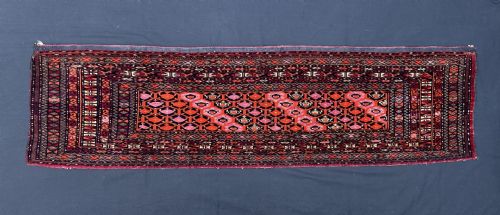
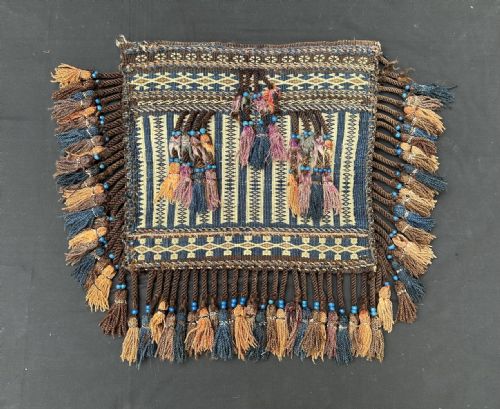
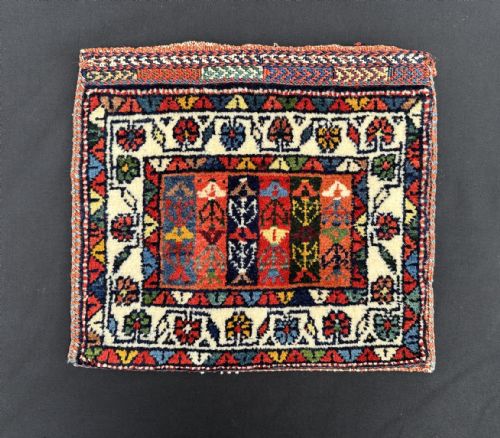
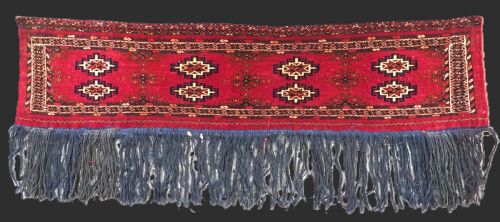
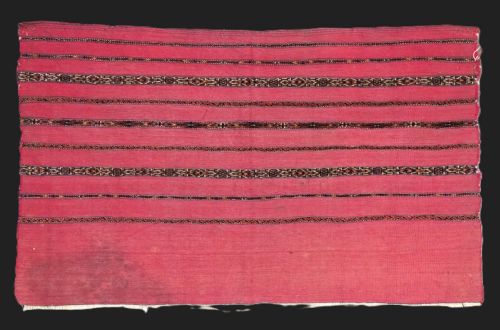
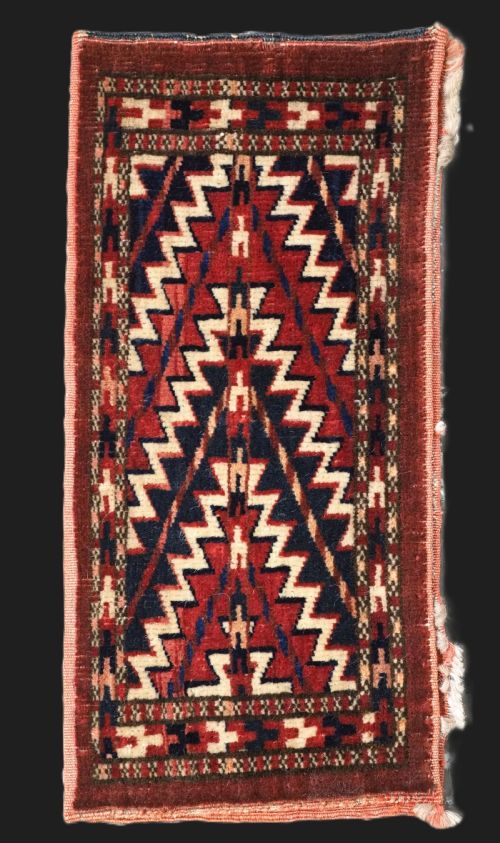
The pieces available on this page encompass various regional types, including Turkmen torbas and chuvals, Persian Qashqai and Afshar chantehs, and Baluch grain bags. Many have been repurposed historically or converted into cushions and decorative wall panels while retaining their original woven fronts.
How they were made
Weavers constructed these textiles primarily using hand-spun wool and cotton foundations, occasionally incorporating silk or glass beads for detail. Natural dyes provided the deep reds, blues, and browns that define the palette.
The faces are typically worked in a dense knotting technique or flatweave structure, designed to withstand the rigours of nomadic life. Artisans repeated tribal guls, geometric motifs, and bird designs with precise symmetry.
What varies in quality
The distinction between ordinary and exceptional pieces lies in the density of the weave and the clarity of the design. A finer knot count permits greater intricacy in tribal guls and secondary ornaments.
Depth of colour and the skilful handling of natural dyes also dictate distinction. Superior examples display vibrant yet harmonious saturation without muddy transitions between motifs.
Sariq Tribe·Baluch Tribes·Lori-Bakhtiari Nomads·Afshar Tribes·Tekke Turkmen·Yomut Turkmen·Ersari Tribes·Shahsavan·Khamseh
The Handwoven Tribal Bag Face Glossary
- Gul
- A primary medallion or repeating botanical motif characteristic of Central Asian tribal weaving. These symbols often identified the specific tribe or confederation that produced the textile.
- Torba
- A small horizontal storage bag traditionally used in Turkmen tents for holding domestic items. They frequently feature elaborate face designs with hooked polygons and subsidiary borders.
- Chuval
- A large tent-storage bag used by Turkmen nomads for bedding and clothing. The faces of these bags display prominent rows of guls executed in rich wool.
- Chanteh
- A small personal vanity or carrying bag made by Persian nomads. These intimate pieces often showcase exceptional refinement in their weave.
- Khorjin
- The Persian term for a double saddlebag designed for transport on pack animals. Surviving bag faces represent the front panels separated from their connecting webs.
Handwoven Tribal Bag Face: Frequently Asked Questions
What is a bag face?
A bag face is the decorative front portion of a nomadic utility bag that has been separated from its plain-weave back. These panels were preserved for their artistry long after the utilitarian container wore out.
Nomads utilised these bags for storage during migrations, but the intricate weaving on the front warranted preservation as decorative textile art.
How were these bags used?
Nomadic groups used these containers to store grain, bedding, clothing, and personal possessions inside tents or during transport on pack animals. Different sizes served specific domestic functions.
Smaller pouches held personal items, while larger sacks stored household goods. Today, many survive as wall hangings or decorative cushions.
How do I identify tribal designs?
Tribal designs are identified by repeating geometric motifs known as guls, colour palettes, and structural characteristics unique to specific regions. Turkmen weavers favoured deep reds and octagonal guls, whereas Persian tribes used varied blues and reds.
Examining the weave density and secondary borders helps pinpoint whether a piece originates from Baluch, Afshar, or Qashqai makers.
How do I care for a textile?
Care involves protecting the wool from direct sunlight and gentle cleaning when necessary. Vacuuming with a mesh screen prevents dust accumulation without pulling the fibres.
Avoiding excessive moisture and hanging the textile away from heat sources preserves the natural dyes and structural integrity of the weave.