

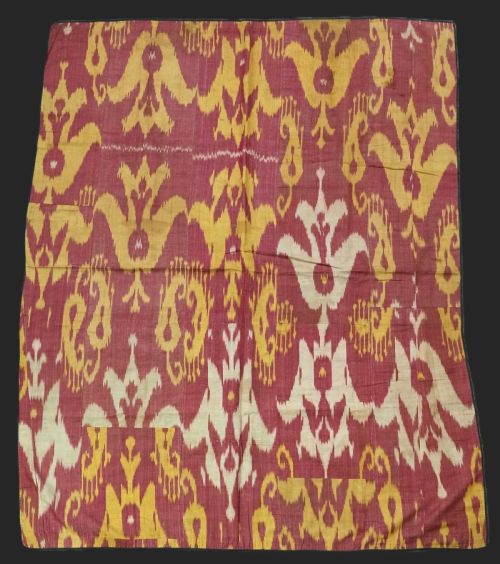
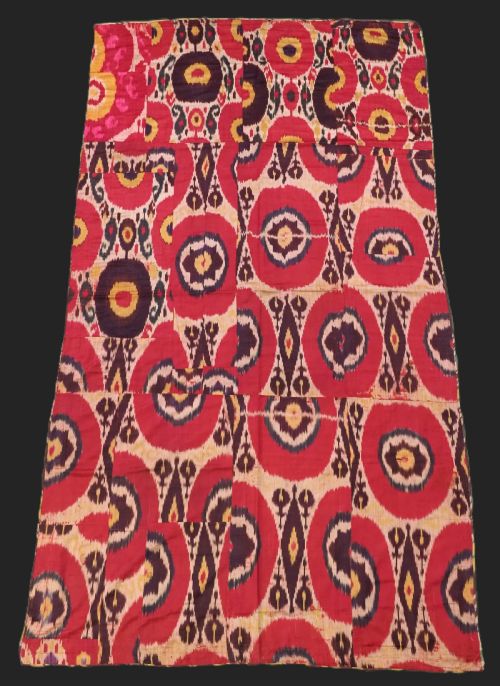


Handwoven Tapestry Rug
A handwoven tapestry rug brings rich tribal pattern and historic textile warmth into a room through flatweave surfaces and flat-faced wool structures.
Handwoven Tapestry Rug
When you search for a handwoven tapestry rug, you encounter flatwoven floor coverings and wall textiles originating from Central Asian, Persian, and Balkan traditions. The selections on this page span the nineteenth and early twentieth centuries, capturing nomadic and village weaving practices.
The inventory leans heavily toward kilims, storage bag faces, tent bands, and regional covers. These pieces served practical domestic functions within nomadic and village life before entering the decorative market.
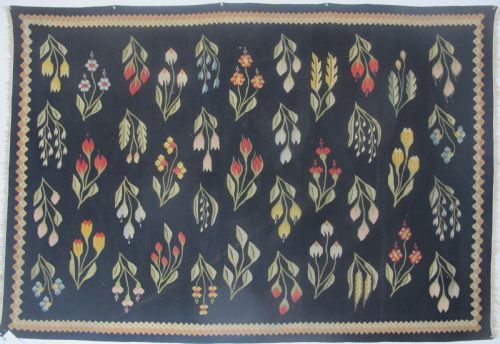
Makers utilised flatweave techniques rather than knotted piles to create lightweight, durable panels suitable for transport, floor placement, or ceremonial use. Each item reflects the distinct visual vocabulary of its specific origin, from Anatolian tribal motifs to Bessarabian floral compositions.
Materials and construction
Weavers constructed these pieces predominantly from wool, cotton, and silk, often incorporating hand-spun wool and camel hair to achieve varied surface textures. Natural dyes provided the foundational palette, yielding soft reds, muted earth tones, and warm secondary shades.
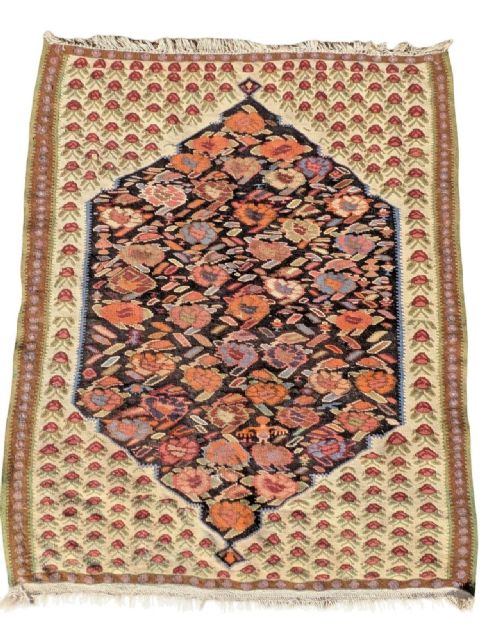
The structural method relies on interlocking or slit-tapestry weaves where the weft threads pass back and forth over the warp. This technique produces a flat, reversible surface that displays crisp geometric or floral patterns without a raised pile.
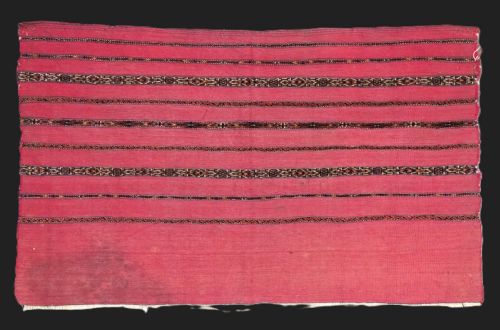
Some nineteenth-century nomadic weavers quietly hid stray camel hairs inside their red wool backgrounds.
Defining quality
Quality in these flatweaves depends upon the tightness of the weave and the precision of the graphic execution. Fine examples demonstrate consistent tension across the warp and weft, ensuring the textile maintains its structural integrity.
The choice of materials and the depth of the natural dyes further separate standard domestic pieces from finer tribal works. Uniformity in the hand-spun fibres and harmonious colour fading elevate the visual impact of the textile.
The Handwoven Tapestry Rug Glossary
- Kilim
- An un-knotted flatwoven carpet or rug produced across Turkey, the Caucasus, and Central Asia. These textiles rely on the interlacing of warp and weft threads to form geometric designs.
- Warp
- The stationary vertical threads stretched onto a loom before weaving begins. The weft threads pass over and under these structural foundations.
- Weft
- The horizontal threads passed through the warp to create the visible pattern and colour of the textile. Tight packing of these threads determines the density of the weave.
- Chuval
- A large storage bag face produced by Turkmen tribes to store household goods inside a yurt. They feature characteristic tribal gull motifs and dense geometric borders.
- Sofreh
- A flatwoven cloth used for spreading meals or handling bread within nomadic households. These functional textiles frequently display minimalist tribal layouts.
Handwoven Tapestry Rug: Frequently Asked Questions
How were tapestry rugs used originally?
Nomadic and village communities utilised these flatwoven textiles as floor coverings, bedding, eating cloths, and storage containers inside tents and dwellings.
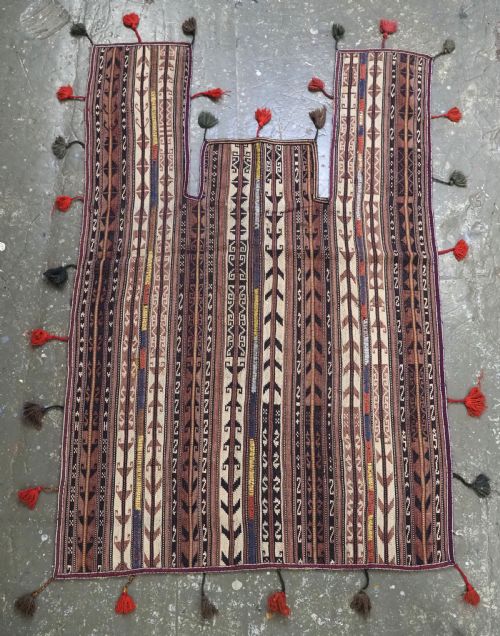
Many pieces also served ceremonial purposes or functioned as wall hangings and horse blankets during communal gatherings and migrations.
Can I place these rugs on the floor?
Most historic flatweaves withstand light to moderate foot traffic when placed over an appropriate underlay. Placing them in low-traffic areas helps preserve the delicate hand-spun wool and natural dye foundations.
For fragile wall panels or antique silk textiles, vertical display on a padded mount prevents surface wear and structural strain.
How do I clean an antique flatweave?
Gentle surface brushing or careful vacuuming with a suction-only attachment removes loose dust and debris from the weave. Professional textile conservators should handle any wet cleaning to prevent dye run in natural colours.
Avoiding direct sunlight prevents the natural dyes from fading prematurely over years of domestic display.
How do I identify the regional origin?
Regional attribution relies on specific colour palettes, structural stripe counts, and recurring tribal motifs. Central Asian pieces often display bold graphic medallions, while Balkan and Bessarabian examples favour naturalistic floral arrangements.
Examining the edge finishes and the twist of the wool provides further clues to whether a piece originated in Anatolia, Persia, or the Caucasus.