




Vintage Serbian Kilim
These vintage serbian kilim examples are flat-woven carpets bringing distinct Balkan folk art traditions and warm geometric patterns into modern spaces.
Vintage Serbian Kilim
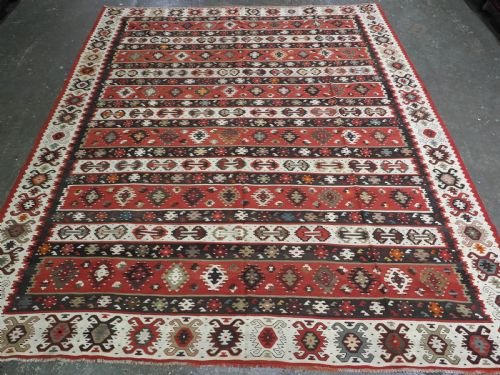
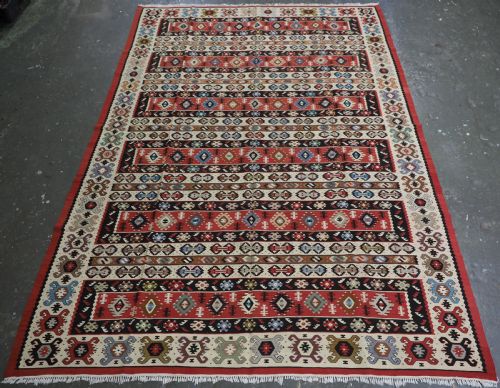
When you search for a vintage serbian kilim, you encounter flat-woven rugs originating from the Balkan region around nineteen twenty. These pieces present traditional Balkan designs such as flowering trees, banded layouts, repeat medallions, and classic motifs.
The format covers area rugs, kilim rugs, and larger room sizes designed for floor placement. The visual character relies heavily on structured geometric arrangements and symbolic folk art patterns.
How they were made
The construction of these textiles relies on wool and cotton fibres woven into flat surfaces without a pile. Artisans interlace the warp and weft threads tightly to create crisp edges along pattern boundaries.
Dyes applied to the wool achieve the warm soft colours characteristic of the period. The weaving technique produces a reversible fabric with structural integrity suited to daily floor use.
Every listed piece dates from nineteen twenty and incorporates wool and cotton materials shaped by Balkan folk art traditions.
What varies in quality
Quality differences emerge in the complexity of the design, distinguishing standard classic layouts from scarce lattice patterns. The precision of the flat weave and the preservation of the wool surface also set examples apart.
The harmony of the colours and the overall condition of the fabric determine the visual impact of each rug. Pieces with well-maintained borders and intact structures represent the upper tier of the selection.
The Vintage Serbian Kilim Glossary
- Kilim
- A flat-woven carpet produced without a pile by interlocking coloured weft threads over a warp foundation. This technique creates lightweight textiles traditionally used for floor coverings and wall hangings.
- Warp
- The stationary vertical threads stretched lengthwise on a loom that form the structural foundation of the textile. Weft threads are passed alternately over and under these foundational strands.
- Weft
- The horizontal threads passed across the warp to build the pattern and colour fields of the flat-weave. In kilim production, these threads wrap back at colour boundaries to form small slits.
- Balkan Folk Art
- The traditional artistic expression and decorative motifs originating from the Balkan peninsula. This style incorporates geometric symbols and regional patterns passed down through generations.
Vintage Serbian Kilim: Frequently Asked Questions
What is a vintage serbian kilim?
A vintage serbian kilim is a flat-woven textile from the Balkan region created around nineteen twenty. These rugs feature traditional folk art designs made from wool and cotton.
They serve primarily as decorative floor coverings that introduce historical character and distinct patterns into domestic interiors.
How were these rugs used originally?
These flat-woven carpets functioned as floor coverings and decorative furnishings within traditional Balkan homes. Their durable wool construction allowed them to withstand everyday movement.
Today, they adapt readily to modern living spaces as area rugs or decorative room-size carpets.
Are these rugs reversible?
The flat-weave construction typical of these textiles generally produces similar patterns on both sides. This technique lacks a raised pile, meaning the face and reverse share structural similarities.
Such reversibility allows for even wear distribution when placing the carpet in a room.
How do I identify the design style?
Design styles on these pieces range from classic layouts and banded arrangements to flowering trees and repeat medallions. Each pattern reflects traditional Balkan folk art motifs.
Examining the specific arrangement of geometric elements helps distinguish one design variation from another.