







Sarkoy Flatweave Kilim
Sarkoy flatweave kilim pieces are traditional Balkan and Anatolian floor coverings valued for distinct regional motifs and flat textiles.
Sarkoy Flatweave Kilim
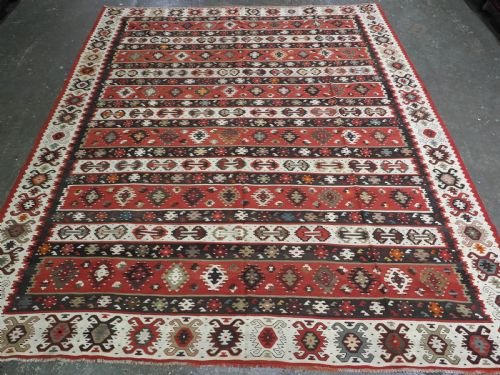
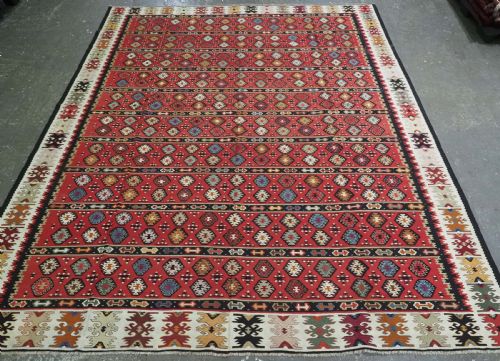
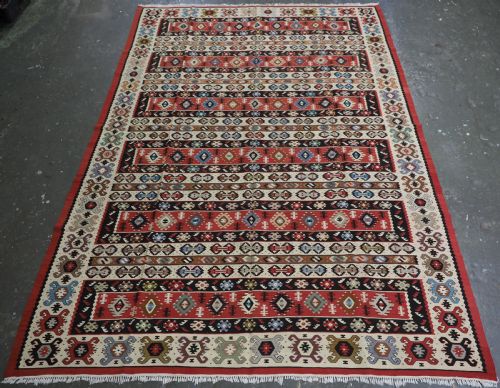
A sarkoy flatweave kilim represents a specific tradition of woven carpets originating from Balkan folk art, often linked with Pirot styles. These rugs appear in large room sizes, area formats, and runner dimensions designed for functional floor placement.
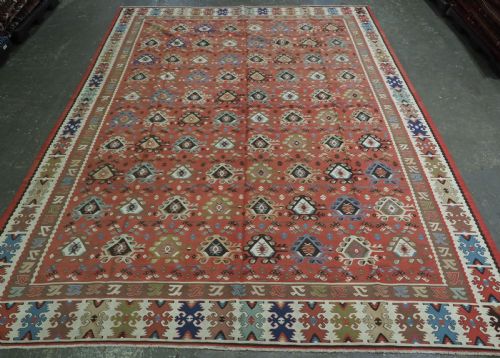
The pieces available trace back to periods spanning the mid-nineteenth century through the early twentieth century, specifically around eighteen sixty, nineteen twenty, and nineteen thirty. Buyers encounter classic designs, banded arrangements, flowering trees, lattice patterns, and repeat medallions.
How they were made
Weavers utilised wool and cotton fibres to construct these flat textiles without a pile, employing traditional interlacing techniques characteristic of tribal workshops. The resulting fabrics rely on tight tension and structural weave patterns to form geometric and floral motifs.
Natural dye sources provided the warm soft colours, repeat tones, and rich hues visible across the banded and medallion layouts. These material choices allowed the flatweaves to maintain structural integrity while displaying elaborate regional imagery.
Several pieces preserve the quiet echo of nineteen twenty Balkan sheep wool, still holding memories of village looms.
What varies in quality
Quality differences depend on the complexity of the design, such as scarce lattice work or detailed flowering tree compositions compared to standard repeat patterns. Superior examples display particularly balanced colour palettes and precise execution of traditional Balkan folk motifs.
The overall preservation of the wool and cotton weave significantly shapes the standard of each piece, alongside the clarity of the banded or medallion layout. Larger room sizes maintain distinct value when the visual impact of the pattern remains strong and undisturbed.
The Sarkoy Flatweave Kilim Glossary
- Kilim rug
- A flatweave carpet produced without a pile by tightly interlocking warp and weft threads. This technique creates a lightweight textile suitable for floors or wall hanging.
- Balkan folk art
- The traditional aesthetic and regional design vocabulary of southeastern Europe. This style informs the geometric patterns and cultural motifs found in these textiles.
- Banded design
- A decorative layout organised in horizontal stripes or bands across the field. This arrangement often incorporates alternating geometric motifs or colour changes.
- Repeat medallion
- A symmetrical central motif repeated at regular intervals across the textile. This composition creates a structured rhythm within the field of the rug.
Sarkoy Flatweave Kilim: Frequently Asked Questions
How are sarkoy flatweave kilim rugs used?
These flat textiles function primarily as area rugs or large room-size floor coverings within traditional and contemporary interiors. Their flat structure allows them to sit smoothly under furniture.
Collectors also display smaller or lighter examples as wall hangings to preserve the textile structure from heavy foot traffic.
What periods do these kilims date from?
The available pieces predominantly date from the early twentieth century, specifically around nineteen twenty and nineteen thirty. Selected examples trace back earlier to eighteen sixty.
These dates reflect traditional weaving periods associated with Balkan and Anatolian folk art production.
What materials are used in their construction?
Traditional wool and cotton form the structural foundation of these flatweave carpets. Wool provides the primary surface texture and dyed colour, while cotton often supports the warp threads.
These natural fibres contribute to the durability and supple drape characteristic of the flatweave technique.
How do design styles vary?
Designs range from classic banded patterns and repeat medallions to flowering trees and scarce lattice arrangements. Each layout draws upon traditional Balkan tribal and folk art influences.
Variations in pattern complexity distinguish standard room-size pieces from more elaborate collector examples.