


Hand Woven Wool Trapping
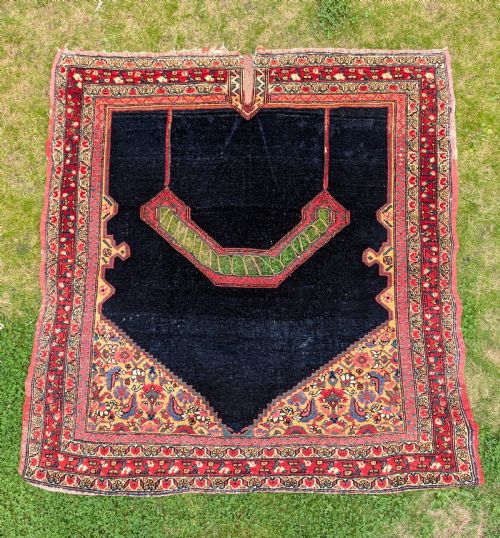
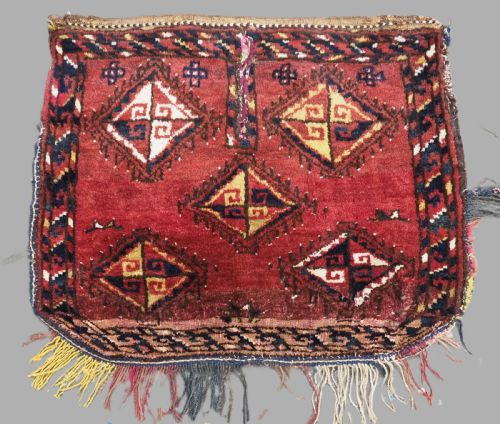
These hand woven wool trapping examples are nomadic textiles and saddle covers created across Central Asia, prized for rich tribal patterns and authentic structure.
Hand Woven Wool Trapping
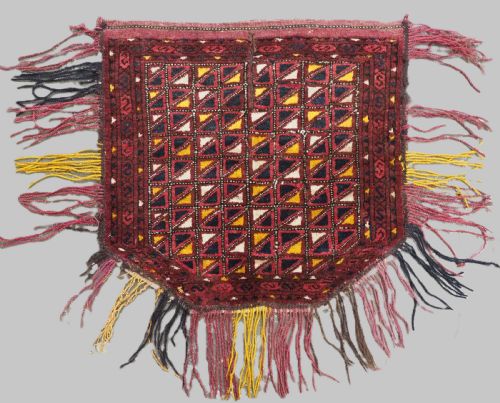
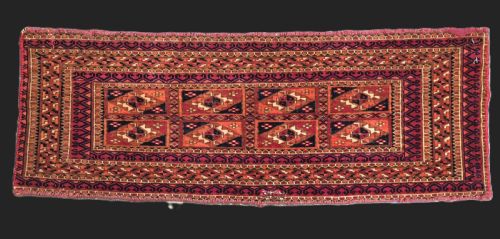
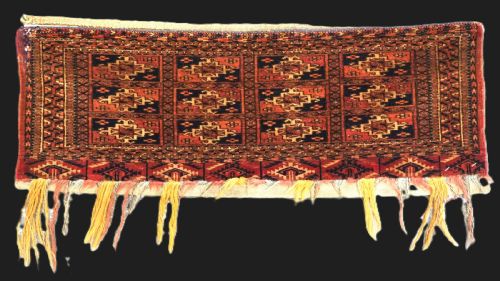
A hand woven wool trapping search brings up tribal textiles, saddle covers, torbas, and asmalyks originating from nineteenth-century Central Asia. Buyers encounter Turkmen tribal pieces, Persian tribal work, and nomadic rug bags featuring traditional motifs.
The most common formats on this page are Ersari, Yomut, Tekke, and Saryk Turkmen weavings dating from eighteen-fifty to nineteen-hundred. These items served functional roles as animal trappings, storage bags, and wall hangings within nomadic communities.
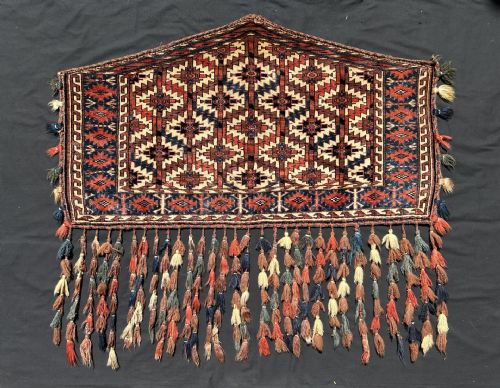
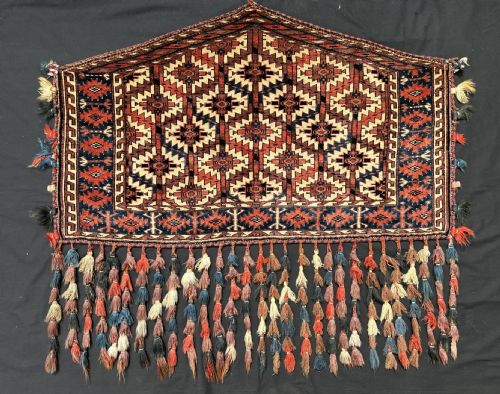
Many examples retain original tassels, complete backs, or specific tribal designs like the aina gul or rams horn motif. Each textile reflects the distinct heritage of regions such as the Trans-Caspian steppes and the Akhal Oasis.
Materials and construction methods
The makers utilised wool and hand-spun wool alongside cotton foundations to build durable structures capable of withstanding heavy nomadic use. Natural dyes provided the deep, lasting tones seen across these nineteenth-century tribal textiles.
Weavers knotted and piled the wool densely to form crisp geometric layouts and structural integrity. Intricate design details like curled leaf patterns and star in octagon motifs were worked directly into the pile during production.
Listings span the nineteenth century, capturing Turkmen tribal, Persian tribal, and Central Asian nomadic origins.
What separates standard from superior examples
Quality rests in the precision of the tribal design work, the clarity of the natural dyes, and the survival of original decorative elements such as tassels and complete backs. Finer pieces display crisp execution of complex guls and balanced proportions.
The handling of wool and hand-spun materials determines the textural depth and resilience of the surface pile. Superior examples maintain structural integrity and visual vibrancy across nineteenth-century Turkmen and Persian nomadic pieces.
Yomut Tribe·Tekke Tribes·Ersari Turkmen·Saryk Turkmen·Senneh weavers
The Hand Woven Wool Trapping Glossary
- Asmalyk
- A pentagonal trapping traditionally mounted on the flanks of a camel during Turkmen wedding processions. These decorative pieces display distinct tribal motifs.
- Torba
- A small storage bag or wall hanging produced by nomadic tribes for domestic organisation. They often feature prominent gul designs on the face.
- Gul
- A medallion motif repeated across Turkmen carpets and trappings to identify specific tribal groups. Each clan utilised characteristic variations.
- Mafrash
- A large storage chest face or bag used by nomadic groups for bedding and household goods. These retain dense pile work.
- Beshir
- A sub-group of Ersari Turkmen weaving known for distinctive coloration and large-scale designs. Pieces often incorporate floral or animal motifs.
Hand Woven Wool Trapping: Frequently Asked Questions
What was a wool trapping used for?
Nomadic communities utilised these textiles as animal trappings on horses and camels, particularly during ceremonial processions and weddings.
They also functioned inside tents as storage torbas, rug bags, and protective wall coverings for domestic goods.
How do I identify a Turkmen asmalyk?
An asmalyk typically presents a distinct pentagonal shape designed to fit the flank of a mounted animal.
These pieces frequently display rich pile work, symbolic tribal guls, and original decorative tassels along the lower edge.
Are these textiles made with natural dyes?
The nineteenth-century pieces recorded here rely on traditional natural dye sources to achieve deep, stable colour palettes.
Over time, these vegetable and animal-based dyes mature with a soft patina across the wool pile.
How should I care for an antique torba?
Keep the textile out of direct sunlight to protect the natural wool pile and prevent dye degradation from ultraviolet exposure.
Gentle vacuuming with a mesh screen protects the structure while removing surface dust from the weave.