





Hand Woven Prayer Rug
When choosing a hand woven prayer rug, you are selecting a textile defined by tribal heritage and centuries-old regional knotting traditions.
Hand Woven Prayer Rug
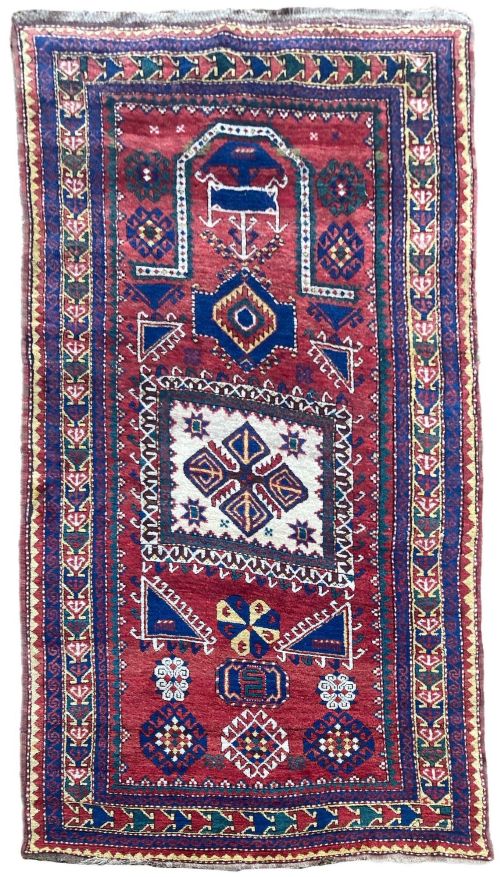
A hand woven prayer rug serves as a portable space for daily devotion, traditionally distinguished by a central mihrab niche design that points toward Mecca. The selection spans distinct regional traditions including Caucasian, Anatolian, and Afghan tribal groups, dating from the mid-nineteenth century through the early twentieth century.
Baluch and Turkmen pieces appear frequently alongside Turkish village formats such as Ghiordes, Kirsehir, and Konya. These floor coverings bridge nomadic utility with ceremonial artistry, capturing specific local motifs from regions spanning West Anatolia to Khorassan.
Buyers encounter formats ranging from standard rectangular runners to unusual square proportions and ivory ground field designs. Each piece reflects the visual vocabulary of the weaver's specific tribe or village workshop.
Materials and construction
Makers utilised wool, hand-spun wool, cotton, silk, camel hair, and goat hair as structural and pile materials. Natural dyes provide the underlying palette, yielding deep saturated tones that soften gracefully over time.
Weavers knotted these materials by hand on vertical or horizontal looms, incorporating sturdy cotton or wool warps and wefts. The dense pile construction ensures durability while maintaining the flexibility inherent in nomadic textiles.
Listings feature wool, cotton, silk, and camel hair across nineteenth and early twentieth-century Anatolian and Caucasian styles.
Assessing the grade
The density and precision of the knotting distinguish finer village and tribal pieces from standard utilitarian examples. A higher knot count allows for sharper definition in geometric and floral motifs.
The purity and depth of the natural dye work influence the visual longevity of the pile. Subtle shifts in colour within a single abraash field demonstrate organic dyeing methods rather than uniform synthetic application.
The Hand Woven Prayer Rug Glossary
- Mihrab
- The arched niche design at the top of a prayer rug that symbolises the direction of prayer. This architectural motif orients the worshipper during daily devotions.
- Abraash
- A natural variation in wool colour caused by changes in dye batches or sheared fleece lots. This tonal shift creates subtle bands of shade across the field.
- Warp
- The stationary vertical threads stretched onto the loom before knotting begins. The fringe of the rug typically consists of these extended warp threads.
- Weft
- The horizontal threads passed back and forth between the warp threads to lock the knots in place. Together with the warp, they form the structural foundation of the textile.
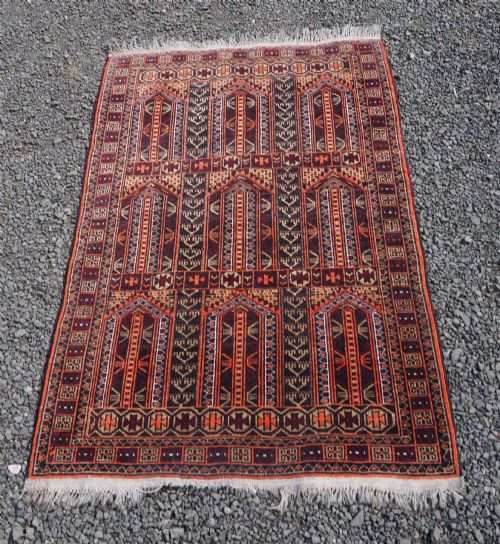
- Seh Mihrab
- A triple arch design featuring three distinct prayer niches across the upper field. This specific variant appears frequently in regional Baluch and Turkmen weaving.
Hand Woven Prayer Rug: Frequently Asked Questions
What is a mihrab design?
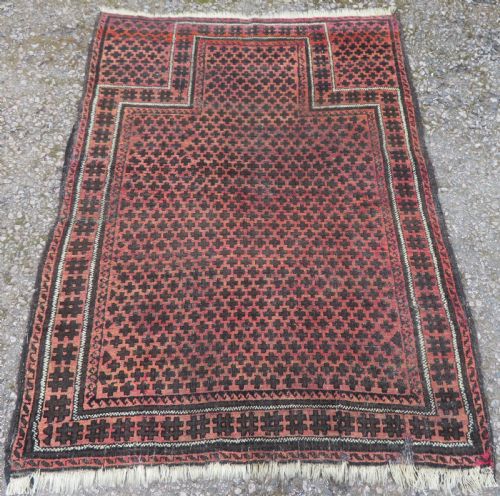
The mihrab is an arched architectural motif woven into the upper portion of the field. It represents the prayer niche in a mosque.
During daily use, the worshipper aligns this pointed arch toward Mecca. Its presence immediately identifies the textile as a devotional piece rather than a standard floor covering.
How do I care for antique wool rugs?
Protect the textile by placing it in low-traffic areas away from direct sunlight. Regular gentle vacuuming without a rotating brush bar prevents dust accumulation in the pile.
Professional cleaning by specialists in antique textiles ensures the natural wool and dyes remain undamaged. Avoid harsh chemical treatments entirely.
Where were these rugs made?
The pieces originate from nomadic tribes and settled villages across Anatolia, the Caucasus, and Central Asia. Specific weaving centres include Kirsehir, Ghiordes, Konya, and the Khorassan province.
Each region developed distinct structural characteristics and colour palettes tied to local materials and tribal lineages.
How do I identify Baluch tribal rugs?
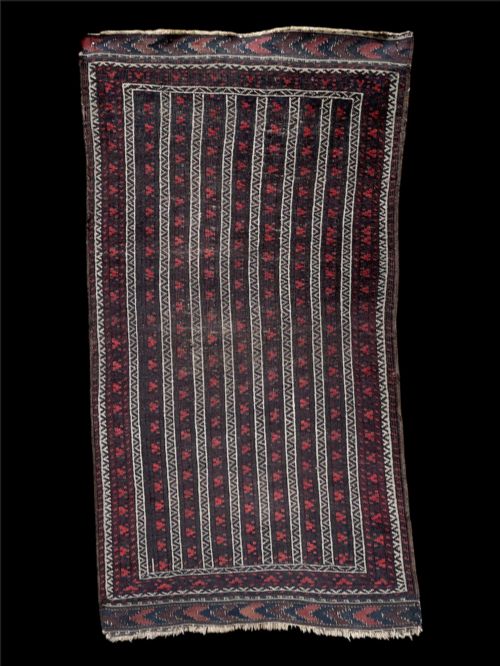
Baluch weavings are typically smaller in format and incorporate rich dark wools, camel hair, and deep indigo blues. Their designs often feature repeated geometric motifs, tree of life patterns, and distinctive flatwoven ends.
Attributions point toward nomadic groups operating across the borders of modern Afghanistan, Iran, and Turkmenistan.