
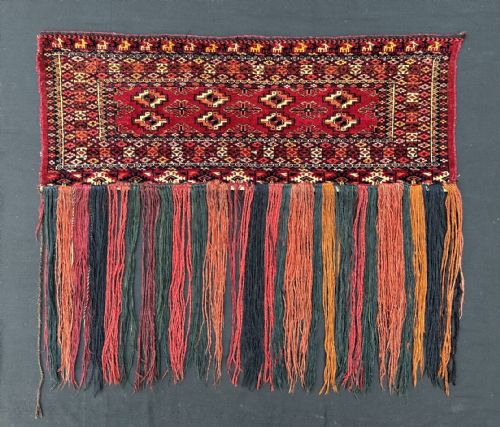
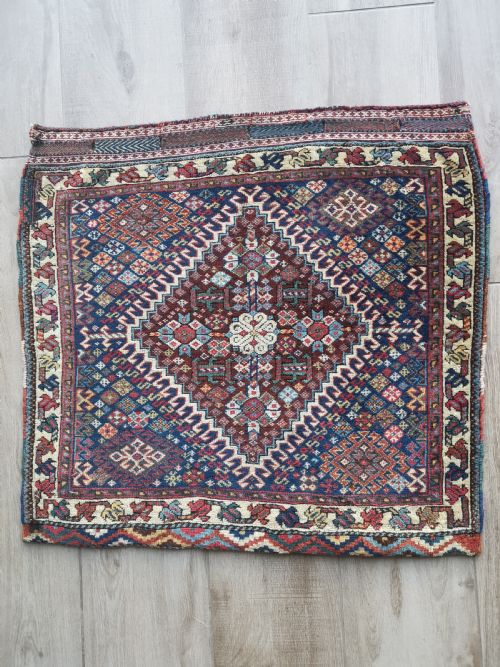

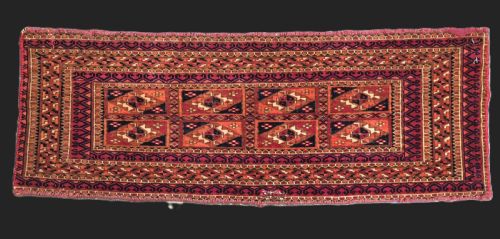
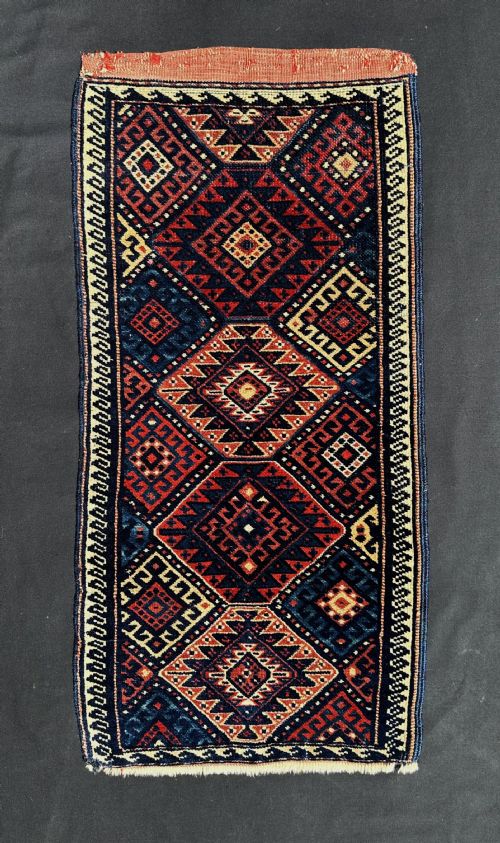


Hand Woven Bag Face
When you search for hand woven bag face, you are looking at tribal and nomadic textile fragments created for daily utility.
Hand Woven Bag Face
A hand woven bag face represents the front panel of a utilitarian nomadic container, such as a torba, chuval, or mafrash, which was originally used for tent storage or saddle transport. These pieces derive predominantly from tribal groups across Central Asia and Persia, including Turkmen tribes like the Tekke, Yomut, and Ersari, as well as southern Persian confederations such as the Qashqai.
Buyers encountering this selection will frequently find smaller rectangular formats that have been separated from their original backings or converted into cushions over time. The designs typically feature traditional tribal motifs, repeating guls, or central medallions associated with specific weaving groups.
Materials and construction
The construction relies on hand-spun wool foundations and pile, combined with natural dyes derived from local plants and minerals to produce deep reds, indigos, and ivory grounds. Linen and cotton also appear in specific structural elements or supplementary weft work.
Weavers utilised traditional knotting and flat-weaving techniques on portable looms, resulting in dense, durable structures capable of withstanding nomadic movement.
Listings feature wool, cotton, and linen materials alongside natural dyes spanning the eighteenth through early twentieth centuries.
Determinants of quality
Knot density and the precision of the drawing dictate the visual clarity of intricate motifs like guls or secondary ornamentation. Finer examples display meticulous handling of natural dye palettes and tighter structural weaving.
Condition and completeness also influence the piece, distinguishing intact storage bag faces and well-preserved fragments from heavily altered or restored examples.
The Hand Woven Bag Face Glossary
- Torba
- A small Turkmen storage bag, typically wider than it is tall, used inside the tent for domestic items.
- Chuval
- A large storage sack face produced by Turkmen and other nomadic groups for bedding and household possessions.
- Gul
- A repeating medallion or primary octagonal motif characteristic of Turkmen tribal weaving.
- Mafrash
- A rectangular storage chest or bag face used primarily for bedding during nomadic migration.
- Chanteh
- A small traditional saddle bag or personal carrier woven by tribal makers.
Hand Woven Bag Face: Frequently Asked Questions
What is a bag face?
A bag face is the decorative front panel of a nomadic storage sack or saddlebag that survived after the plain utilitarian back was removed.
These panels preserve the most intricate weaving and tribal iconography of the original container.
How were these bags used?
Nomadic tribes utilised these woven containers inside tents for organising household goods, clothing, and blankets.
Larger versions travelled on pack animals during seasonal migrations across Central Asia and Persia.
How should I display a bag face?
Many collectors mount these textile panels directly onto fabric-covered boards for wall display or preserve them as decorative cushions.
Proper mounting distributes the weight evenly across the wool structure to prevent distortion.
How do I identify tribal origins?
Specific design elements, such as Yomut kepse guls or Tekke secondary motifs, point directly to particular tribal groups.
Colour palettes and wool characteristics further help separate Persian nomadic work from Turkmen pieces.