




Nomadic Wool Pouch
When you examine a nomadic wool pouch, you touch the portable heritage of tribal weavers from Persia, Central Asia, and the Caucasus.
Nomadic Wool Pouch
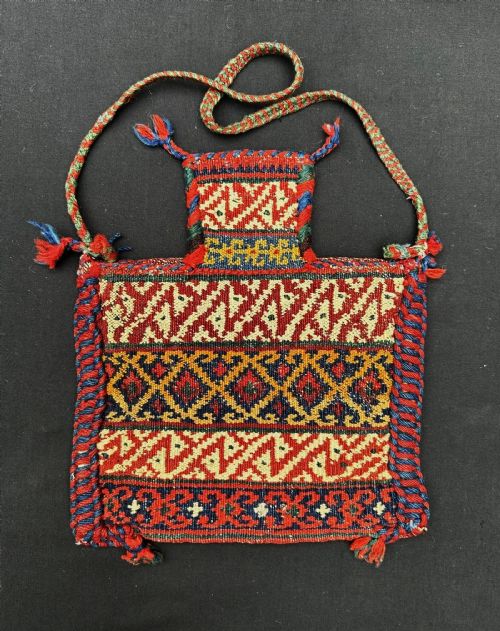
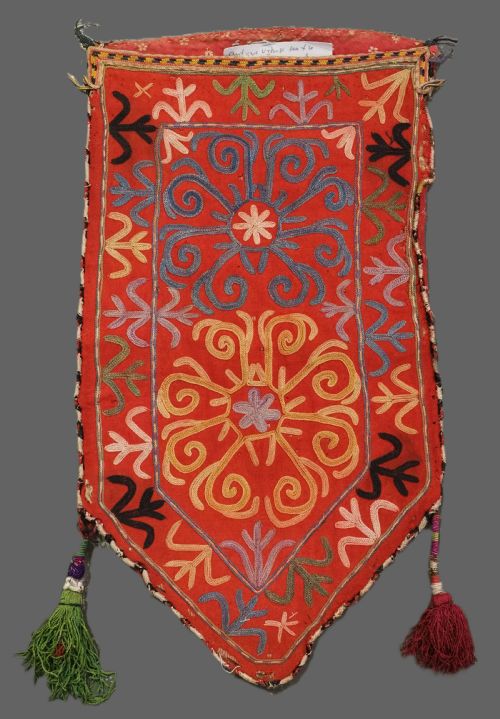
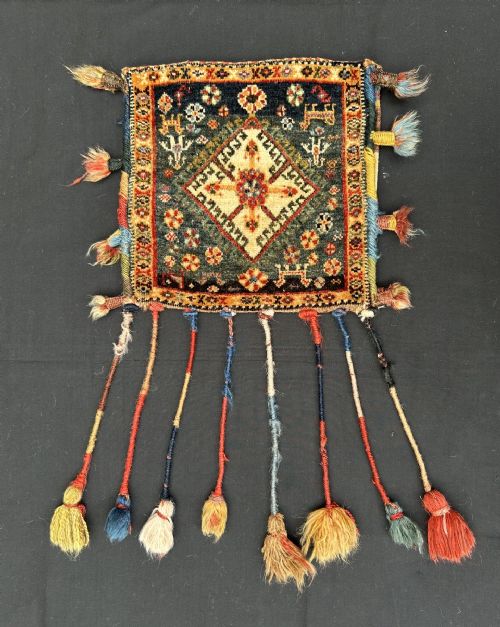
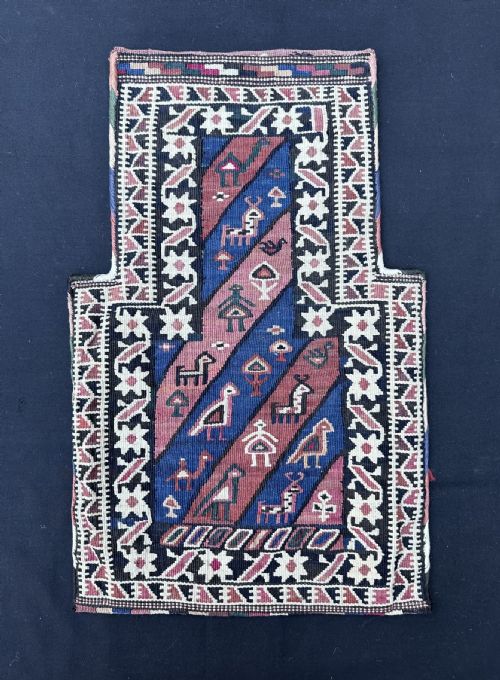
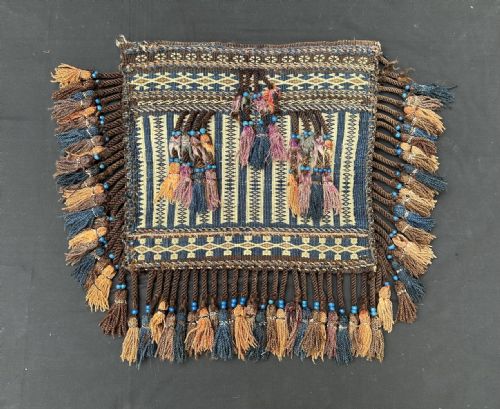
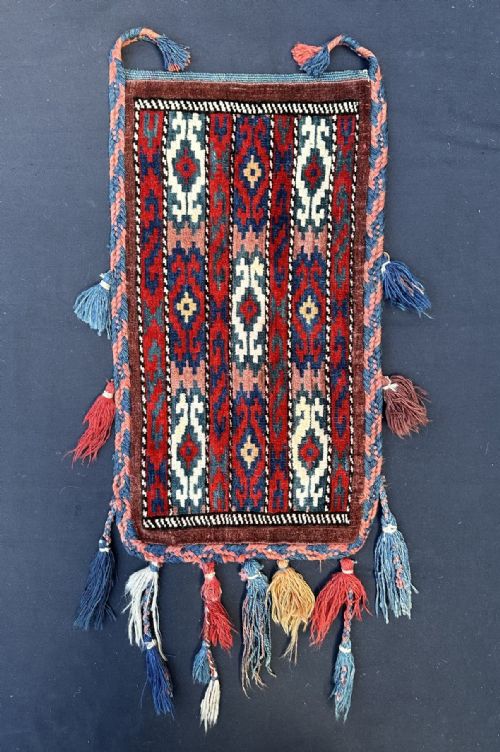
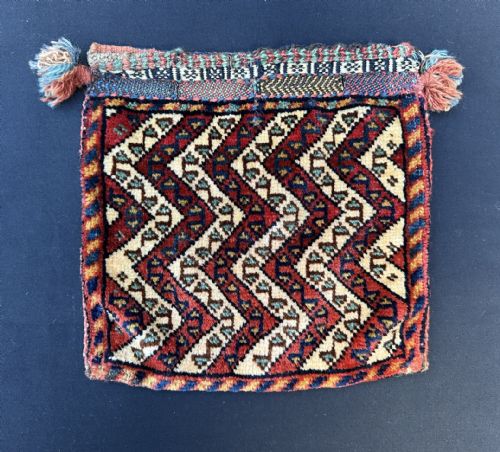
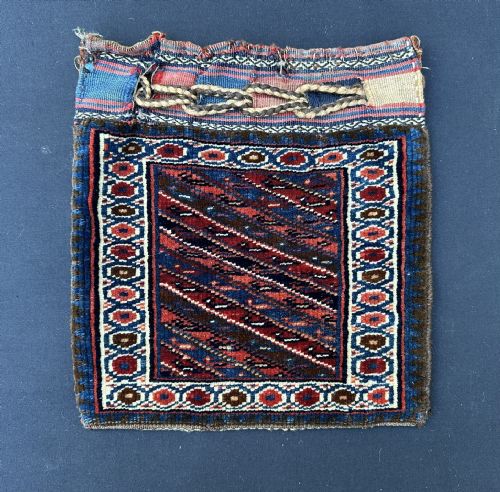
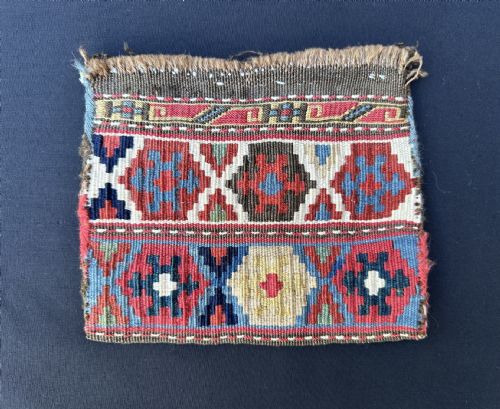
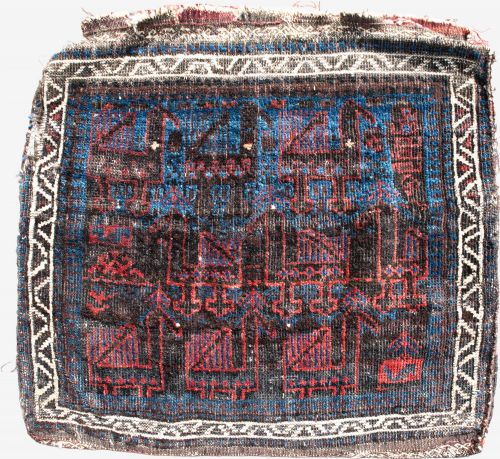
The selections on this page span several decades, originating from regional groups such as the Qashqa'i, Afshar, Baluch, and Yomut Turkmen. Each piece reflects the specific weaving traditions and tribal affiliations of its makers across Persia, Central Asia, and Azerbaijan.
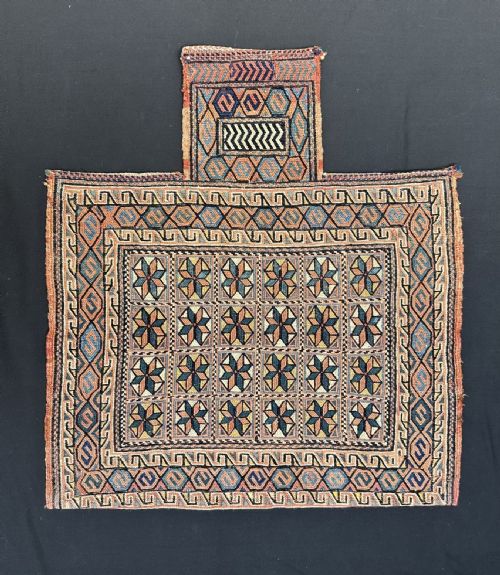
Forms range from miniature saddlebags and double-sided vanity pieces to specialised receptacles like pipe bags and storage pouches. The variety demonstrates the ingenuity applied to small-scale textile production in nomadic contexts.
How they were made
Weavers utilised hand-spun wool and cotton foundations, dyed with natural pigments to create enduring colour palettes. The surface design frequently incorporates supplementary weft work, pile knotting, or flatweave techniques.
Many examples integrate decorative elements such as glass beads, cowrie shells, and silk highlights into the wool structure. Complete survivals often retain their original plain weave backs, showing how the pouches were constructed for practical use.
Nomadic weavers packed everything from salt to spinning spindles into these tiny wool pouches, trusting sheep to hold their secrets.
What varies in quality
The integrity of the original materials and the tightness of the weave establish the baseline character of a pouch. Finer knot density and well-preserved natural dyes elevate the visual depth of the tribal patterns.
Completeness alters the standing of an item, particularly when original backs, hanging loops, or closure mechanisms survive intact. The precision of the geometric layout and the clarity of regional iconography reflect the skill of the individual weaver.
The Nomadic Wool Pouch Glossary
- Chanteh
- A small tribal bag or personal pouch used by Persian nomads for carrying personal items. These pieces often feature pile-woven fronts and plain-weave backs.
- Torba
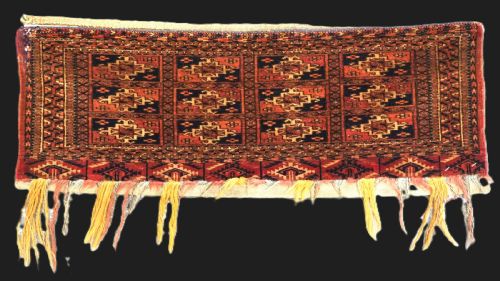
- A Turkmen tent bag or wall hanging, typically wider than it is deep. They frequently display gul motifs and served both decorative and storage functions within the yurt.
- Namakdan
- A specialised salt bag characterised by a narrow neck and bottle-like shape designed to prevent spilt contents during transport. Weavers created these for household salt storage.
- Igsalyk
- A specific Turkmen designation for a spindle bag utilised to hold spinning tools and materials. Yomut weavers produced these elongated pouches with sturdy plain-weave backs.
- Gul
- A medallion motif repeated across Turkmen and Central Asian carpets and bags. Each tribal group utilised distinct gul variations to signal lineage and identity.
Nomadic Wool Pouch: Frequently Asked Questions
What were nomadic wool pouches used for?
Nomadic families utilised these pouches to store salt, tobacco, spinning tools, and personal possessions during seasonal migrations. Their compact sizes made them practical for camp life and transport on animals.
Different tribal groups designed specific shapes for specific tasks, such as narrow-necked salt containers or double-sided vanity receptacles. These items combined utility with artistic expression through traditional tribal patterns.
How do I identify different tribal styles?
Distinguishing between tribal origins involves examining the specific palette, structural format, and motif vocabulary. For instance, Afshar and Qashqa'i pieces from Persia often display distinct geometric layouts compared to Turkmen Torbas from Central Asia.
Regional materials and weaving techniques, such as the specific use of supplementary weft work or particular border arrangements, provide further clues to provenance. Local traditions dictated the design choices handed down through generations.
How should I display a pouch at home?
These small textiles adapt well to wall mounting using non-invasive display methods that support the weight evenly across the textile. Supporting the piece with a custom mount or display shelf protects the antique wool and structure.
Placement away from direct sunlight preserves the natural dyes used by the nomadic weavers. Allowing the textile to breathe prevents moisture accumulation within the wool fibres.
Are these pouches complete with backs?
Many surviving examples retain their original plain-weave backs, which protected the contents from dust and wear during daily use. The presence of the original back enhances the integrity of the textile.
Some pieces exist as fragments or single-sided fronts, while others preserve the complete construction including hanging loops and closures. Checking the listing details confirms the current state of preservation for each specific pouch.