
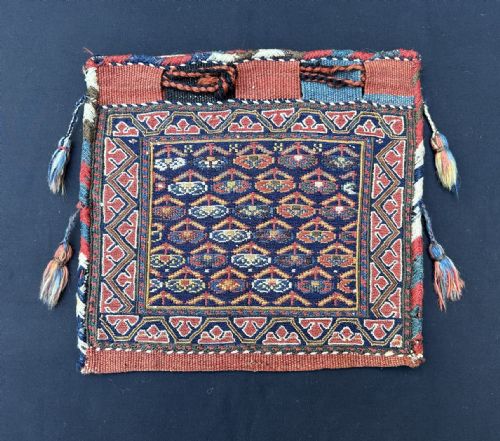


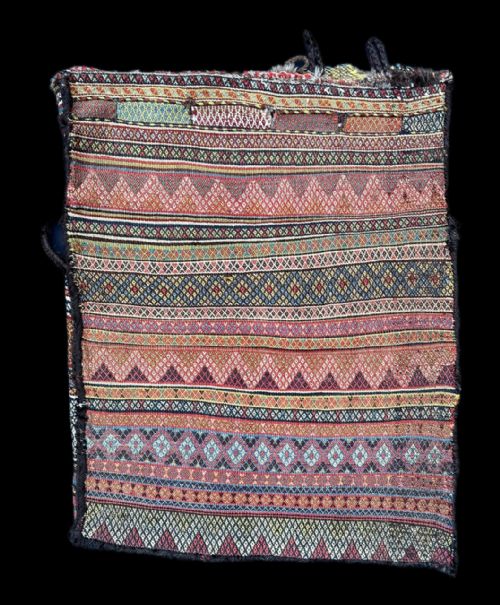
Persia Tribal Saddlebag Face
A Persia tribal saddlebag face offers a portable fragment of nomadic weaving history, prized for rich wool pile and geometric tribal motifs.
Persia Tribal Saddlebag Face
The versions most commonly met on this page include half-saddlebags, vanity-bags, and storage-bags created by tribal confederations such as the Qashqa'i, Afshar, Lori-Bakhtiari, and Shahsevan. Each piece reflects the distinct aesthetic traditions and geographical origins of the weaving communities that produced them.
Collectors encounter these textiles preserved as flat panels after the back sections and connecting webs were separated over generations of use. They function today primarily as wall hangings or small decorative rug fragments rather than utilitarian transport items.
How they were made
The construction of a Persia tribal saddlebag face relies fundamentally on sturdy wool foundations paired with wool pile and cotton elements. Weavers utilised hand-spun animal fibres to ensure durability against the rigours of nomadic travel and daily domestic use.
Natural dyes provide the characteristic colour palettes found across these historical textiles, interacting with the wool fibres to age with distinct patinas. Artisans applied traditional regional dyeing techniques to achieve the deep reds, blues, and earth tones recorded in the evidence.
Nomadic weavers frequently hid tiny intentional irregularities in their geometric patterns to ward off the evil eye.
What varies in quality
The distinction between standard examples and superior specimens rests on the precision of the knotting and the complexity of the tribal design. Finer pieces demonstrate tighter structural foundations and greater deliberateness in the execution of motifs such as the large boteh.
The depth and vibrancy of the natural dyes also determine the visual standing of a piece, with well-preserved colour saturation elevating the overall character. Furthermore, the integrity of the remaining wool pile and the clarity of regional tribal attributions influence how successfully a textile represents its origin.
The Persia Tribal Saddlebag Face Glossary
- Boteh
- A traditional almond-shaped or paisley motif representing a floral spray or cypress tree. This design appears frequently in Afshar and other tribal weaving traditions across Persia.
- Khorjin
- The Persian term for a double-sided saddlebag used by nomadic tribes for transport. Surviving fragments often consist of only the face of this original container.
- Nomad
- A member of a community that moves seasonally with livestock rather than settling in one permanent location. These groups produced the distinctive tribal textiles documented in the listings.
- Pile
- The upright or cut loops of wool that form the plush surface of a rug or bag face. This soft texture contrasts with the flat-woven back foundations.
- Confederation
- An alliance of various nomadic tribes acting under shared leadership within a specific geographic territory. Groups such as the Qashqa'i incorporated multiple smaller taifeh factions.
Persia Tribal Saddlebag Face: Frequently Asked Questions
What is a saddlebag face?
A saddlebag face is the decorative front panel of a nomadic transport bag that has been separated from its companion pouch and back web. These textile pieces survived because their intricate woven designs warranted preservation long after the utility bags wore out.
Today, collectors mount or display these panels independently to appreciate the regional patterns and wool work. They capture the traditional artistry of specific tribal groups without the bulk of the original containers.
How were these bags used?
Nomadic families loaded these woven containers onto horses, donkeys, and camels to transport personal possessions during seasonal migrations. The paired pouches held household goods, grains, or clothing while enduring harsh travel conditions.
Over decades, the rear sections and connecting straps deteriorated through friction and heavy loading. Owners or later traders cut away the damaged areas, leaving only the decorative front faces intact.
Which tribes made these pieces?
Weavers from groups such as the Qashqa'i, Afshar, Lori-Bakhtiari, and Shahsevan created these textile faces across distinct geographical territories. Each tribe maintained unique design repertoires and colour preferences tied to their ancestral homelands.
Regions like Fars, Kerman, Luristan, and Azerbaijan yielded distinct stylistic markers that help identify the maker communities. These regional variations remain visible in the surviving geometric layouts and border arrangements.
How do I date a textile?
Dating relies on examining the specific wool characteristics, natural dye chemistry, and structural wear patterns present across the piece. Stylistic indicators tied to nineteenth-century production periods also help establish approximate decades of origin.
Expert analysis compares the knot counts and material preparation methods against documented examples from known nomadic regions. This combination of structural and aesthetic evidence provides reliable chronological placement.
How should I care for it?
Protect these textile faces from direct sunlight to prevent the natural dyes from fading over extended periods of time. Gentle vacuuming without a rotating brush helps remove dust from the wool pile safely.
Mounting the piece securely takes weight off the old foundation threads when displaying it on a wall. Professional textile conservationists should handle any necessary cleaning or stabilization work.