






Hand Painted Porcelain Basin
A hand painted porcelain basin brings centuries of skilled ceramic work into a room, offering rich colour and pattern.
Hand Painted Porcelain Basin
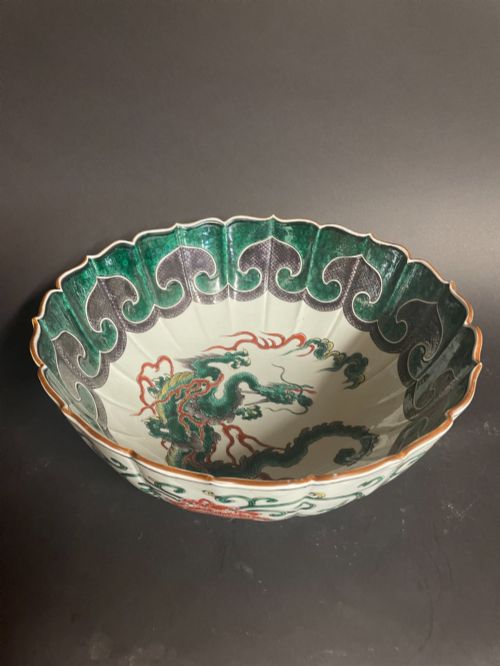
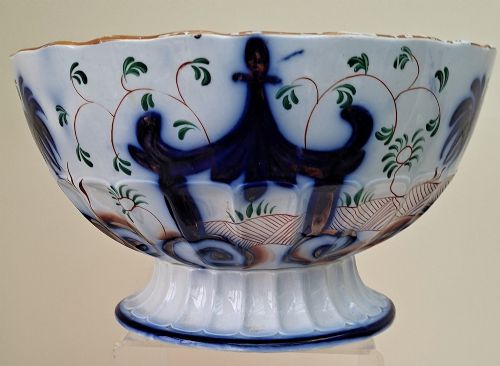
A hand painted porcelain basin encompasses a broad range of vessels, from large Chinese punch bowls and Japanese Imari jardinieres to smaller English and continental sucriers. These decorative and functional items span the eighteenth, nineteenth and early twentieth centuries, reflecting diverse global ceramic traditions.
The pieces appearing on this page lean heavily towards East Asian export wares alongside traditional European porcelain and pottery. Buyers encounter forms such as footed bowls, scalloped edge dishes, and large fish bowls spanning periods like the Qing Dynasty and the Meiji era.
Materials and production methods
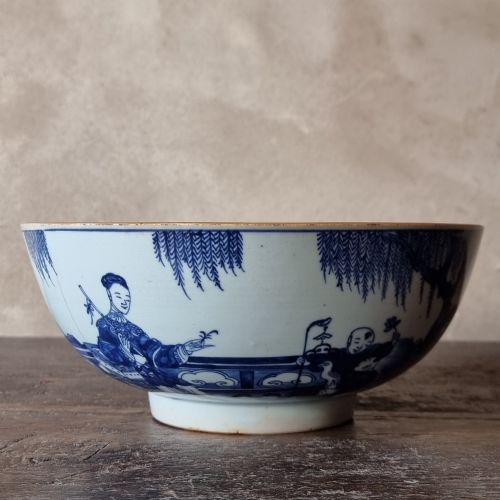
Potters shaped fine clay and porcelain bodies before applying intricate designs using cobalt glaze, overglaze enamel, and sometimes gold leaf or gilt detailing. Firing in kilns set the pigments permanently beneath or above the glaze surface.
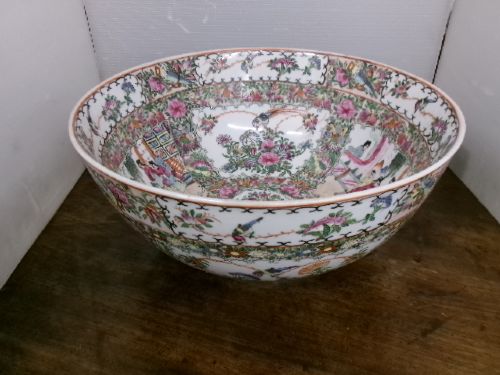
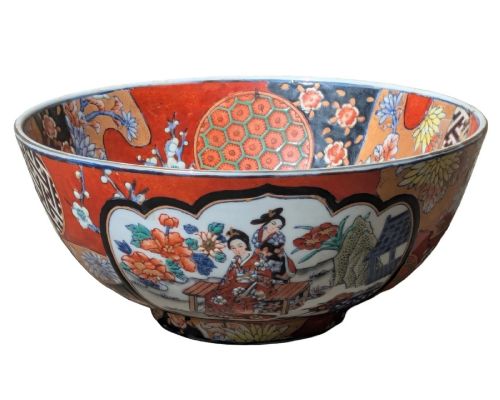
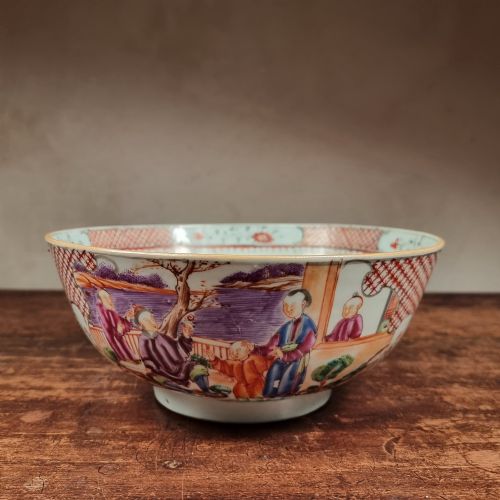
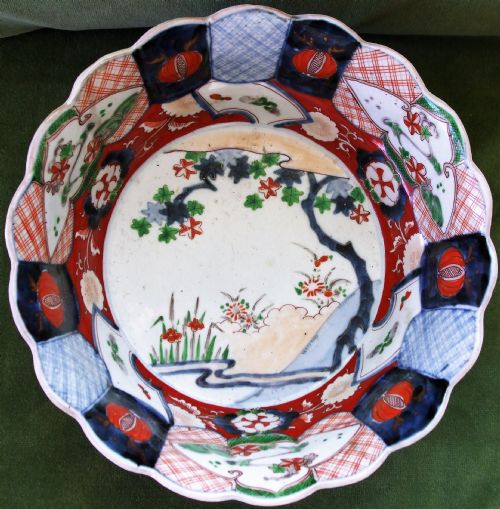
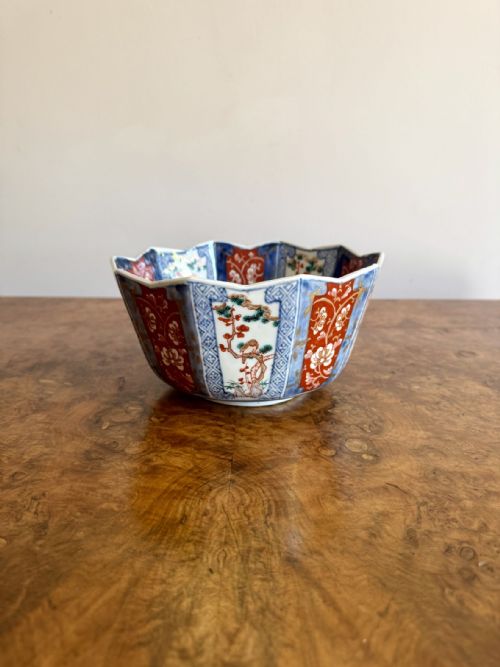
Many items underwent multiple kiln firings to bond complex multi-coloured palettes, such as the vibrant pinks and greens of Famille Rose or the deep blues and iron reds characteristic of Imari wares.
Several bowls feature hand painted samurai battles locked in eternal combat beneath quiet moonlit skies.
Distinctions in quality and execution
The precision and detail of the brushwork separate standard decorative items from masterworks. Controlled lines, balanced compositions, and complex pictorial scenes indicate superior artisan skill.
The crispness of the porcelain body, the depth of the glaze, and the preservation of overglaze enamels and gilding determine the overall preservation and merit of each vessel.
Spode·Royal Crown Derby·Ridgway·Worcester·Kinkozan·Richard Ginori
The Hand Painted Porcelain Basin Glossary
- Imari
- A style of Japanese porcelain featuring a distinct palette of underglaze blue, iron red, and gold, originating in Arita. These wares gained immense popularity across Europe during the export period.
- Famille Rose
- A major palette of Chinese ceramic glazes introduced in the eighteenth century, distinguished by opaque pink or purple enamels. It allowed for nuanced shading in floral and figural motifs.
- Jardiniere
- A large ornamental pot or basin designed to hold plants or flowers. They often sit on footed bases and feature robust walls to support weight.
- Sucrier
- A small covered sugar bowl used in tea service sets. They appear in porcelain across eighteenth and nineteenth century European manufactories.
- Canton
- A style of Chinese export porcelain decorated with panels of figures, birds, and flowers set against dense green and gold grounds.
Hand Painted Porcelain Basin: Frequently Asked Questions
Were these basins used daily?
Many larger vessels served practical roles as punch bowls or water basins for dining and household routines. Sucriers held sugar during formal tea services.
Others functioned purely as decorative display pieces in drawing rooms, particularly large Imari jardinieres and deeply painted export bowls.
How do I identify Japanese Imari?
Look for a distinct colour scheme combining cobalt blue underglaze with iron red and gilt highlights over the glaze. Motifs often incorporate floral panels, brocade patterns, and natural scenes.
Production centres around Arita, with pieces dating from the eighteenth century onwards showing crisp white porcelain bodies and dense surface decoration.
What is Chinese export porcelain?
Chinese export porcelain refers to wares made in China specifically for Western markets from the sixteenth through the nineteenth centuries. Designs often blended traditional Chinese techniques with shapes requested by European buyers.
Common styles include Famille Rose, Canton, and blue and white motifs produced in large quantities for international trade.