



Hand Painted Landscape Urn
A hand painted landscape urn brings distant views onto porcelain surfaces, capturing scenic vistas across classical vessel forms.
Hand Painted Landscape Urn
When you search for a hand painted landscape urn, you encounter vessels designed to display scenic views across ceramic surfaces. These pieces appear in forms such as lidded vases, bough pots, ice pails, and ewers.
The selections span multiple eras, including the Georgian, Regency, and Edwardian periods, alongside Japanese Satsuma and Kutani productions. British factories such as Worcester, Coalport, and Derby sit alongside continental and Asian works.
Materials and construction
Potters shaped these vessels from porcelain and earthenware, often applying glazes before artists painted the scenery. Enamel paint provides the pigments for the lakes, castles, and cattle depicted on the bodies.
Makers finished the pieces with gold leaf, gilt, and gilding to highlight handles, rims, and covers. Ironstone china and enamel also appear in the construction of these decorative forms.
Highland cattle stare steadfastly from porcelain flanks, unfazed by centuries passing on a mantelpiece.
Quality differences
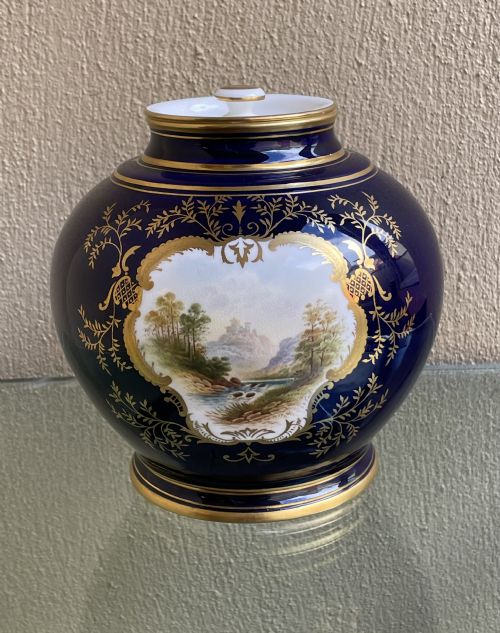
The skill of the painter dictates the standard of the landscape, distinguishing hasty brushwork from detailed artistic rendering. Specific artists working for major factories produced identifiable scenes of Windsor Castle or highland cattle.
The application of gilding and the precision of the porcelain body contribute to the overall refinement of the vessel. Intact covers and well-preserved enamel paints complete the execution of better examples.
Coalport·Derby Porcelain·Royal Doulton·Flight Barr And Barr·Royal Worcester
The Hand Painted Landscape Urn Glossary
- Bough pot
- A vessel designed to hold cut branches or flowers, often featuring a pierced cover. These containers frequently carry landscape scenes on their porcelain bodies.
- Ewer
- A large jug with a wide spout, shaped for pouring water but frequently made as an ornamental piece. They appear decorated with hand painted views.
- Medici vase
- A bell-shaped krater form with a footed base, named after the Renaissance collection. Makers in the nineteenth century reproduced this classical shape in porcelain.
- Satsuma
- Japanese earthenware pottery decorated with crackled glaze and detailed enamel paints. These pieces often illustrate landscapes and figures.
- Gilding
- The application of gold leaf or gold paint to ceramic surfaces. This technique emphasises handles, borders, and scenic panels.
Hand Painted Landscape Urn: Frequently Asked Questions
What subjects do these landscapes show?
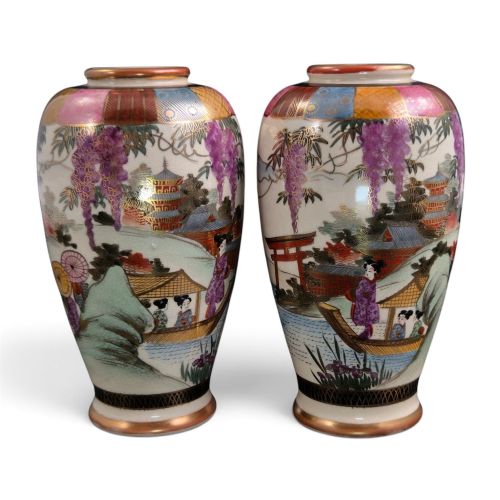
The painted scenes depict lakes, castles such as Windsor, and highland cattle within pastoral settings. Artists also rendered traditional Japanese views involving wisteria and lake vistas.
These compositions occupy central panels on the body of the vase, framed by gilt borders or applied handles.
How do I identify the period?
Georgian and Regency pieces often display classical forms with fine hand painting from factories like Worcester and Derby. Edwardian and later nineteenth-century examples feature works by named artists such as Harry Stinton or Harry Davis.
Japanese Satsuma and Kutani pieces from the Meiji and Taisho periods utilise distinctive crackle glazes and dense enamel decoration.
Were these urns meant for display?
Most of these vessels served as decorative ornaments on mantelpieces and side tables rather than functional containers. Forms like ice pails and bough pots had initial utility, but many acted primarily as decorative display pieces.
The inclusion of delicate covers and extensive gilding points to a primarily ornamental role within period interiors.
What is the difference between porcelain and earthenware here?
Porcelain provides a white, vitrified body that allows fine, smooth enamel painting of detailed landscapes. Earthenware, found in Japanese Satsuma and Mason's pieces, offers a porous base often finished with crackled glazes.
Both materials support painted scenery, though porcelain typically carries finer British factory work.