


Blue Gilt Ceramic Urn
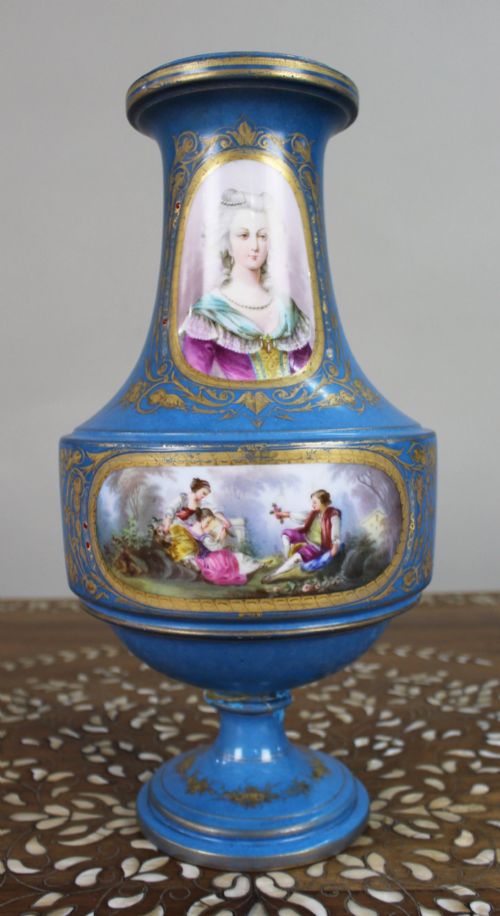
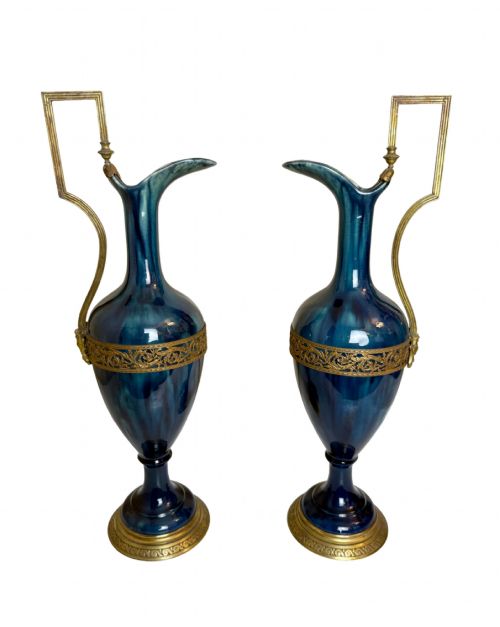
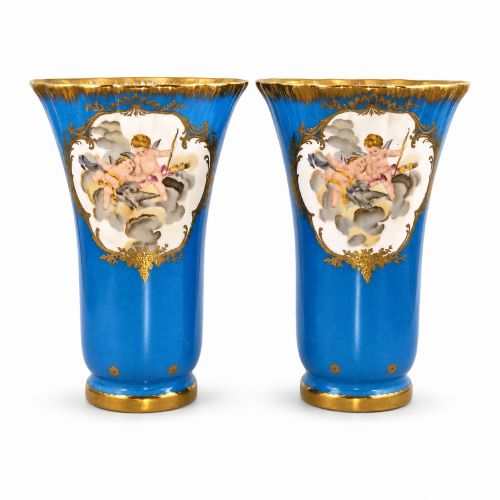
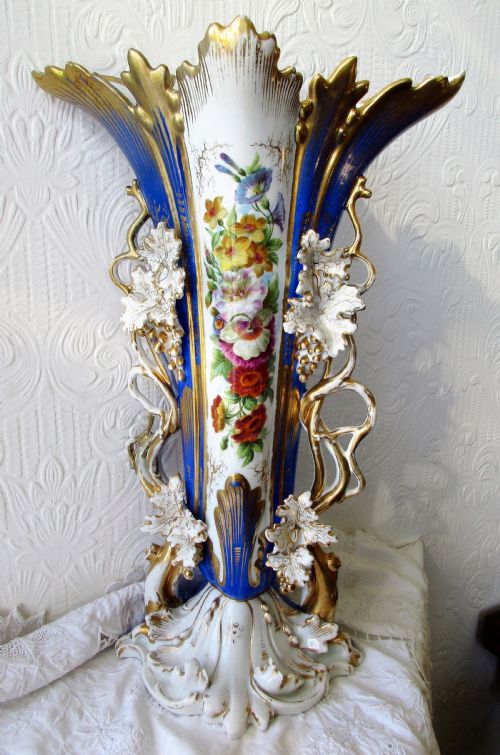
A blue gilt ceramic urn brings together cobalt ground colours and bright metallic highlights across centuries of European and Japanese production.
Blue Gilt Ceramic Urn
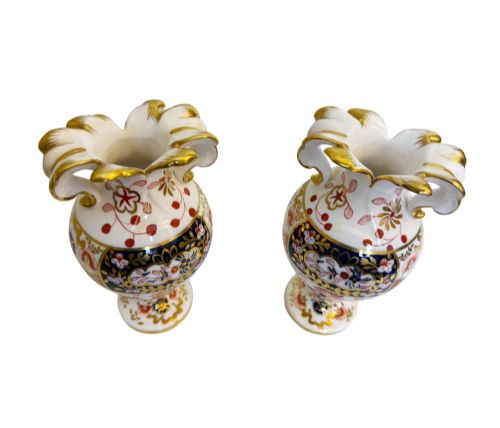
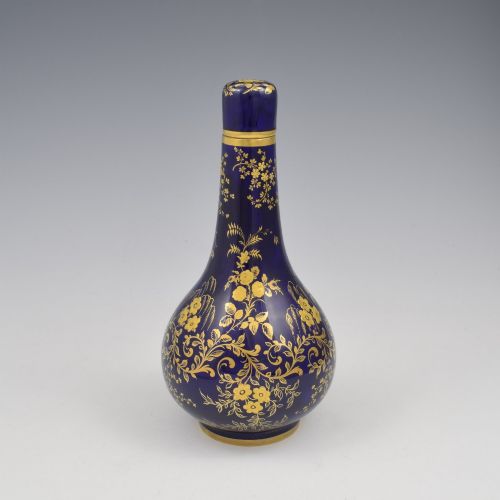
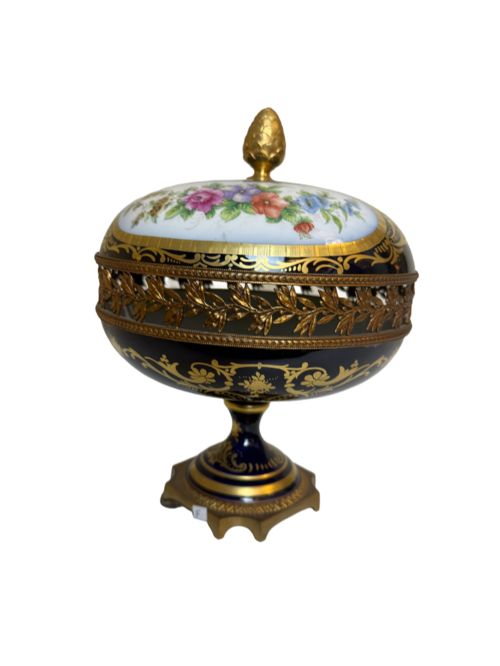
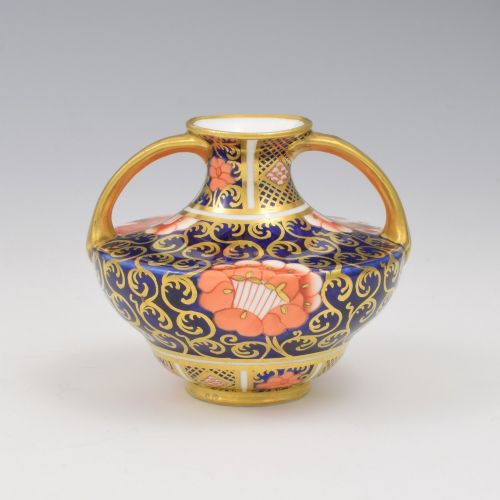
A blue gilt ceramic urn search covers a diverse selection of decorative vessels, lidded jars, table lamps, and pot pourri containers originating from nineteenth century factories and Meiji period workshops. The items listed here range from French Sèvres style porcelain and English ironstone to Japanese Satsuma and Imari wares featuring rich cobalt or turquoise grounds paired with metallic gilding.
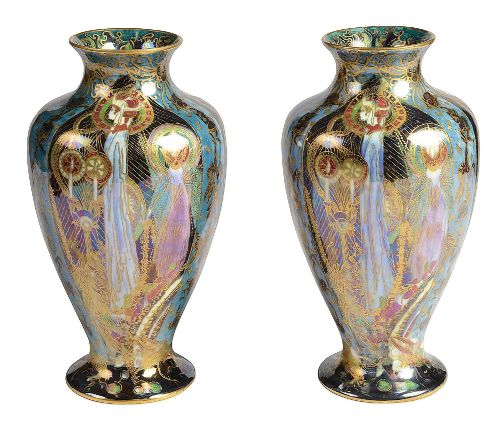
Buyers will encounter pairs of vases, garniture sets, and single display pieces spanning Regency, Victorian, and Edwardian periods. Many items incorporate gilt bronze, ormolu mounts, or converted lighting fittings that reflect nineteenth and early twentieth century interior tastes.
Materials and construction methods
Makers utilised ceramic bodies including earthenware, ironstone, and fine porcelain, applying deep blue enamels, cobalt grounds, or powder blue washes before secondary firing. Surface decoration frequently combines hand painted scenes, transfer printing, or raised moriage relief work.
Gilding is applied using gold leaf, gilt paint, or fire gilding on bronze and ormolu mounts. Metal trim is secured with pins, screws, or fitted bezels to porcelain bodies and lamp conversions.
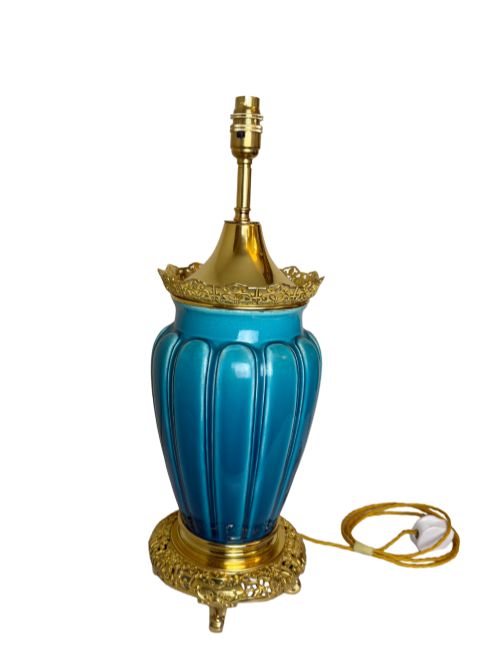
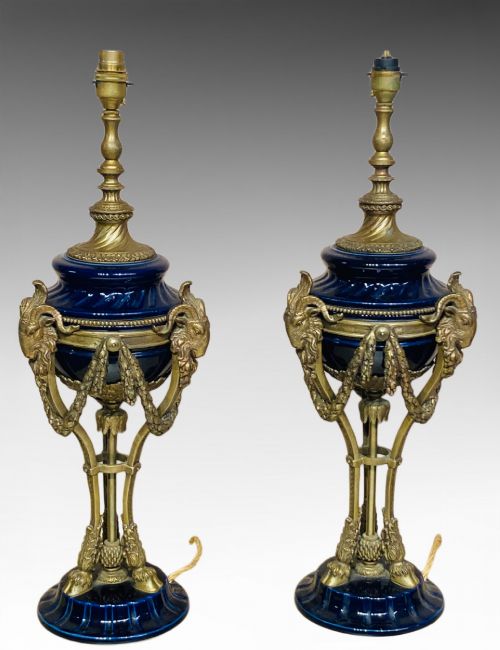
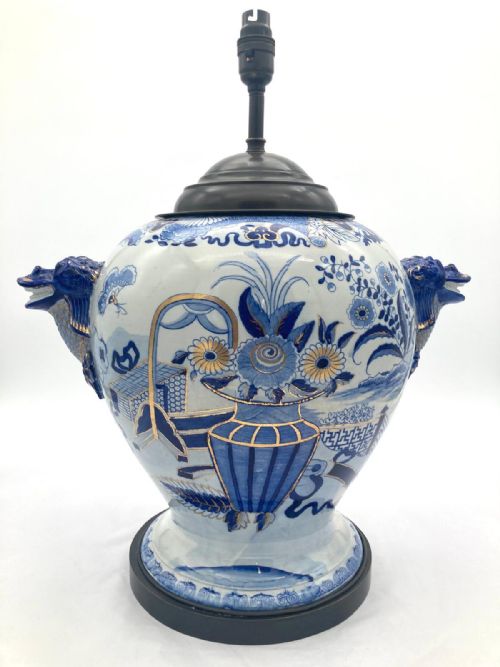
Several heavy nineteenth century vases traded their original floral displays long ago for electrical wiring and handmade silk lamp shades.
Judging quality and craftsmanship
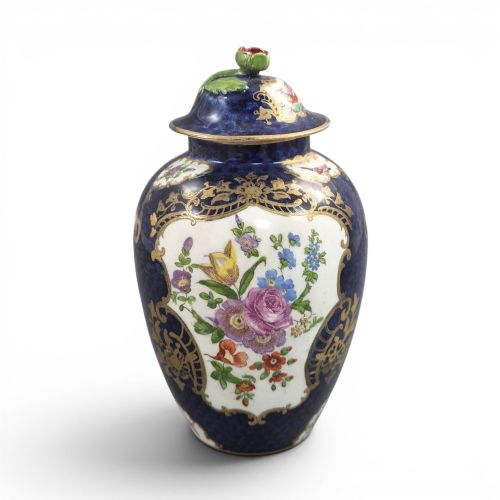
Quality rests in the crispness of the hand painting, the depth of the blue ground colour, and the precision of the gilding application. Superior examples demonstrate finely detailed brushwork on figural panels or botanical subjects rather than simplified transfer prints.
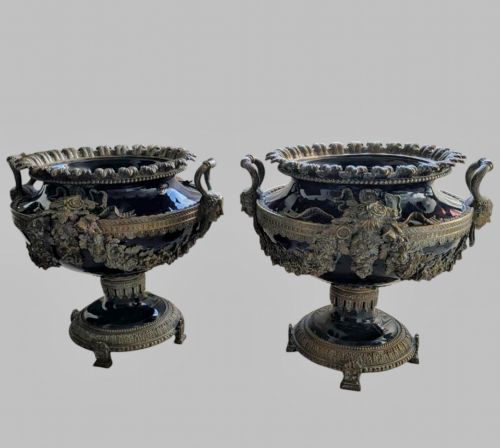
The integration of metal mounts, such as ormolu or gilt bronze trim, dictates the overall refinement of the piece. Heavier, crisply chased metal fittings indicate superior manufacture compared to lightweight cast replacements.
Wedgwood·Spode·Royal Crown Derby·Chamberlain Worcester·Royal Doulton·Coalport·Mason Ironstone·Kinkozan·Samuel Alcock·Royal Worcester
The Blue Gilt Ceramic Urn Glossary
- Bleu Céleste
- A bright sky blue ceramic ground colour famously developed at the Sèvres porcelain manufactory in France during the eighteenth century. This pale yet vibrant hue provides a distinct backdrop for gilded borders and painted reserves.
- Moriage
- A Japanese ceramic decoration technique using piped clay slip to build up raised decorative patterns before glazing and gilding. This method creates a tactile, textured surface common on Satsuma export wares.
- Ormolu
- Finely ground high-carat gold applied to a bronze base using a mercury amalgam technique, producing a rich golden finish on decorative mounts. The term also describes modern electroplated brass furniture and vase fittings.
- Imari
- A traditional Japanese style of porcelain decoration featuring underglaze cobalt blue and iron red combined with extensive gilding. European factories frequently copied these distinct patterns during the nineteenth century.
- Campagna urn
- A classical bell shaped garden or decorative vase form named after excavations in the Roman Campagna. These vessels typically feature a deep bowl, flaring rim, and a stepped foot on a square plinth.
Blue Gilt Ceramic Urn: Frequently Asked Questions
What is a blue gilt ceramic urn used for?
These vessels were primarily designed as decorative mantel ornaments, garniture sets for display, or centrepieces in nineteenth century drawing rooms. Many surviving examples have been subsequently converted into table lamps while retaining their original ceramic bodies and painted decoration.
Collectors today place them on sideboards, pedestals, or tables to introduce strong cobalt colour and metallic warmth into traditional or eclectic interiors. Lidded versions can also function as pot pourri jars when paired with pierced covers.
How do I date a Japanese Satsuma urn?
Japanese Satsuma pieces from the Meiji period typically display dense cobalt and gilt decoration alongside finely crazed earthenware glazes. Signature panels on the base often record the artist, workshop, or exporting company active during the late nineteenth and early twentieth centuries.
Earlier nineteenth century examples generally feature heavier potting and more restrained hand-painted court figures, whereas twentieth century export pieces exhibit brighter synthetic colours and standardised motifs.
What is the difference between porcelain and ironstone?
Porcelain is a vitrified ceramic material made from kaolin and petuntse fired at high temperatures, resulting in a translucent body that rings when struck. It forms the smooth, refined base for many fine European and Asian decorative vases.
Ironstone is an opaque, heavy earthenware developed in the nineteenth century to imitate porcelain while offering greater industrial durability. It provides a robust body well suited for large hall vases and heavy lamp conversions.