




Hand Painted Japanese Earthenware
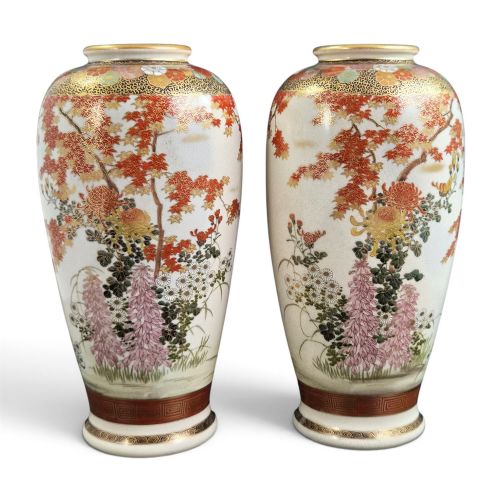
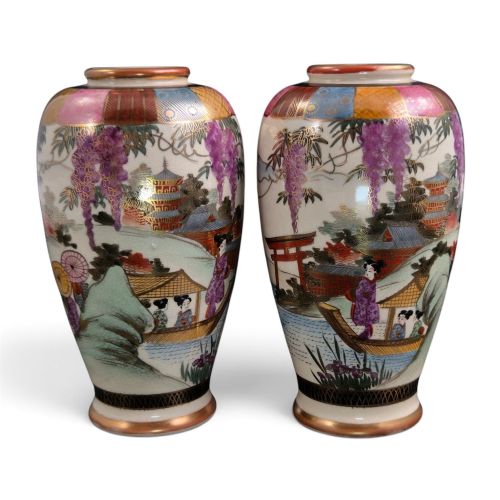
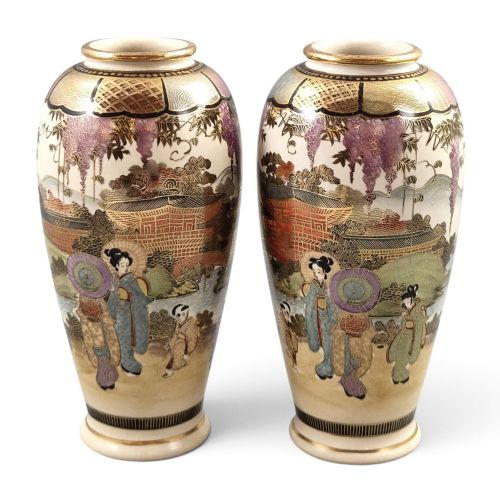
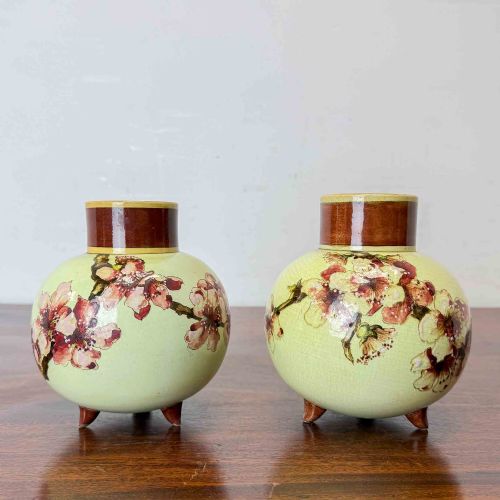
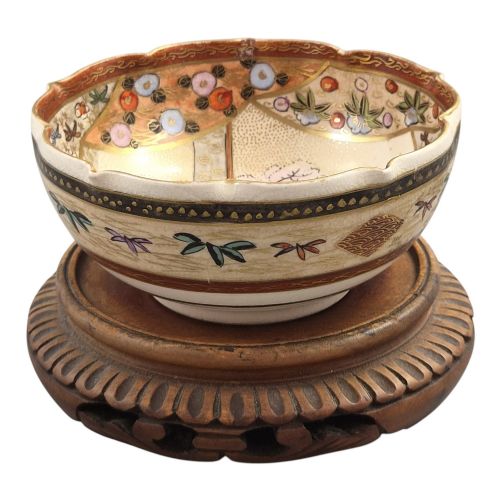
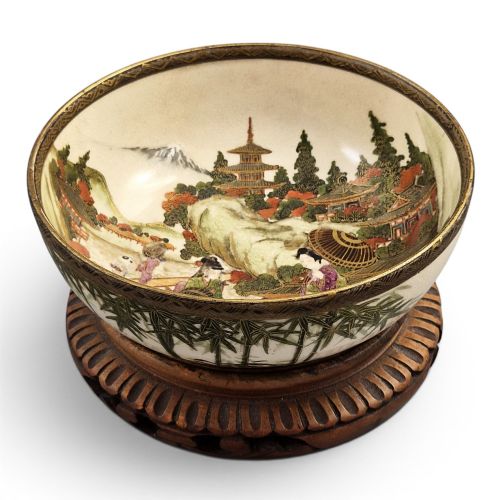
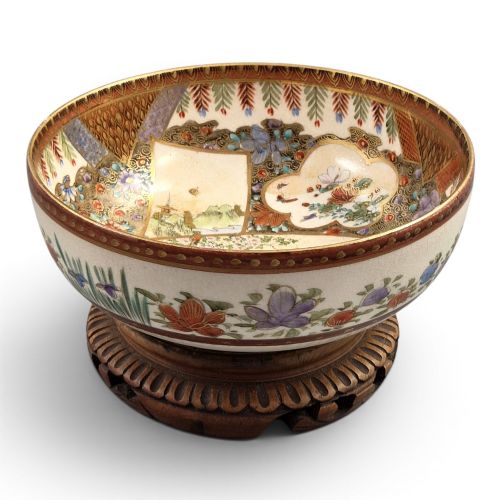
Hand painted japanese earthenware brings together intricate Satsuma wares decorated during the Meiji and Taisho periods.
Hand Painted Japanese Earthenware
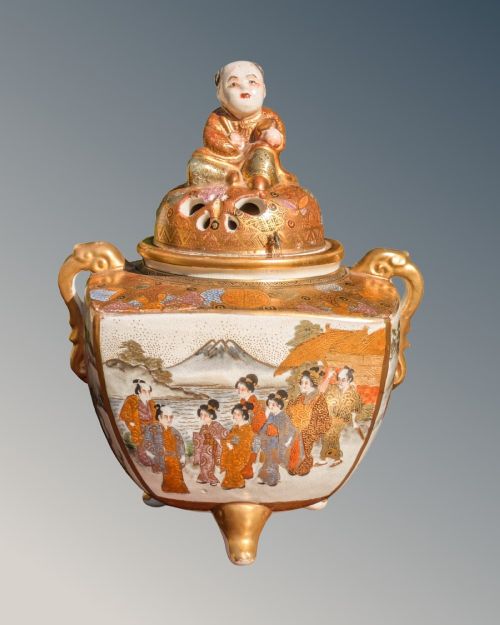
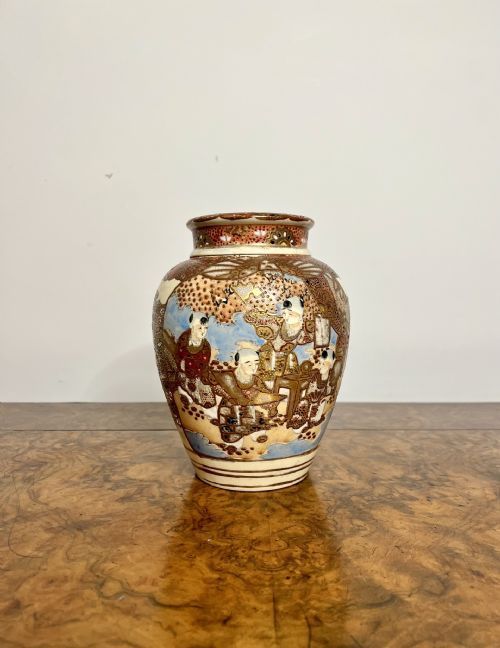
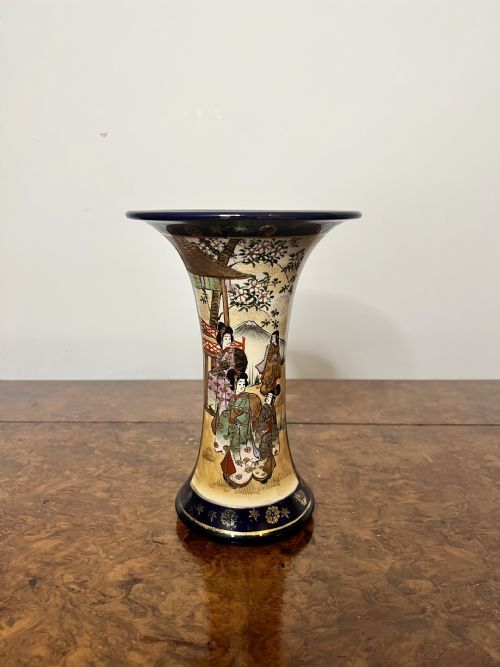
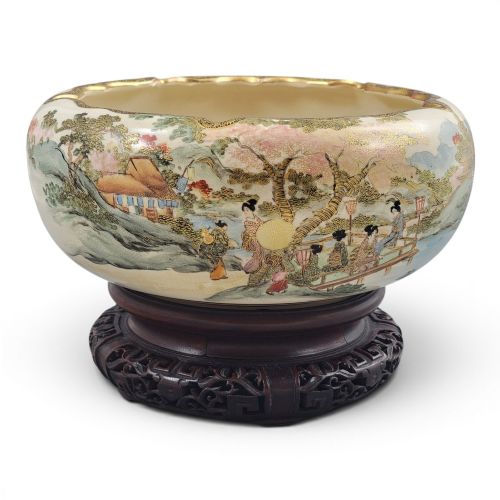
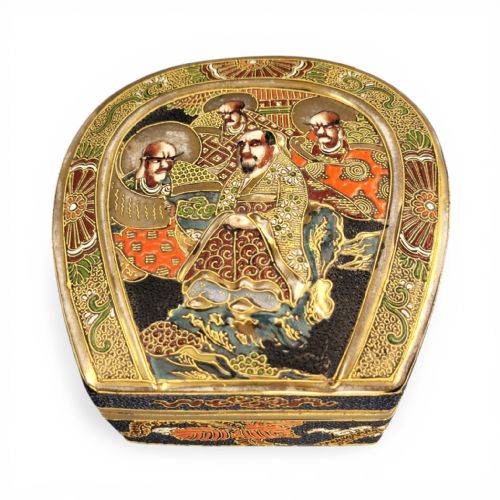
Hand painted japanese earthenware primarily comprises Satsuma ware vessels originating from Japan during the late nineteenth and early twentieth centuries. These pieces encompass vases, decorative bowls, plates, tea caddies, and incense burners created across periods including the Meiji and Taisho eras. Collectors encounter diverse forms ranging from large monumental bowls to miniature vases and covered ginger jars.
How they were made
Potters shaped these vessels from earthenware clay, applying specialised glazes that produced the characteristic finely crackled surface associated with Satsuma ware. Artisans then hand-painted detailed decorative scenes directly onto the glazed pottery using polychrome enamel pigments.
Makers integrated extensive gilding and gold leaf highlights to accentuate the painted compositions, framing intricate portraits of figures, birds, and botanical motifs. Certain items incorporate wooden elements or custom boxes accompanying the ceramic bodies.
Listings feature works spanning the late 19th century through the Edwardian era, incorporating materials like enamel, gold leaf, and gilt glaze.
What varies in quality
Quality rests upon the precision of the hand-painted brushwork and the complexity of the figural or landscape composition. Master painters executed densely populated scenes featuring meticulous detailing in the robes, facial expressions, and surrounding foliage.
The application of gold leaf and enamel saturation distinguishes standard production from pieces bearing signature marks of renowned makers. Fine vessels demonstrate careful control over the glaze crackle and balanced integration of the Shimazu crest or individual artist seals.
Koshida·Maruni Kobe·Shozan·Kizan·Kozan·Shizan·Toshozan·Ryuzan·Chosei·Shuzan·Nikko·Choshuzan·Hakusan·Hododa·Kotobuki-do·Kinkozan·Meizan·Hayakawa
The Hand Painted Japanese Earthenware Glossary
- Satsuma Ware
- A type of Japanese earthenware featuring a characteristic ivory-coloured, crackled glaze. It originated in Satsuma Province and became widely produced in Kyoto for export.
- Meiji Period
- The era in Japanese history spanning from 1868 to 1912. This period saw a massive expansion of decorative arts created specifically for Western markets.
- Koro
- A traditional Japanese incense burner fitted with a lid. These tripod or footed vessels often feature openwork covers.
- Natsume
- A small Japanese tea caddy typically utilised in the preparation of matcha. They take their name from the shape of the natsume fruit.
- Mon
- A Japanese heraldic badge or crest. The Shimazu clan crest frequently appears on high-quality Satsuma ceramics.
Hand Painted Japanese Earthenware: Frequently Asked Questions
What is Satsuma ware?
Satsuma ware is a distinct category of Japanese pottery known for its pale earthenware body and fine network of crackled glaze. Artisans decorated these surfaces with elaborate hand-painted designs enriched with enamel and gold leaf.
Production flourished during the late nineteenth century to satisfy international demand for detailed oriental art. Pieces range from small cabinet items to large exhibition-quality vases.
How do I identify Meiji period pieces?
Meiji period ceramics typically date between 1868 and 1912, aligning with the reign of Emperor Meiji. Listings often reference this timeframe alongside specific stylistic indicators and artist signatures.
Many high-grade examples feature Shimazu family crests and calligraphic artist marks painted on the base. The intricacy of the multi-figure scenes and refined gilding also point toward this era of production.
Were these items made for export?
The vast majority of Satsuma earthenware created during the late nineteenth and early twentieth centuries was destined for Western export markets. European and American collectors developed an intense appetite for Japanese aesthetics.
Exhibition pieces were frequently sent to international expositions where Kyoto workshops showcased their finest painting capabilities. This export focus explains the prevalence of these wares in Western antique collections today.
How should I display these ceramics?
Displaying these hand-painted items involves placing them away from direct sunlight to preserve the vibrant enamel colours and delicate gold leaf. Stable indoor environments prevent any stress on the antique earthenware bodies.
Enclosed cabinets or shelves protect fragile elements such as protruding handles and decorative lids on items like incense burners and tea caddies.