


Hand Painted Ceramic Tray
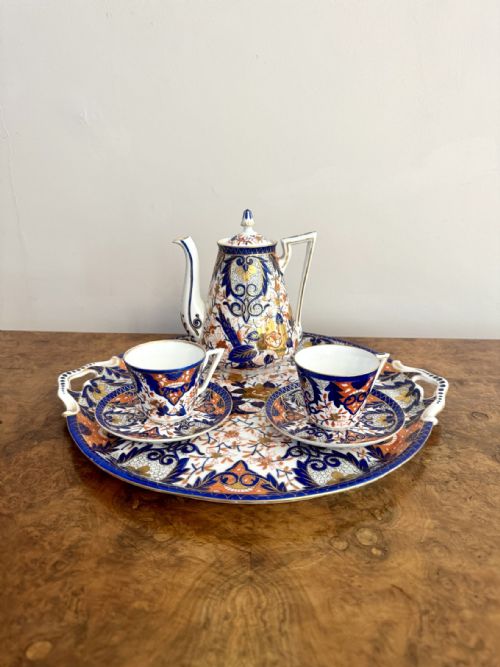
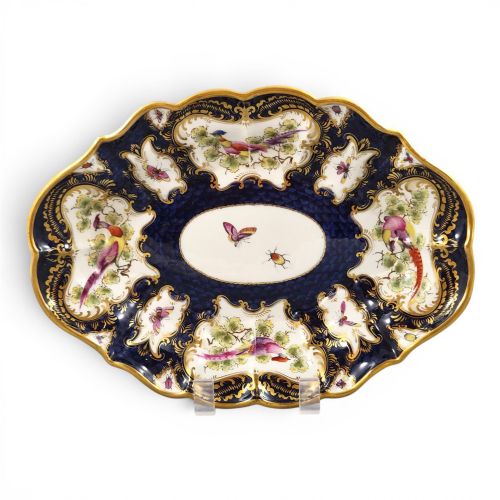
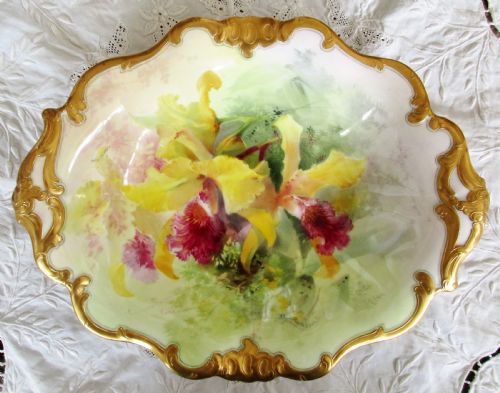
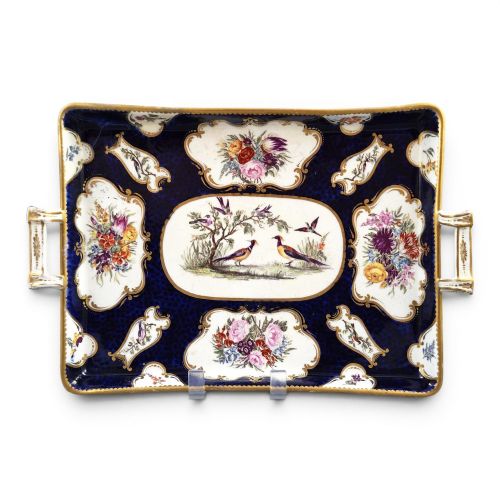
A hand painted ceramic tray brings painted birds, flowers and scenes to a table or desk, combining utility with artistry.
Hand Painted Ceramic Tray
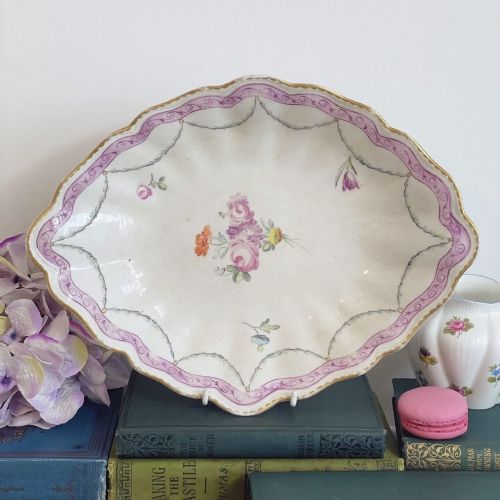
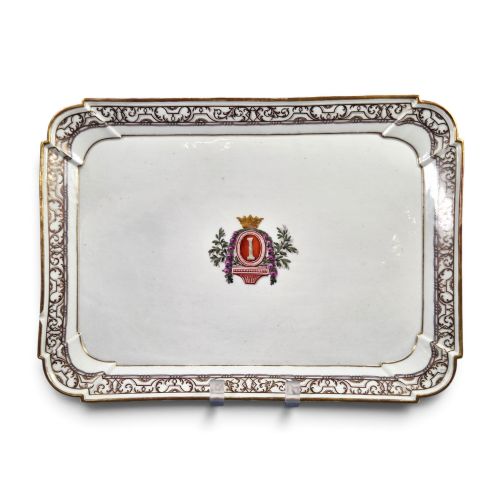
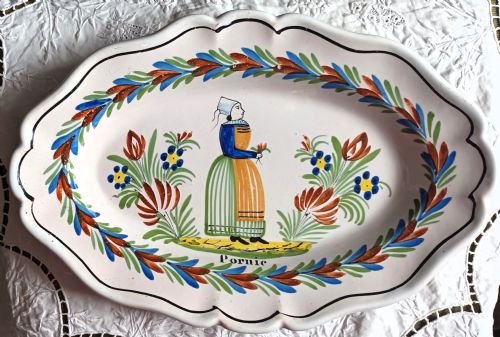
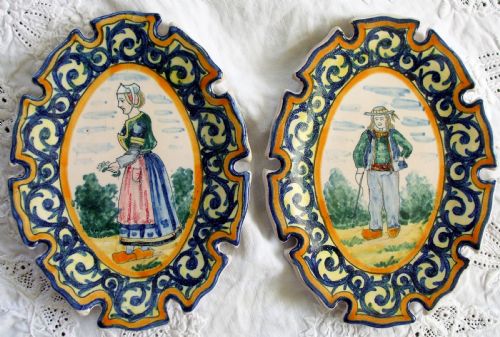
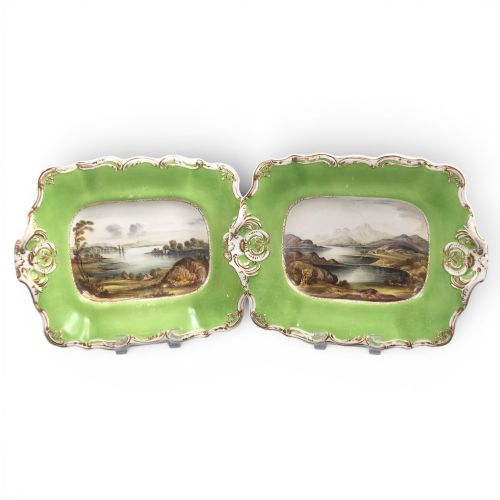
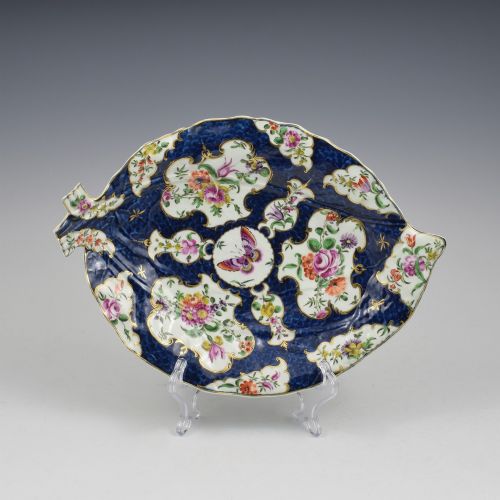
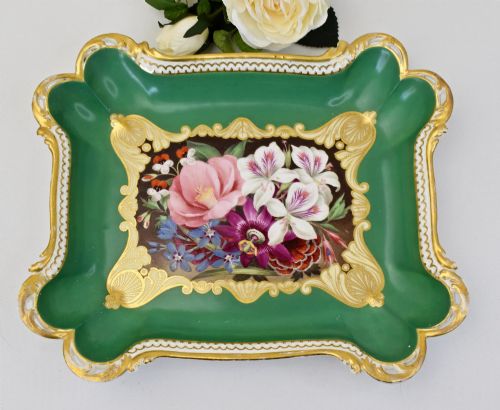
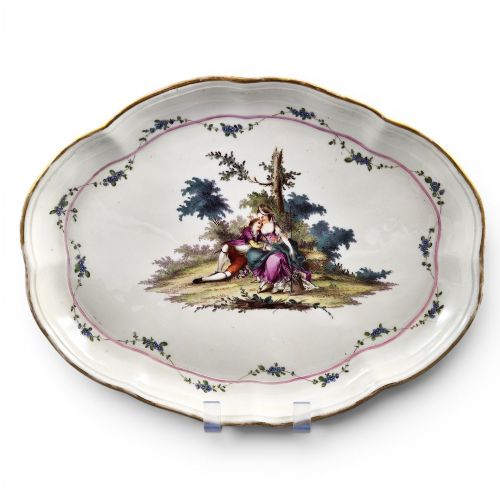
A hand painted ceramic tray takes many forms across this selection, including serving dishes, dessert platters, pin trays, inkstands and vide-poche dishes. These pieces originate from English, French, German, Chinese, Japanese and Dutch makers spanning the eighteenth, nineteenth and early twentieth centuries.
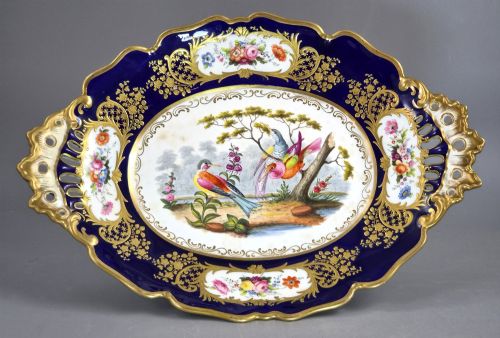
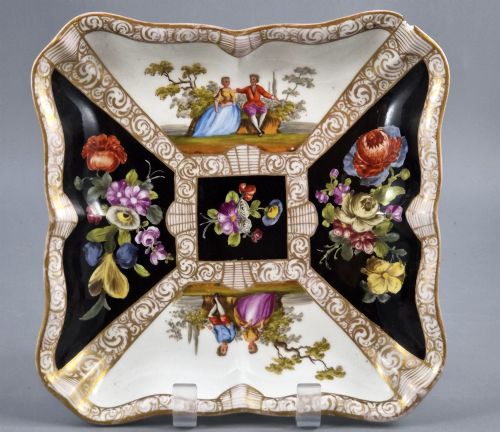
The version most commonly met on this page is the nineteenth-century porcelain or earthenware dish, often decorated with polychrome florals, exotic birds or hand-painted scenes in styles ranging from Rococo Revival to Chinese Export.
Makers utilised various physical configurations such as oval, square, fan and shell shapes to serve specific domestic functions, from desktop inkwells to large dessert presentations.
How they were made
Potters formed these items using hard-paste porcelain, earthenware, and faience, shaping them into plates, dishes and trays before applying tin-glaze, cobalt blue or polychrome enamel pigments by hand.
Gilding, gold leaf and enamel work frequently accent the painted motifs, adding metallic lustre to porcelain and ceramic surfaces through careful firing techniques.
Makers incorporated bronze mounts, champlevé enamel and intricate moulded details to support heavier centrepieces and inkstands.
The selection includes forms from English, French, German, Dutch, Chinese, and Japanese ceramic traditions.
What varies in quality
The precision and detail of the hand-painted brushwork separate ordinary production wares from exceptional studio and factory pieces, particularly in rendered figures, avian plumage and botanical studies.
The application of gold leaf, gilding and cobalt blue underglaze varies significantly, dictating the visual depth and permanence of the decorative surface.
The complexity of the ceramic body form, such as moulded shell shapes, pierced edges or added bronze mounts, indicates the ambition of the original workshop.
Derby·Ludwigsburg Porcelain·Meissen Porcelain·Royal Doulton·Copeland and Garrett·Worcester·Doe and Rogers·Joseph Gaspard Robert·Paul Muller Selb·Royal Worcester·Wemyss·Samson Paris·Swansea Porcelain·Ridgway Porcelain·Minton Porcelain
The Hand Painted Ceramic Tray Glossary
- Hard-paste porcelain
- A dense, vitrified ceramic composed of kaolin and petuntse fired at high temperatures. It forms a durable body that resists scratching and absorbs no moisture.
- Faience
- Tin-glazed earthenware produced widely in France and the Netherlands. The opaque white glaze provides a smooth ground for painted decoration.
- Champlevé
- An enamelling technique where troughs are carved into a metal surface and filled with enamel powder before firing. This method creates bold coloured patterns against metallic boundaries.
- Vide-poche
- A small shallow tray or dish designed for emptying pockets of small items. These catch-alls sit typically on a hallway table or desk.
- Kakiemon
- An asymmetric Japanese ceramic style featuring delicate enamels on a milky white porcelain body. Motifs often include birds, flowers and banded hedges.
Hand Painted Ceramic Tray: Frequently Asked Questions
How were these trays used historically?
These ceramic trays served various practical functions in domestic interiors, from presenting fruit and desserts at the dining table to holding writing implements on a desktop.
Smaller variants acted as pin trays or vide-poches for retaining coins and trinkets in private rooms and hallways.
How do I care for a painted ceramic tray?
Clean antique ceramics gently with a dry or barely damp microfiber cloth to remove dust without disturbing fragile gilt edges or enamel pigments.
Avoid submerging pieces in water or using abrasive cleaning agents, particularly on items featuring exposed earthenware or delicate overglaze painting.
How can I tell different porcelain periods apart?
Examine the base of the piece for factory marks, seals, or blue underglaze signatures that indicate specific manufacturing eras and workshops.
Style indicators such as Rococo Revival moulding, Chinese Export motifs, or Victorian floral reserves also point to distinct periods of production.
What is the difference between porcelain and faience?
Porcelain is a vitrified, non-porous ceramic fired at high temperatures to achieve a hard, translucent body that rings when struck.
Faience is an earthenware body coated with an opaque tin glaze, resulting in a heavier, opaque structure with a softer ceramic base.