
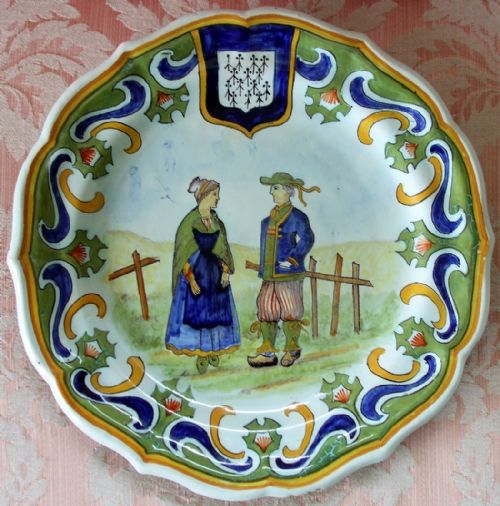


French Faience Pottery
French faience pottery brings tin-glazed earthenware and hand-painted ceramic charm to any room through centuries of traditional regional craft.
French Faience Pottery
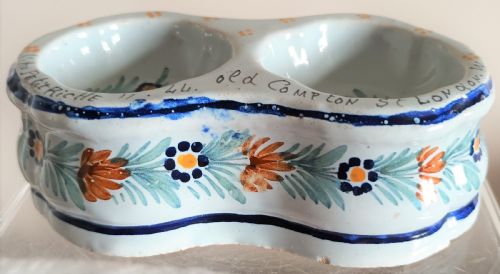
French faience pottery encompasses tin-glazed earthenware and ceramic pieces originating from various French regions and eras. Buyers seek these items for their distinct painted decoration and historic regional character.
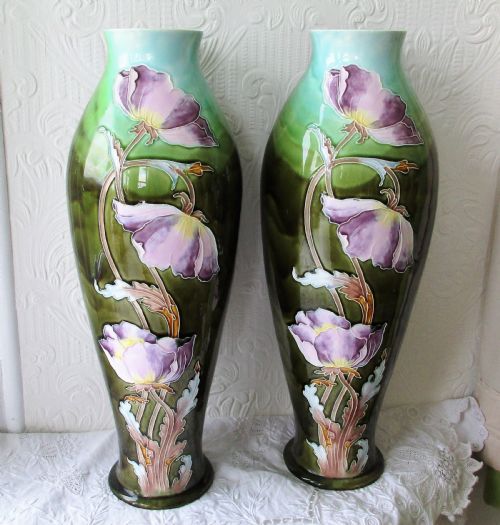
The selections available span multiple centuries, with 19th-century production and Quimper wares appearing frequently alongside 18th-century dishes and later Art Nouveau or Art Deco designs.
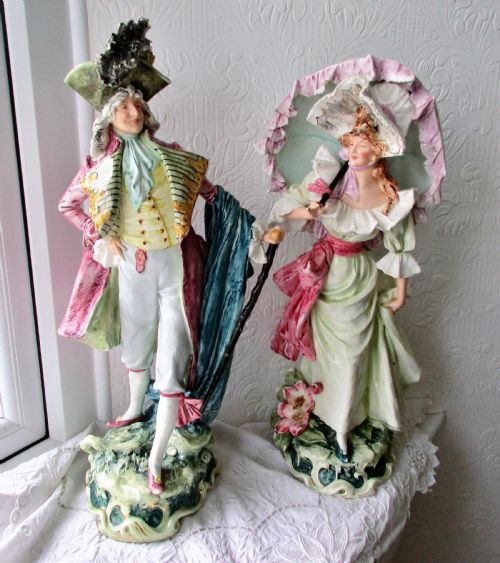
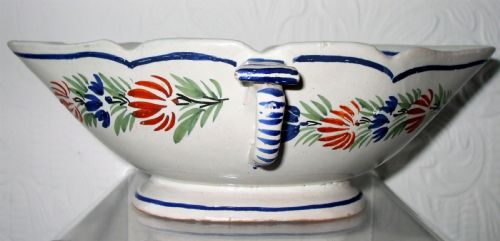
Forms range from everyday tablewares like sauceboats, salt cellars and plates to decorative vases, figurines, plaques and sculptural animals.
How they were made
Potters shaped earthenware and ceramic bodies before applying an opaque tin glaze that created a smooth white surface for hand-painted ornamentation.
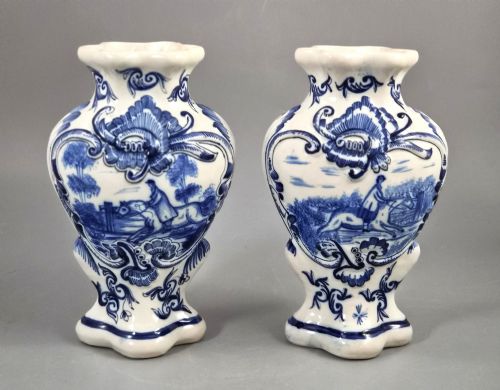
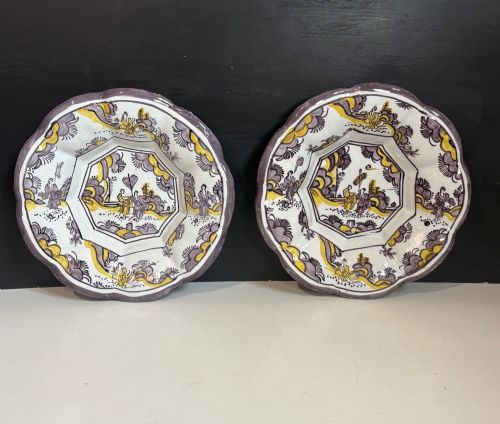
Makers utilised cobalt blue, manganese purple and polychrome pigments to depict figures, florals and heraldic motifs directly onto the absorbent unfired glaze.
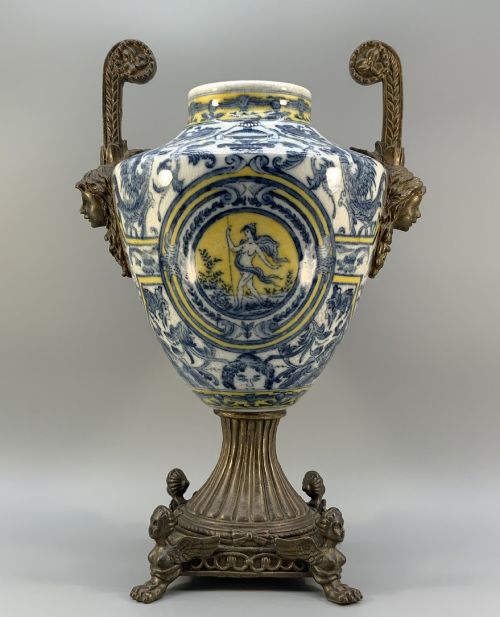
Certain specialised pieces incorporated moulded details, bronze mounts or cloisonné enamel effects to enhance the finished ceramic object.
Ceramic pigs, cats, and poodles populate the kiln output alongside human figures, proving that historic potters loved pets as much as we do.
What varies in quality
Quality depends upon the clarity and precision of the hand-painted brushwork, distinguishing swift factory production from accomplished individual artistry.
The consistency of the tin glaze and the complexity of the moulded form, such as figurative sculptures or botanical urns, influence the refinement of the piece.
Fourmaintraux-Courquin·HB Quimper·HR Quimper·Jules Vieillard·Veuve Perrin·Le Manceau
The French Faience Pottery Glossary
- Faience
- Tin-glazed earthenware made in France. This technique creates a milky white background suitable for colourful hand-painted designs.
- Quimper
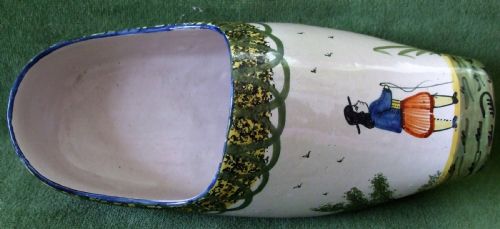
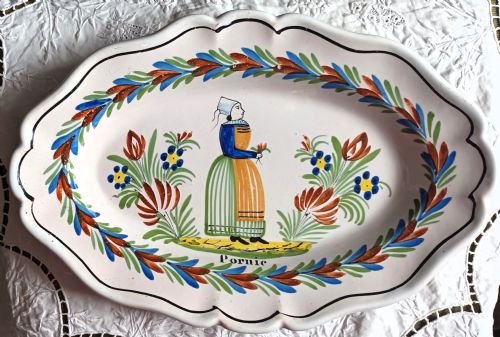
- Pottery produced in the Breton town of Quimper. Pieces often feature traditional regional figures and floral borders.
- Tin Glaze
- A lead glaze made opaque by the addition of tin oxide. It provides the characteristic white ground for decorative painting.
- Sauceboat
- A vessel designed for serving sauces at the table. These often feature double spouts and handles in regional earthenware.
- Polychrome
- Decoration employing multiple colours. Artisans used various mineral pigments to achieve varied painted scenes.
French Faience Pottery: Frequently Asked Questions
How do I clean old faience?
Wash gently by hand using lukewarm water and mild soap. Avoid soaking or placing pieces in a dishwasher.
Dry thoroughly with a soft cloth to protect the historic tin glaze from moisture damage.
Can I use these for dining?
Historic tin-glazed ceramics often feature crazing and softer earthenware bodies. Modern food use is generally discouraged.
Display them as decorative objects or table centerpieces instead of everyday tableware.
How do I identify Quimper pottery?
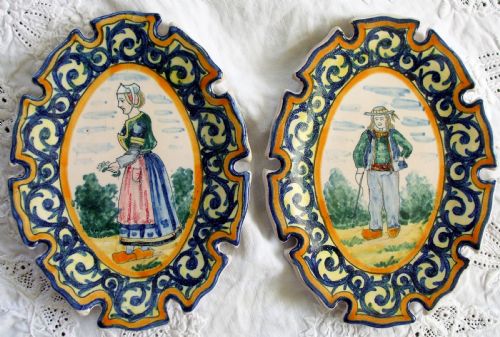
Look for hand-painted motifs depicting Breton peasants in traditional regional costume. Signatures or factory marks on the base often confirm the origin.
Blue and yellow colour palettes frequently characterise these pieces.
What is a vide-poche dish?
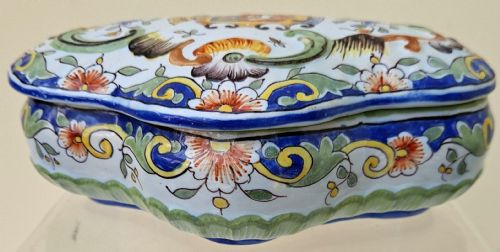
A vide-poche translates as an empty-pocket dish used for holding small daily items. People placed them near entryways for keys and coins.
They appear in various decorative ceramic styles across the nineteenth century.