
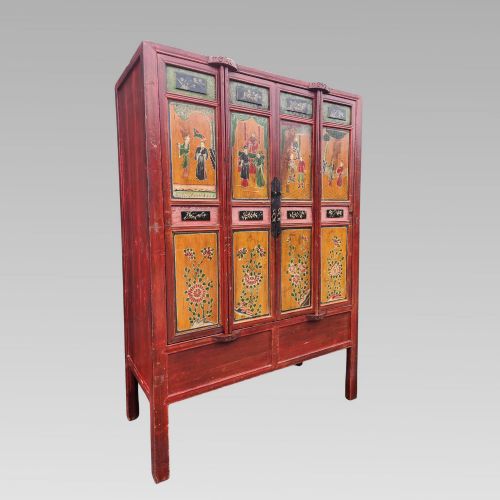


Hand Painted Asian Cabinet
These hand painted asian cabinet examples bring centuries of pigment and lacquer directly to your room, offering substantial storage alongside striking focal points.
Hand Painted Asian Cabinet
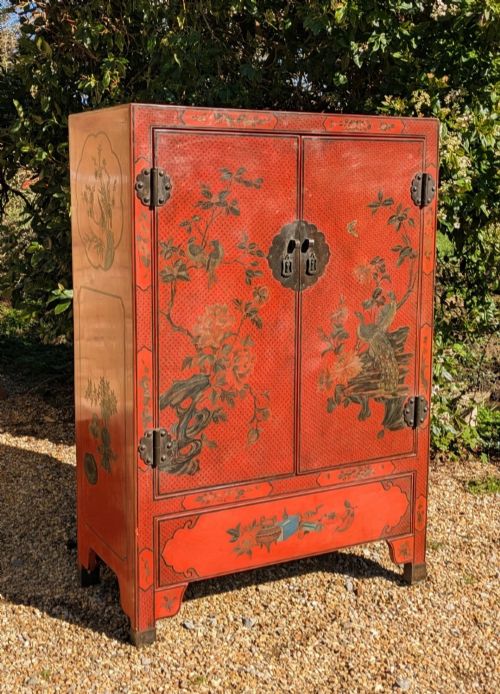
A hand painted asian cabinet serves as both practical storage and a visual anchor in a room, drawing the eye with detailed surface decoration. When exploring this selection, you encounter various forms including side cupboards, marriage chests, and larger storage units.
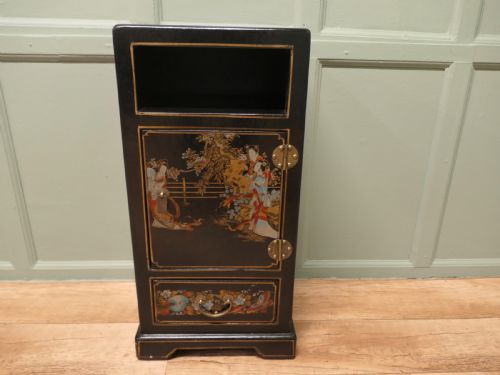
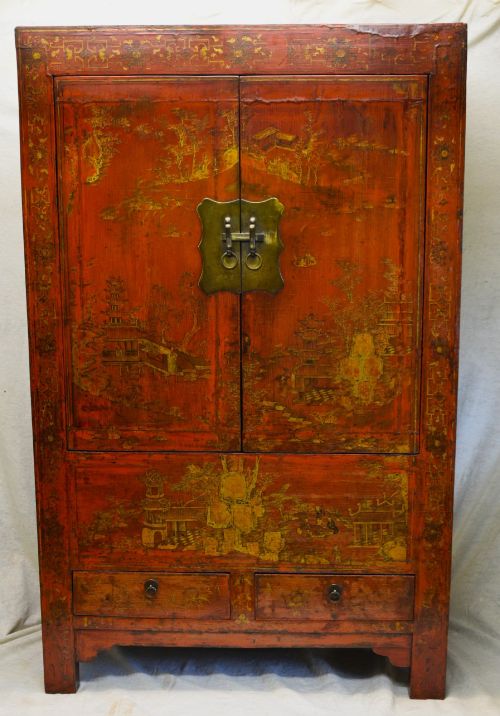
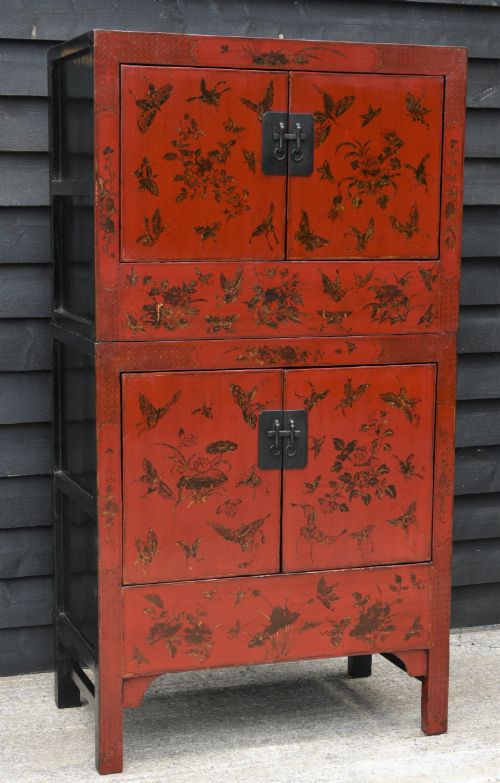
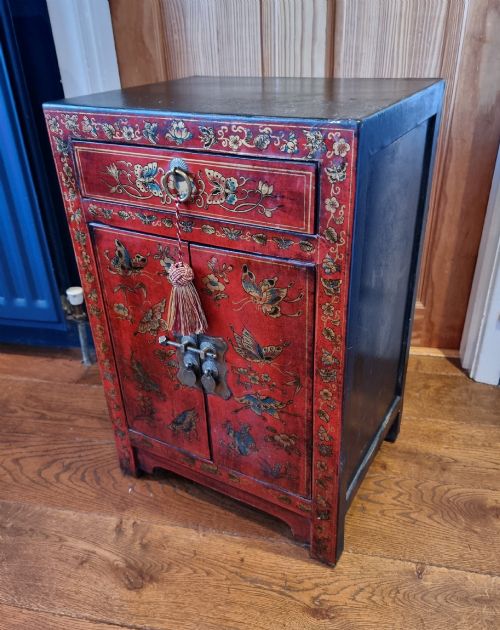
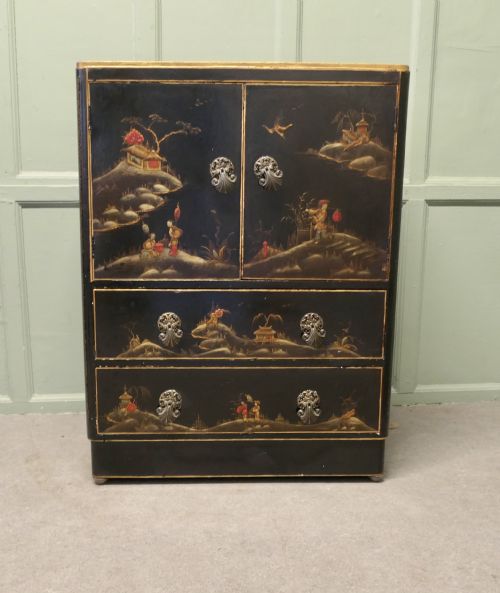
The objects span multiple eras, most frequently appearing from the nineteenth century through the early decades of the twentieth century. Chinese red lacquer wedding cabinets and black Chinoiserie side cupboards dominate the current selection.
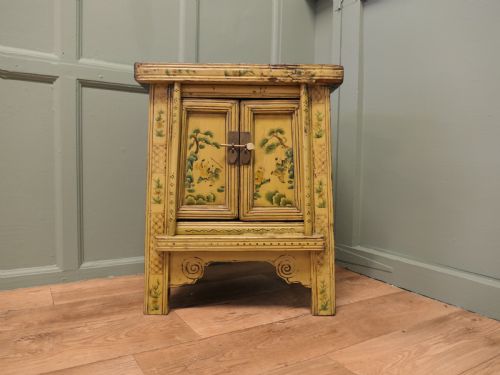
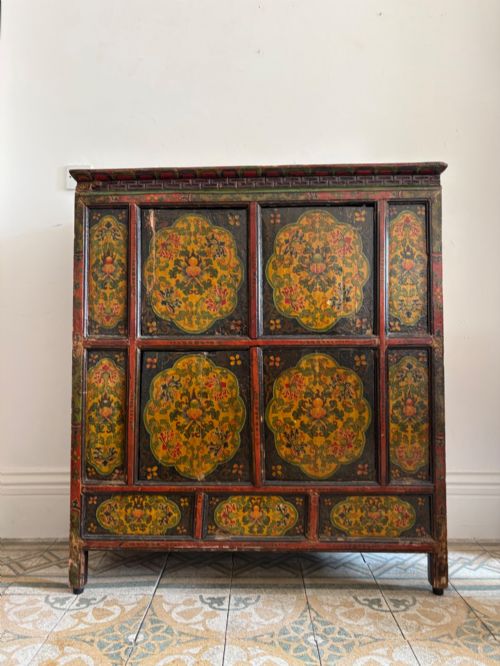
Origin points stretch across Asia, incorporating Tibetan floral storage pieces, Korean painted chests, and traditional Chinese marriage armoires. These pieces reflect distinct regional aesthetics while sharing a foundation of painted surface work.
How they were made
Wood serves as the primary structural material for these storage pieces, frequently prepared with layers of lacquer to create a smooth canvas for the artisan. Artisans applied gold leaf and enamel pigments directly onto the prepared wooden surfaces to build complex pictorial scenes.
Metal hardware such as brass plates and hinges provides functional support while framing the painted panels. The combination of lacquered wood, gilt detailing, and brass fittings characterises the manufacturing approach seen across these items.
The furniture styles represented across the inventory include Chinoiserie, traditional Chinese, Tibetan, and Korean Joseon aesthetics.
What varies in quality
The depth and complexity of the painted surface dictate much of the visual merit, distinguishing simple geometric decoration from intricate figurative scenes. Pieces featuring layered gold leaf and detailed enamel work demonstrate higher levels of artisan investment.
The preservation of the original lacquer and pigment layers remains central to the character of each piece. Cabinets retaining their early surface finishes without heavy later repainting offer a more authentic representation of their period.
The Hand Painted Asian Cabinet Glossary
- Chinoiserie
- European interpretation and imitation of Chinese artistic traditions and motifs, popular in furniture decoration. This style often employs black or red lacquer backgrounds adorned with gilt figures and landscapes.
- Lacquer
- A durable resin finish applied to wooden furniture in multiple thin layers before being polished. It creates a hard, glossy surface that protects the wood and accepts painted decoration.
- Gilt
- Application of gold leaf or gold powder onto a surface to create metallic highlights. It frequently outlines panels and figures on decorative storage pieces.
- Marriage cabinet
- A traditional large Chinese storage piece given to couples upon their wedding, often finished in red lacquer to symbolise good fortune. These units provide deep interior storage behind double doors.
- Imari
- A style of Japanese porcelain featuring blue, iron red, and gold decoration, occasionally referenced in related decorative listings. It represents the vibrant ceramic output exported during the Meiji period and earlier.
Hand Painted Asian Cabinet: Frequently Asked Questions
Where should I place a hand painted asian cabinet?
These cabinets suit living rooms, hallways, or dining spaces where their decorative surfaces can serve as a primary focal point. Their substantial storage capacity allows them to function effectively as linen cupboards or media units.
Position them away from direct sunlight and strong heat sources to protect the delicate lacquer and painted details from drying or cracking over time.
How do I care for lacquered wood furniture?
Dust the surfaces regularly with a soft, dry cloth to prevent particulate buildup on the painted and gilded details. Avoid using commercial liquid polishes, abrasive cleaners, or chemical solvents that can soften or strip the historic lacquer.
Maintain a stable room humidity level to prevent the underlying wood from expanding or contracting, which can stress the hard lacquer finish.
What is the difference between Chinese and Tibetan painted cabinets?
Chinese storage pieces often feature high gloss red or black lacquer finishes with precise gilt court scenes, floral motifs, or symbolic marriage decorations. They lean toward formal symmetry and structured architectural framing.
Tibetan examples tend to display brighter, multi-coloured mineral pigments with looser floral or geometric borders reflecting distinct regional folk traditions. Their construction and surface textures often appear more rustic than their urban Chinese counterparts.
How can I tell the age of a painted cabinet?
Examine the timber construction methods, visible tool marks on the interior boards, and the natural wear patterns within the lacquer. Older pieces from the nineteenth century display characteristic shrinkage in the wood and gentle softening of the pigments.
Hardware placement, hand-forged brass hinges, and the specific composition of the underlying layers provide further clues regarding the period of manufacture.