



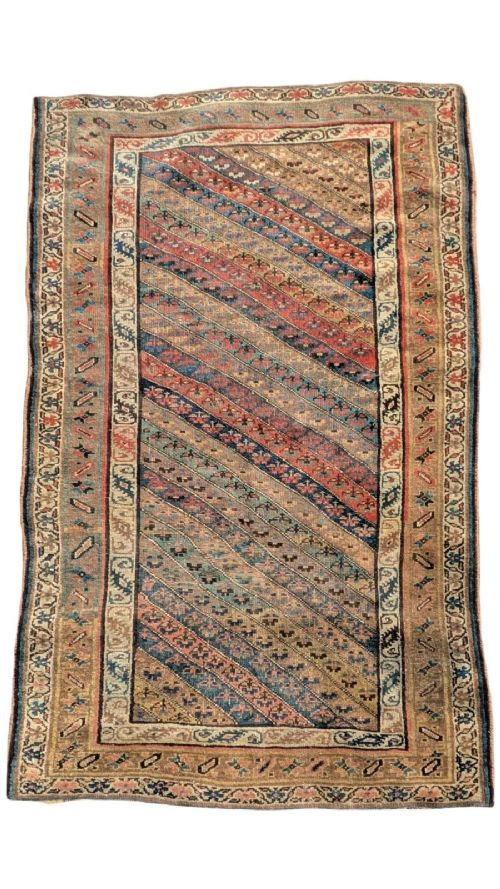
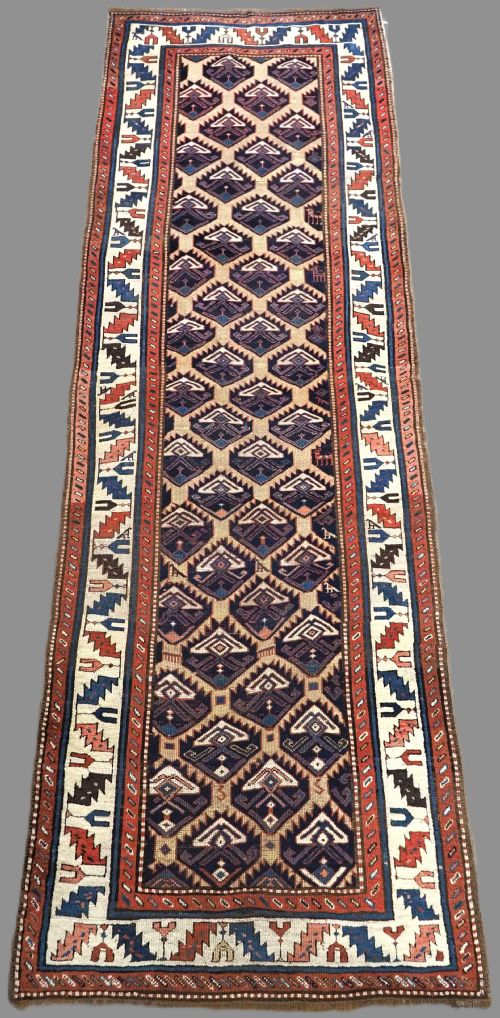
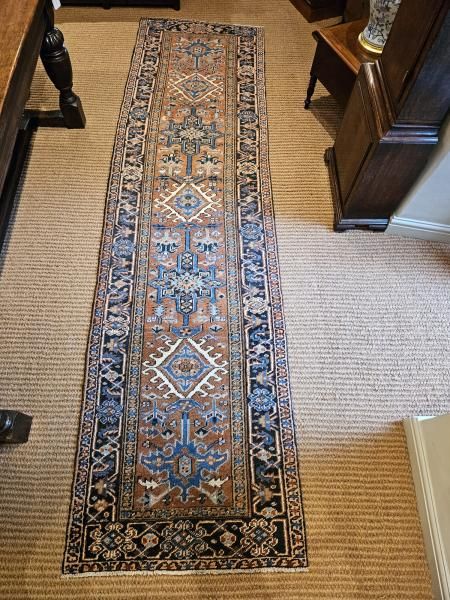
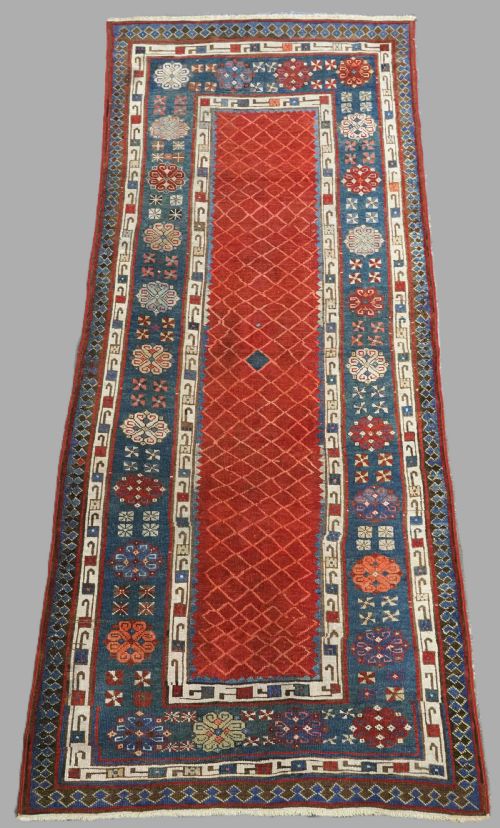
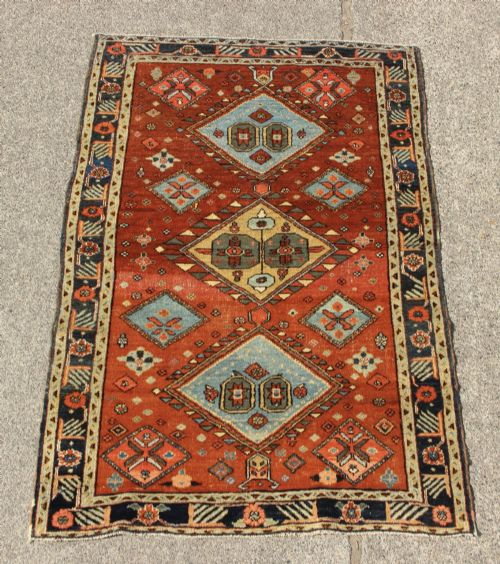
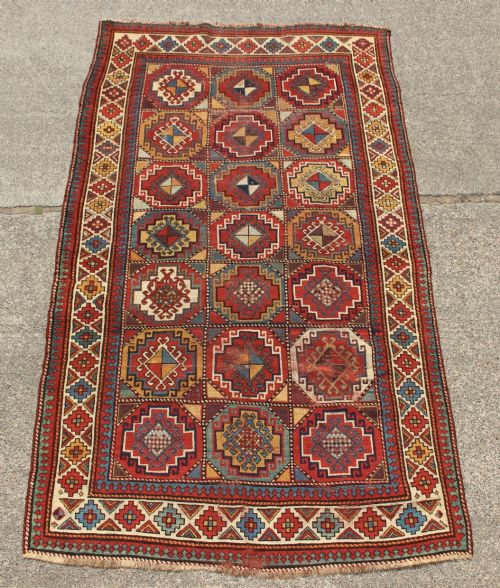
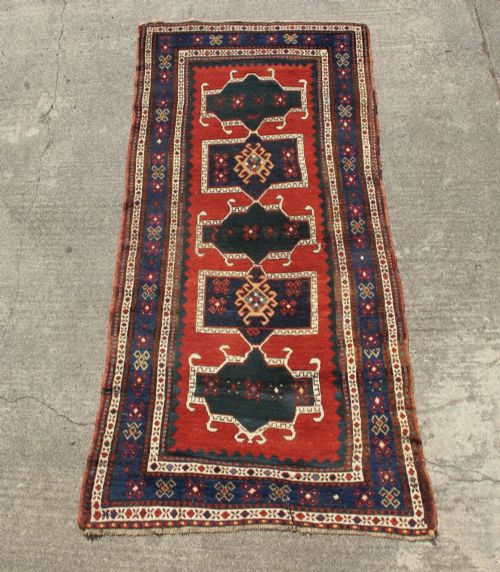
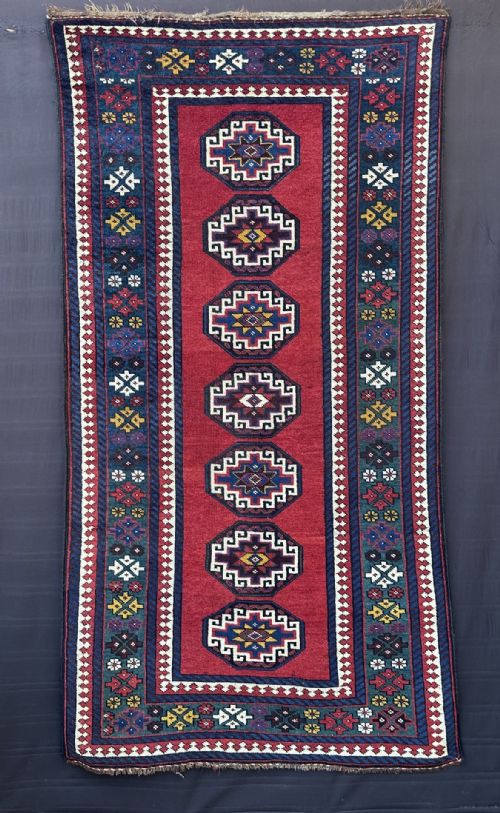
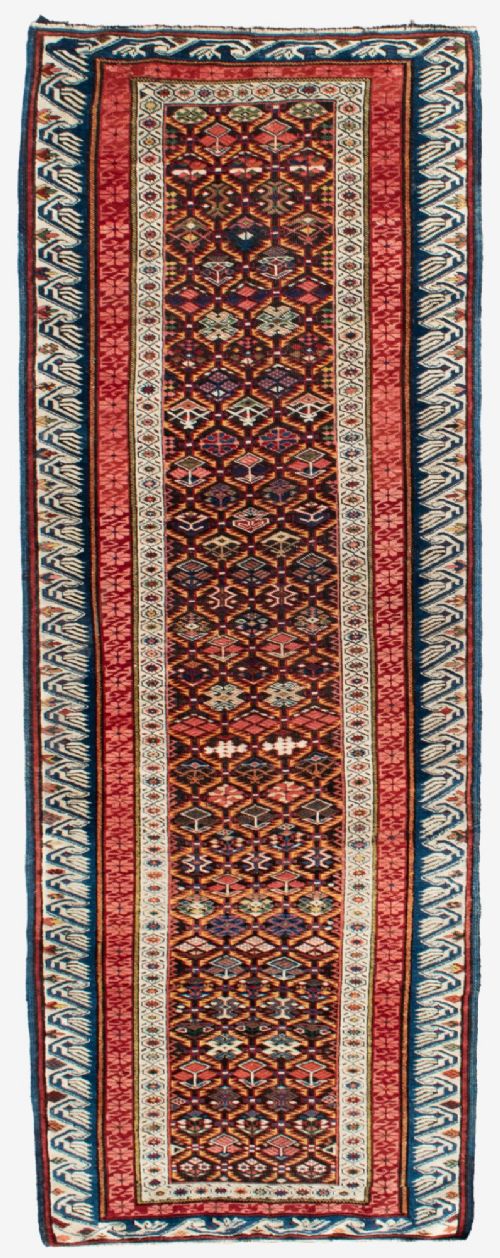
Hand Knotted Caucasian Runner
A hand knotted caucasian runner brings geometric vigour and rich wool texture to a hallway or narrow space.
Hand Knotted Caucasian Runner
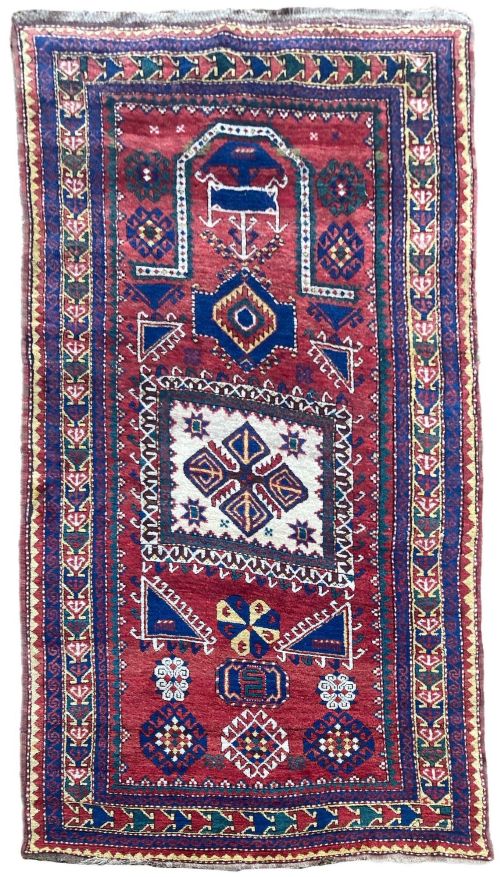
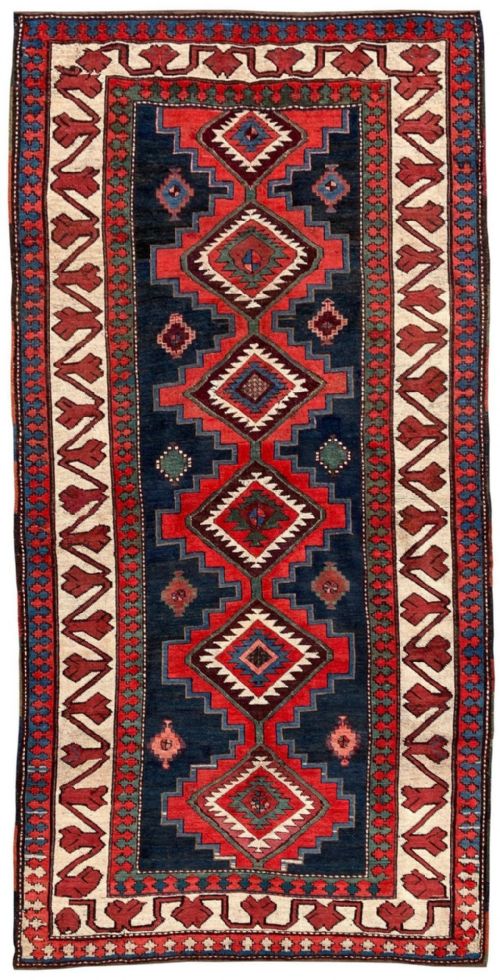
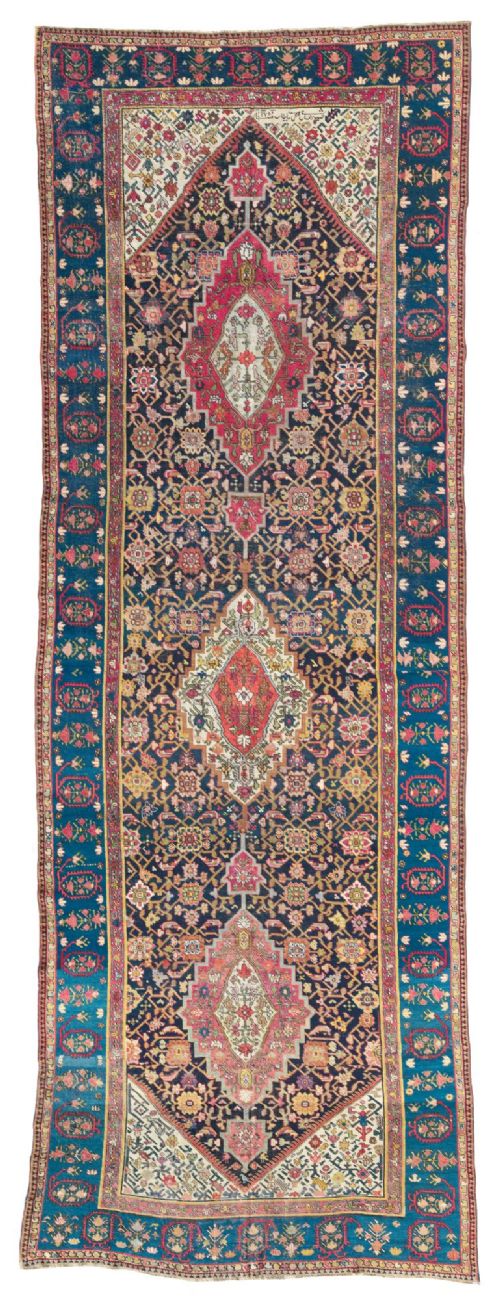
A hand knotted caucasian runner is a narrow, elongated textile created by tribal weavers in the Caucasus region during the nineteenth and early twentieth centuries. These pieces display distinct geometric medallions, hooked polygons, and lattice motifs that reflect centuries of regional weaving traditions.
Most examples found in commerce date from the 1870s to the 1930s, spanning periods from the late nineteenth century through to the early decades of the twentieth. They function primarily as hallway runners and long rugs, bringing tribal character and structured pattern to domestic interiors.
Materials and Construction
Weavers utilised wool for the pile, often hand-spinning the fleece to create a durable, resilient surface that responds well to traditional wear. Cotton appears alongside wool for foundations and support structures, giving the elongated formats structural stability.
Natural dyes provide the palette, yielding mellow colours and deep tones that age gracefully over decades. The construction relies entirely on hand knotting techniques passed down through generations of Kurdish, Kazak, and Caucasian craftspeople.
Certain antique Kazak runners arrive with wonderfully crooked geometry, revealing the charming asymmetry of human hand-weaving.
Distinctions in Quality
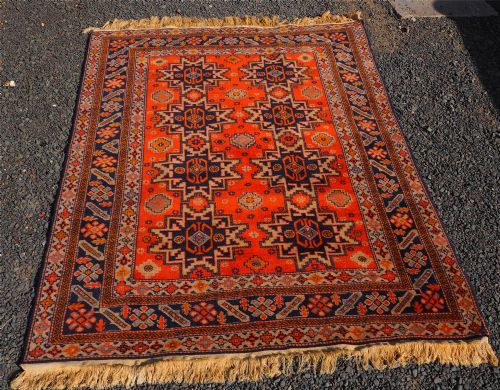
The fineness of the knotting and the crispness of the geometric design determine the standard of an individual runner. Denser knots allow intricate motifs like Lezghi stars and lattice patterns to appear sharp and well-defined.
The condition of the wool pile and the depth of the natural dyes significantly influence the visual impact. Examples retaining vibrant, untouched palettes and strong structural integrity stand apart from heavily worn pieces.
The Hand Knotted Caucasian Runner Glossary
- Pile
- The upright yarn loops that form the soft surface of the carpet. This layer bears the direct friction of footsteps.
- Knot
- The individual loop of wool tied around warp threads to build the design. Hand knotting defines the labor-intensive production method.
- Warp
- The vertical threads stretched on the loom that hold the foundation together. These run the entire length of the runner.
- Weft
- The horizontal threads passed across the warp to lock the knots in place. They alternate with rows of knots to secure the structure.
- Natural dye
- Colouring matter derived from plants, insects, and minerals rather than synthetic chemicals. These substances produce complex, harmonious tones.
Hand Knotted Caucasian Runner: Frequently Asked Questions
Where do these runners originate?
These runners originate from the Caucasus region, bridging Europe and Asia, where various tribal groups produced distinct regional designs.
Weavers in areas such as Shirvan, Karabagh, and Kazak developed specific geometric vocabularies that identify their local workshops.
How do I care for antique wool runners?
Protect the wool pile by placing a suitable underlay beneath the runner to prevent slipping and reduce friction against hard floors.
Vacuum gently without using a rotating brush roll, and arrange for professional specialist cleaning when required.
What styles appear in these runners?
The designs feature tribal motifs including lattice patterns, animal figures, and geometric Kazak medallions.
Mellow colours and traditional oriental compositions predominate across nineteenth and early twentieth century examples.
How are different regional types distinguished?
Distinctions rely on specific border arrangements, colour palettes, and characteristic medallion shapes unique to each Caucasian weaving group.
For instance, Kazak pieces favour bold geometric forms, while Shirvan and Seychour runners often display refined lattice structures.