

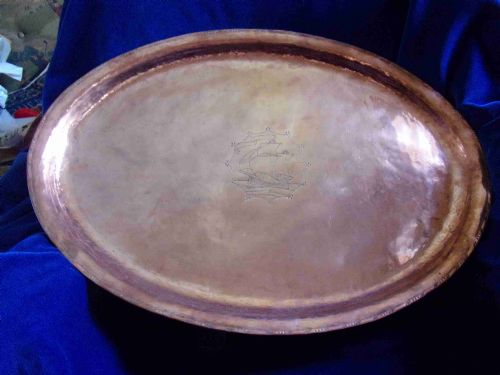


Hand Hammered Tray
These hand hammered tray pieces bring tactile depth and historic metalwork directly into daily life.
Hand Hammered Tray
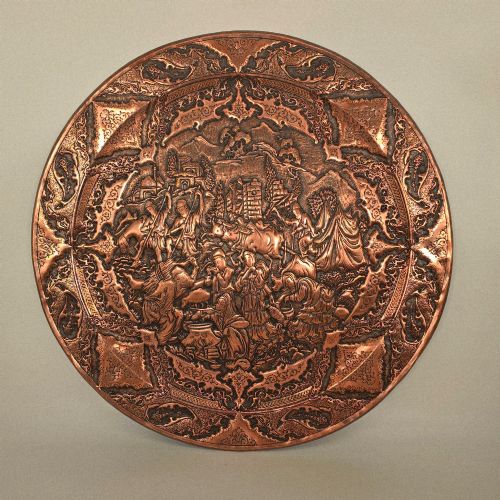
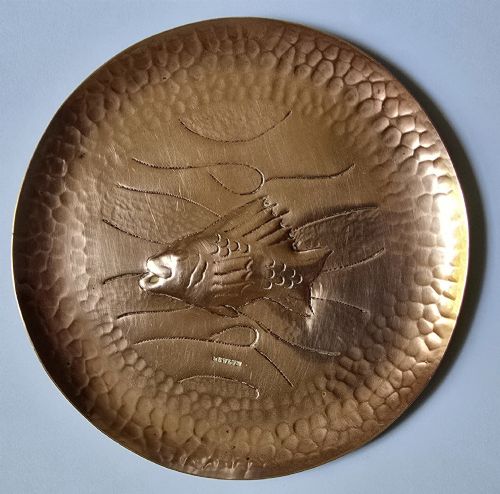
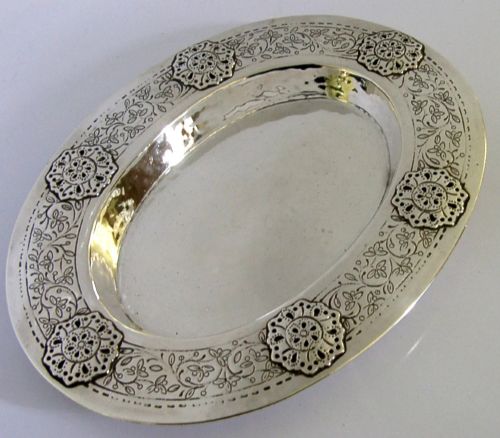
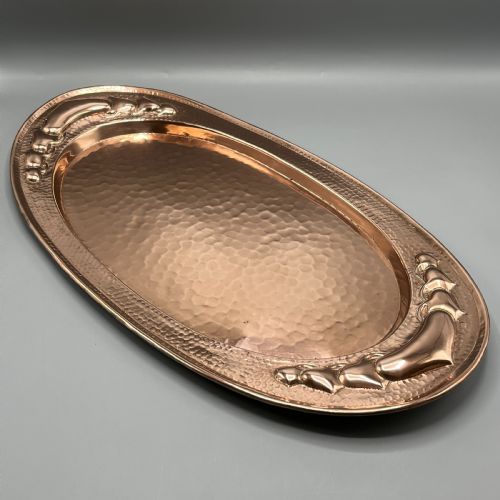
A hand hammered tray encompasses metalwork forms spanning card trays, decorative chargers, and wall plates produced across the late nineteenth and early twentieth centuries. Most examples meet the eye in copper and pewter, reflecting the dominant metalworking choices of the era.
The aesthetic leans heavily into Arts and Crafts and Art Nouveau ideals, alongside distinct Persian and Anglo-Indian regional influences. Collectors encounter everything from small visiting card trays to large decorative platters bearing organic motifs.
These items originate primarily from British workshops, regional guilds, and international trading contexts, capturing a specific period of manual craftsmanship. The selections on this page demonstrate the enduring appeal of beaten metal surfaces in domestic interiors.
How they were made
Artisans shaped these pieces using copper, pewter, and sterling silver, transforming sheet metal through intensive manual striking. The process relies on repeated hammering to build structural form while creating distinctive surface textures.
Techniques such as repoussé work and chasing push the metal from the reverse to raise motifs of foliage, pomegranates, and clover flowers. Enamel accents occasionally appear to add colour contrast against the hammered ground.
Makers finished many surfaces with patination or polished highlights to accentuate the individual marks left by the hammer. This direct hand labour ensures that every piece bears unique physical evidence of its creation.
Listings feature copper and pewter predominantly, alongside sterling silver, spanning the decades from the eighteen-eighties to the nineteen-thirties.
What varies in quality
Quality rests in the precision and rhythm of the hammer marks across the surface, distinguishing intentional texture from uneven manufacturing. The best examples display a harmonious relationship between the weight of the metal and the depth of the repoussé relief.
Design execution separates standard domestic wares from exceptional studio output, particularly where motifs like pomegranates or geometric patterns integrate seamlessly with the rim and handles. Maker identification, through stamps or known attribution, further elevates the standing of a piece.
Newlyn·Liberty & Co.·Hugh Wallis·Faulkner Bronze Company
The Hand Hammered Tray Glossary
- Repoussé
- A metalworking technique where the artisan hammers the design from the reverse side to form a raised relief on the front. This method creates tactile depth in floral and figurative motifs.
- Pewter
- A malleable metal alloy consisting primarily of tin, traditionally used for domestic vessels and decorative plates. It offers a dull silvery lustre well suited to beaten surface treatments.
- Patinated Copper
- Copper that has been chemically or naturally aged to alter its surface colour, ranging from dark browns to mottled greens. This finish highlights the handmade texture of the metal.
- Card Tray
- A small receptacle historically utilised for presenting visiting cards in a hallway or receiving room. These miniature trays often feature intricate border decoration.
- Arts and Crafts
- A design movement valuing hand craftsmanship and traditional materials over mass production. Objects from this period frequently celebrate the visible marks of the maker's tools.
Hand Hammered Tray: Frequently Asked Questions
Are these trays suitable for daily use?
Many smaller trays and dishes function well for holding everyday items like keys, coins, or calling cards.
Larger chargers and wall plates are generally intended for decorative display rather than heavy service.
How do I identify an Arts and Crafts tray?
Look for visible hammer marks, organic motifs such as pomegranates or foliage, and substantial weight in the metal.
Maker stamps or workshop hallmarks on the reverse often confirm the origin and period.
What is the difference between pewter and copper?
Pewter is a tin alloy that offers a softer, silvery grey tone and a heavier, more muted feel in the hand.
Copper provides a warm metallic reddish hue that accepts patination and deep repoussé detailing with sharp definition.