


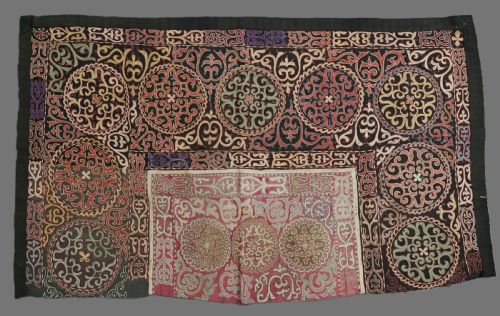
Hand Embroidered Suzani Panel
A hand embroidered suzani panel brings vibrant Central Asian textile artistry and intricate needlework into modern interiors.
Hand Embroidered Suzani Panel
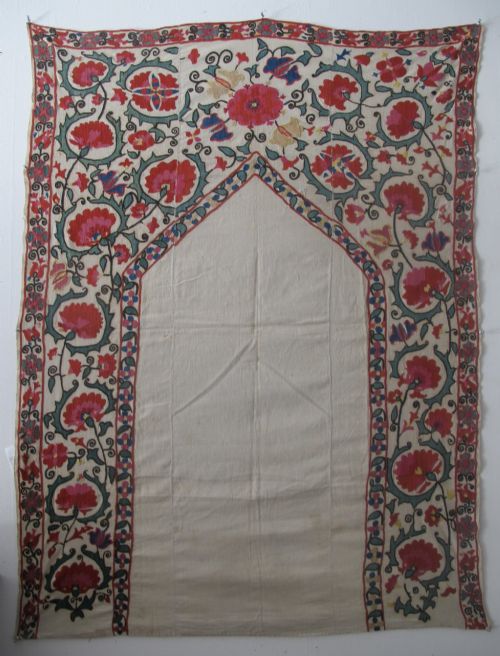
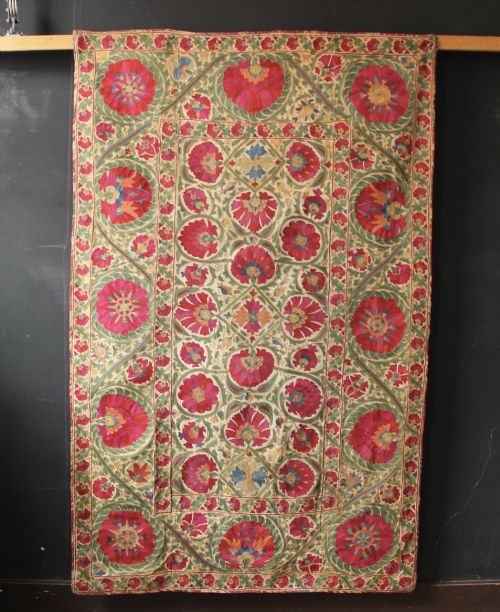
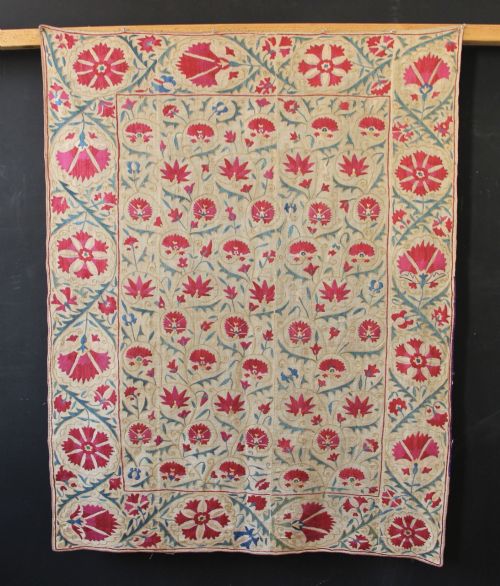
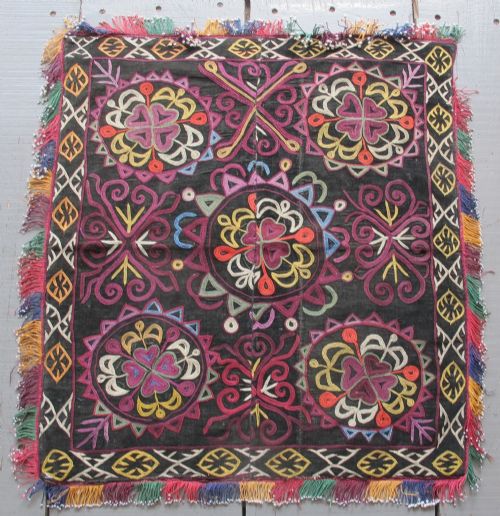
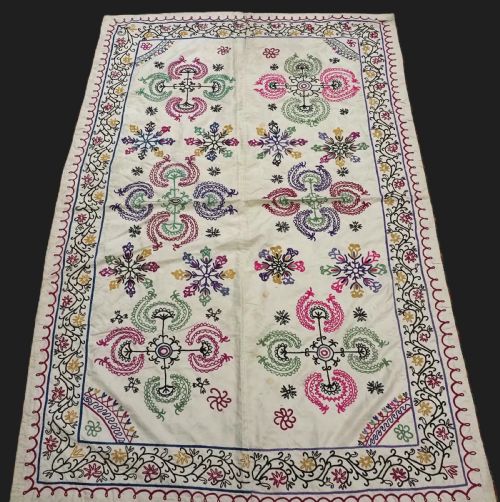
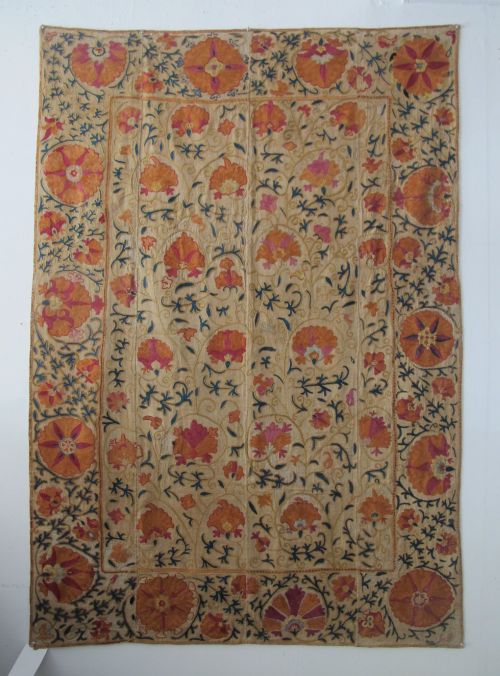
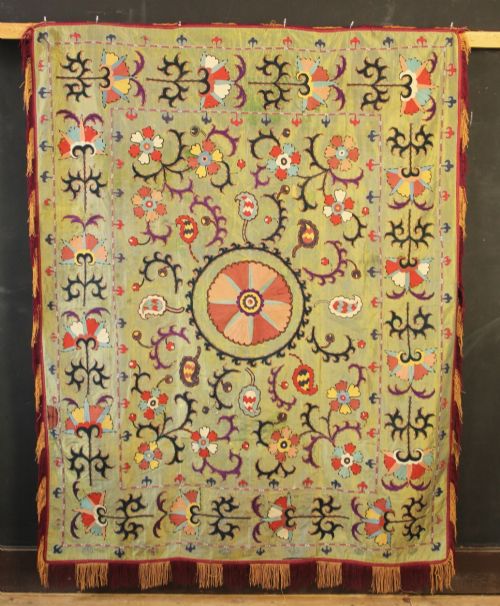
When searching for a hand embroidered suzani panel, buyers encounter traditional Central Asian wall hangings, covers, and decorative textiles originating largely from Uzbekistan. These pieces take various regional forms, including smaller nim suzanis, large palak designs with central stars, and architectural Bokhara compositions.
The objects stem predominantly from the nineteenth and early twentieth centuries, reflecting the folk art traditions of Uzbek, Tajik, Kyrgyz, and Lakai makers. Most examples function as decorative wall art, mounted displays, or ceremonial domestic items.
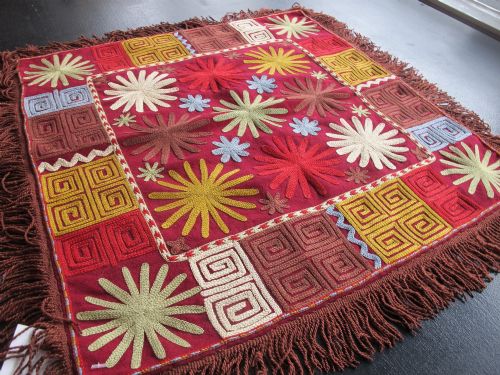
Smaller formats such as mirror covers, torbas, and saddle covers also appear alongside expansive full-size wall hangings. Each piece demonstrates traditional regional motifs rooted in Central Asian tribal culture.
Materials and Construction Techniques
Makers utilised fine silk threads to apply dense embroidery onto foundational grounds constructed from cotton, linen, wool, or adras silk-cotton blends. Certain regional works also incorporate velvet or glass beads for added texture and visual depth.
Needlework techniques vary by tribal group and region, encompassing specialised stitches that form bold floral patterns, geometric arrangements, and intricate central medallions. Natural ground cloths in red, yellow, black, or green provide a strong contrast to the luminous silk embroidery.
Some nimble nineteenth-century makers snuck glass beads right into the silk foliage.
Assessing Quality and Execution
The condition of the base fabric and the preservation of the vibrant silk threads strongly influence the standing of an individual panel. Pieces featuring fully embroidered fields or distinctive regional signatures like Tashkent palak motifs command particular attention from collectors.
The Hand Embroidered Suzani Panel Glossary
- Nim Suzani
- A half-sized or smaller version of a standard suzani panel, often utilised for specific domestic furnishings or compact display spaces.
- Palak
- A fully embroidered Tashkent suzani variety dominated by large circular star medallions covering the entire ground cloth. This type represents a major regional style.
- Adras
- A traditional Central Asian woven fabric made from a combination of silk and cotton yarns. It serves as a textured ground for needlework.
- Tush Kyiz
- A large embroidered wall hanging traditionally made in Kyrgyzstan to decorate the interior of a yurt. They display elaborate symbolic ornamentation.
Hand Embroidered Suzani Panel: Frequently Asked Questions
What is a suzani panel?
A suzani panel is a traditional embroidered textile originating from Central Asia, principally Uzbekistan, created as a decorative wall hanging or domestic cover.
These pieces feature intricate silk needlework on cotton or silk grounds, displaying rich floral and geometric motifs rooted in regional folk traditions.
How were original suzanis used?
Historically, families used these textiles as wall hangings, ceremonial covers, wedding furnishings, and domestic decorations within traditional homes and yurts.
Smaller formats served specific purposes such as mirror covers, saddle adornments, or storage bags for tribal communities.
How should I hang a textile panel?
Mounting a textile safely requires distributing the weight evenly across the entire width of the piece using conservation-grade framing or a specialised sleeve method.
Direct pinning or sustained tension on the fragile historic fabric should be avoided to protect the delicate silk threads and ground cloth.
How do I identify regional suzani styles?
Regional attribution relies on examining the specific embroidery stitches, colour combinations, and predominant motifs characteristic of centres like Bokhara, Samarkand, or Tashkent.
Tribal groups such as the Lakai also employ distinct design vocabularies and smaller formats that differentiate their output from city workshops.