






Hand Carved Wooden Saints
These hand carved wooden saints are devotional figures carved from timber, offering collectors centuries of ecclesiastical artistry and craftsmanship.
Hand Carved Wooden Saints
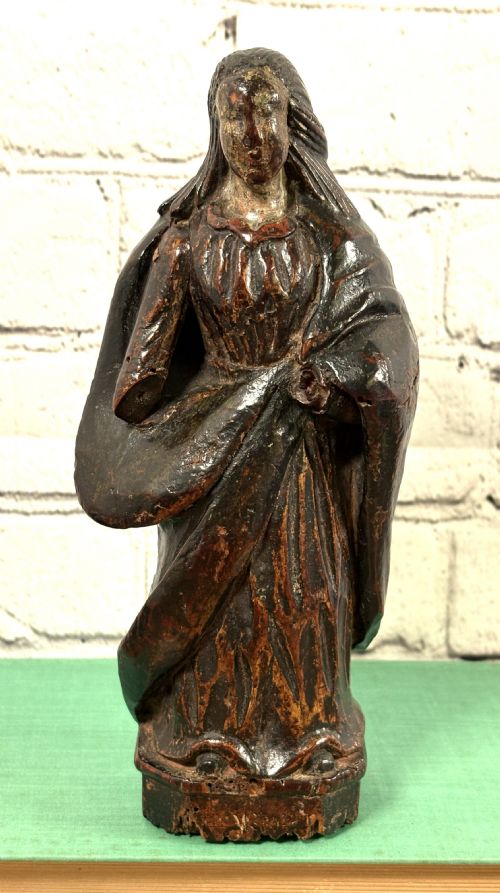
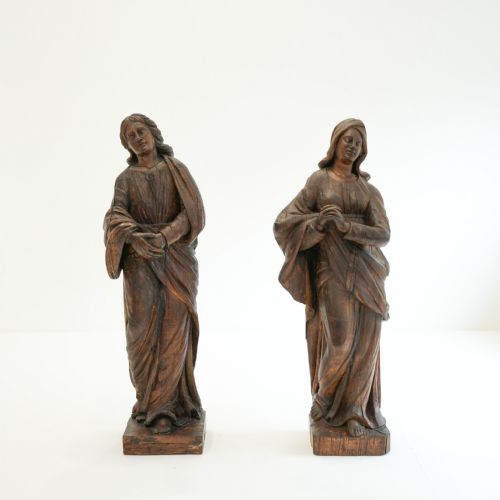
When you search for hand carved wooden saints, you encounter devotional sculptures spanning from pre-sixteenth century church figures to nineteenth-century folk art. The most frequent versions on this page are oak and limewood figures depicting figures such as the Virgin Mary, Saint Joseph, and various apostles.
The objects take the form of statues, processional figures, and church carvings originating from regions including Italy, Germany, and Croatia. These pieces range from monumental architectural remnants to smaller domestic folk art carvings created for private contemplation.
How they were made
The carvers utilised dense domestic timbers such as oak and limewood, working with gouges and chisels to shape the figures from solid blocks. Many surfaces received an application of gesso to prepare the wood for subsequent decoration.
Finishing techniques frequently involved polychrome paint and gold leaf to bring depth and luminosity to the garments and haloes. Over centuries, these layered finishes have worn down to reveal the underlying wood grain and preparation layers.
Listings feature oak, limewood, and carved wood alongside applied gesso, paint, and gold leaf.
What varies in quality
The primary distinction in quality lies in the anatomical precision and expressive depth of the carving, ranging from naive regional folk art to highly sophisticated ecclesiastical workshop production. Master carvers achieved fluid drapery folds and convincing facial expressions that elevate the sculpture beyond simple geometry.
The survival of original surface treatments, including polychrome pigment and gold leaf, significantly influences the integrity of a piece. Examples retaining genuine early finishes demonstrate greater material authenticity than those stripped or heavily repainted in later periods.
Franz Keller
The Hand Carved Wooden Saints Glossary
- Polychrome
- Decoration applied in several colours to the surface of wood or gesso. This technique was standard for medieval and baroque church figures.
- Limewood
- A fine-grained, pale timber favoured by European carvers for its even texture and suitability for intricate detail. It resists splitting during the carving process.
- Gesso
- A plaster mixture applied to wood as a smooth base for paint and gold leaf gilding. It seals the timber and provides a bright ground.
- Santos
- A carved figure representing a saint or religious personage, traditionally used in processional and domestic worship, particularly within Catholic traditions.
- Gothic Revival
- An architectural and decorative style from the nineteenth century that imitated medieval forms. This aesthetic influenced the creation of many revival saints on this page.
Hand Carved Wooden Saints: Frequently Asked Questions
How do I date an old wooden saint?
Dating relies on tool marks, timber species, and the style of the carving. Earlier pieces often display adze marks and heavier wood preparation.
Surface layers also help indicate age. Traces of original gesso and worn polychrome pigment provide clues to the century of manufacture.
Were these statues painted originally?
Most historic church figures were brightly painted and gilded to enhance realism and visual impact in dim chapels. Pigments were bound in oil or tempera over a gesso ground.
Many figures have lost their surface colour over time through cleaning or stripping, leaving bare wood exposed today.
How should I care for wooden saints?
Keep wooden sculptures away from direct heat sources and dramatic humidity fluctuations. Stable environmental conditions prevent the timber from splitting.
Dust the surface gently with a dry, soft brush. Avoid liquid cleaners or polishes that might damage fragile historic paint layers.
What is Alpine folk art style?
Alpine folk art refers to regional, domestic carvings produced in mountain communities. These pieces often feature simplified forms and local timber choices.
Unlike urban workshop pieces, folk carvings possess a direct, unpretentious charm reflecting regional traditions of devotion.