


Hammered Brass Fireside Bin
These hammered brass fireside bin pieces bring functional warmth to a hearth, offering sturdy containment for coal and logs.
Hammered Brass Fireside Bin
A hammered brass fireside bin is a utilitarian vessel designed for holding fuel near a fireplace, appearing primarily across Victorian and nineteenth-century eras. Such objects take the form of coal scuttles, log bins, coal boxes, and fireside buckets.
The versions most commonly met on this page span the Victorian period, nineteenth century, and specific dates like eighteen hundred, eighteen fifty, eighteen eighty, eighteen ninety, and nineteen hundred. These domestic items merge heavy metal utility with decorative domestic metalwork.
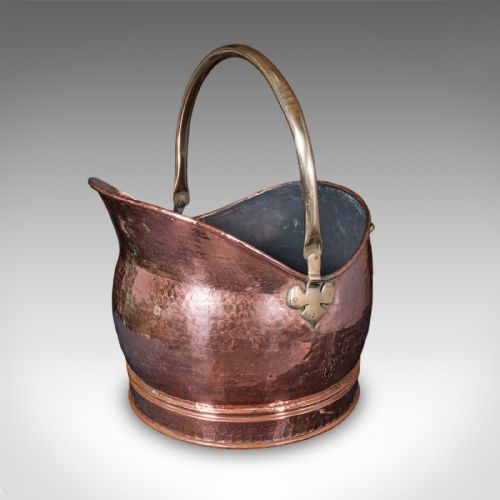
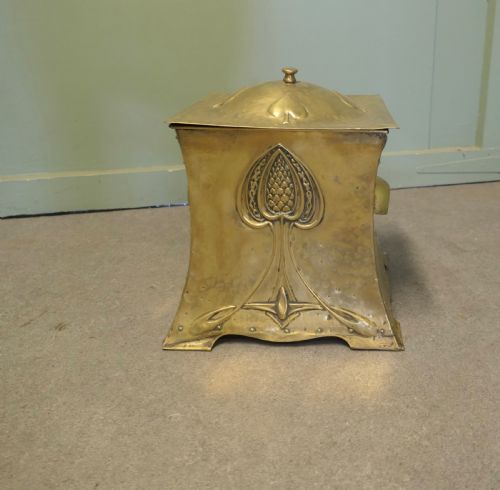
Forms range from helmet coal scuttles and coal receivers to log and coal boxes, alongside related fireside storage vessels. Stylistic influences lean toward Victorian, Arts and Crafts, and Art Nouveau expressions.
How they were made
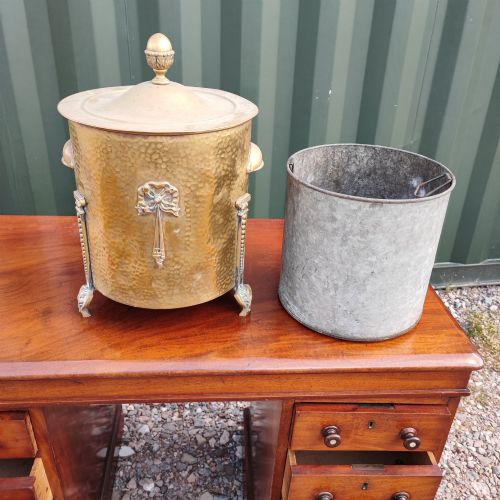
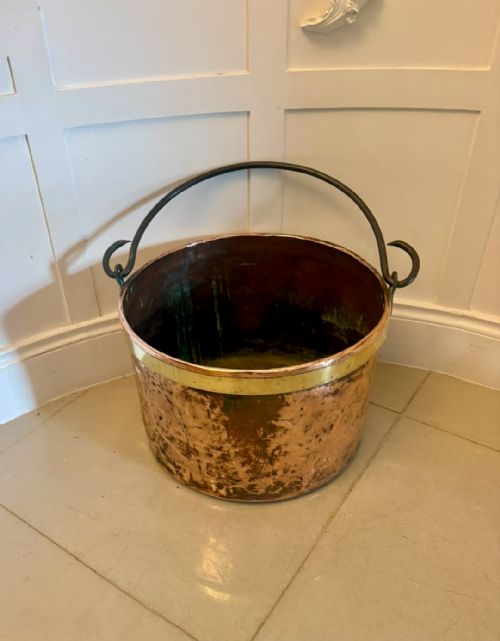
These items are constructed predominantly from brass, copper, and handbeaten or hand-finished copper, sometimes utilising galvanised metal, wrought iron, iron, and wood elements. Artisans shaped the sheet metal through manual hammering techniques to create textured, light-catching surfaces.
Makers formed the bodies of coal scuttles and log boxes by joining metal panels, adding decorative spade motifs or handles suited for hearthside service. The combination of brass and copper defined the visual character of nineteenth-century fireside accessories.
Some coal boxes come equipped with a spade decoration, ensuring your fuel gets properly introduced to its shovel.
What varies in quality
Quality reveals itself in the weight of the metal and the depth and regularity of the hand-beaten hammering across the surface. Heavier gauge brass and copper indicate a more substantial vessel built to withstand daily hearth duties.
Distinction also lies in the crispness of decorative detailing, such as applied spade motifs or structural handles, and the integrity of internal linings like galvanised metal or wood. Finer examples show careful hand-finishing that elevates a simple coal receiver into a considered decorative object.
The Hammered Brass Fireside Bin Glossary
- Coal scuttle
- A bucket or container specifically shaped for carrying and storing coal, often featuring a sloping rim or hinged lid for easy access.
- Arts and Crafts
- A design movement valuing handcraftsmanship, simple forms, and traditional materials, frequently seen in the beaten metal surfaces of these bins.
- Art Nouveau
- A stylistic approach characterised by organic, flowing lines and natural motifs, appearing on nineteenth-century fireside containers.
- Helmet coal scuttle
- A traditional coal container named for its resemblance to a classical helmet, featuring a flared mouth and a rear handle.
- Handbeaten copper
- Metalworked surfaces shaped manually with a hammer, leaving a distinctive textured finish that catches the fireside light.
Hammered Brass Fireside Bin: Frequently Asked Questions
What is a hammered brass fireside bin?
A hammered brass fireside bin is a traditional container used to hold coal, logs, or kindling beside a fireplace. These vessels combine heavy metal construction with decorative hand-beaten finishes.
Originating largely in the nineteenth century, they served a practical domestic purpose while adding warmth and texture to the hearth.
How were these bins used?
They sat beside the fireplace to store fuel within easy reach of the hearth. Household staff used them to transport coal from outdoor stores to the living rooms.
Over time, their sturdy metal construction allowed them to handle heavy loads of wood and coal safely.
How do I date a fireside bin?
Dating relies on observing manufacturing techniques, materials, and stylistic cues such as Victorian ornamentation or Arts and Crafts hand-beaten patterns. Nineteenth-century pieces often feature specific handle attachments and construction methods.
Examining the type of metal, such as hand-finished copper or brass, helps narrow down the production era.
Are these bins waterproof?
Many examples include internal components like galvanised metal or wooden bases to contain moisture and debris from logs and coal. However, their primary function is dry fuel storage rather than holding standing water.
Checking the interior construction reveals whether a particular piece was designed to handle damp wood.