


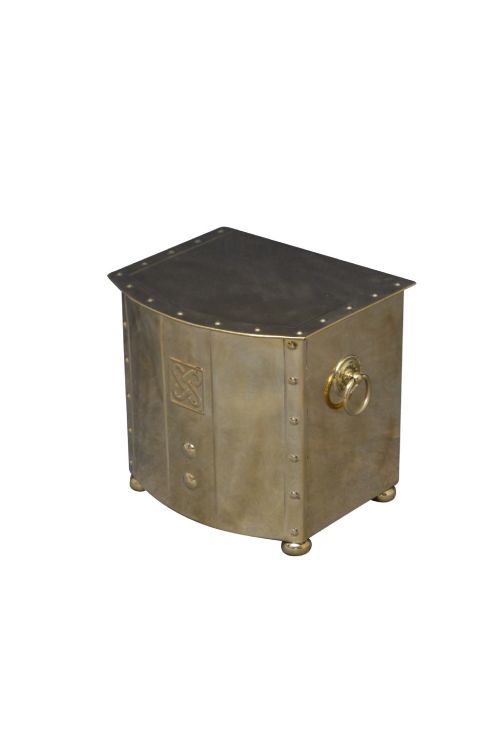


Edwardian Brass Log Bin
An edwardian brass log bin brings bright metal and practical fuel storage to the hearth.
Edwardian Brass Log Bin
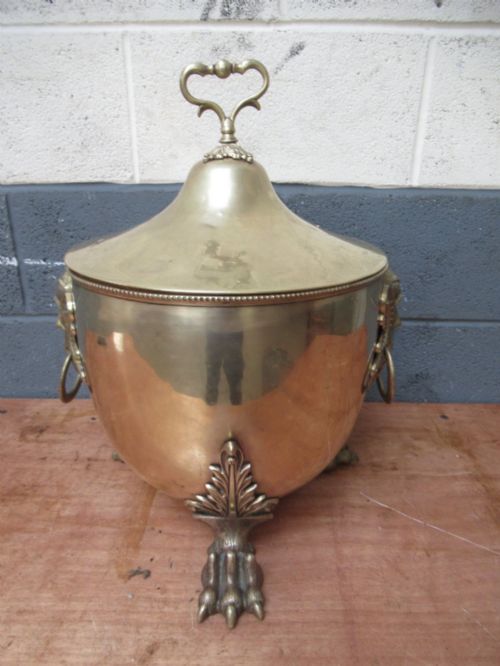
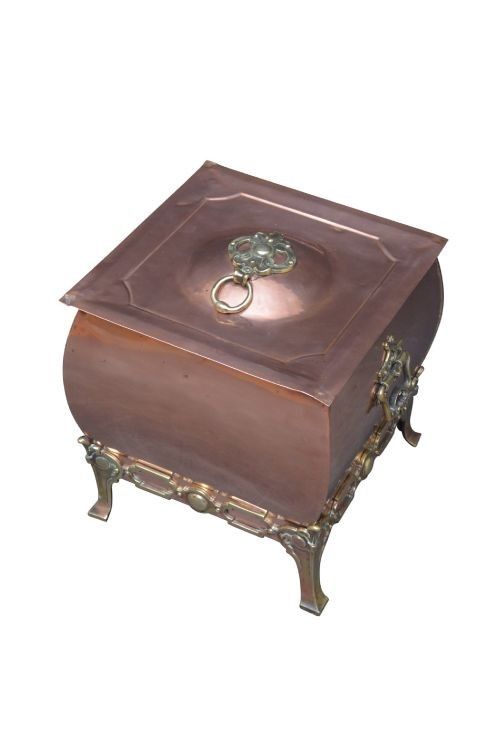
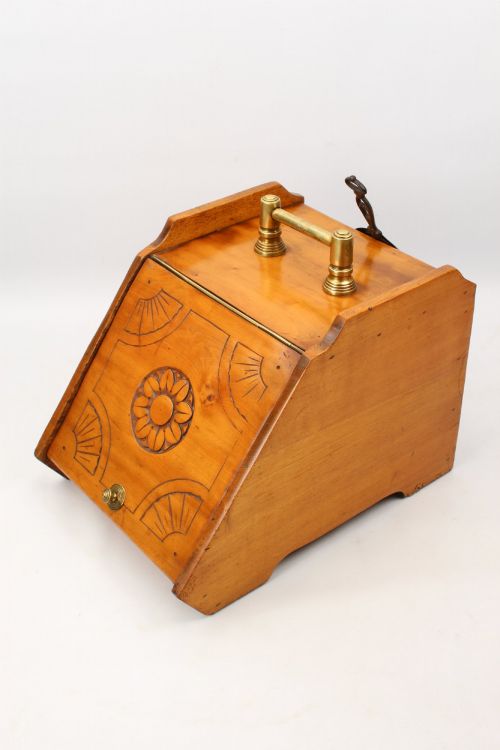
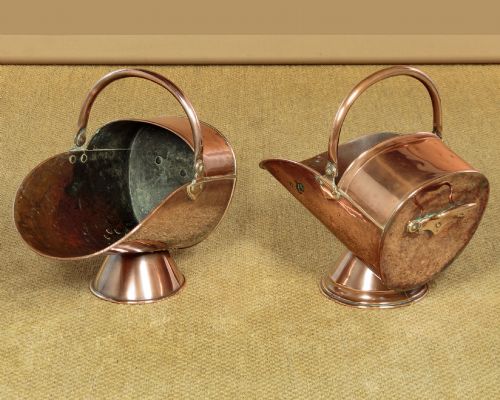
An edwardian brass log bin provides a designated container for fireplace fuel such as logs, peat, or coal, sitting neatly beside the hearth. These pieces belong to a wider family of fireside accessories, including coal scuttles, purdoniums, and coal boxes.
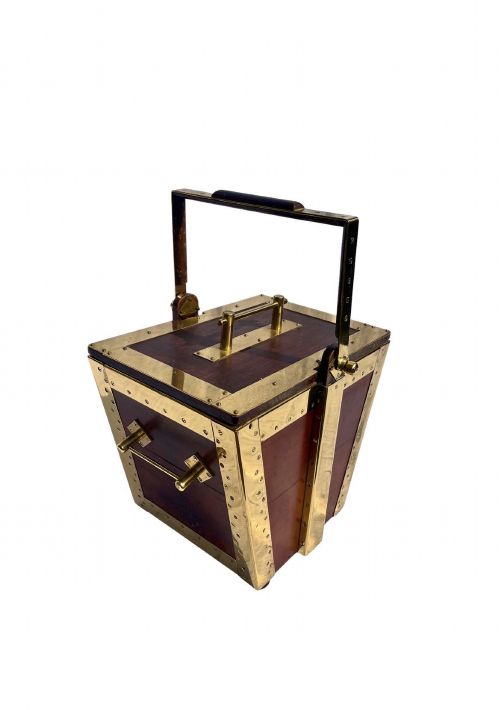
The versions most common on this page date from the Edwardian period and the late Victorian era, though earlier nineteenth-century examples and later twentieth-century styles also appear. Makers built these containers from metals like brass and copper, frequently pairing them with wood elements such as mahogany, oak, and walnut.
Beyond holding fuel, many of these vessels double as planters or kindred storage baskets. Their robust metal construction allows them to serve multiple domestic functions while retaining a distinct decorative presence by the fireplace.
How they were made
Makers constructed these bins primarily from sheet brass and copper, often shaping the metal through hammering, spinning, or panel assembly. Rivets and brass fittings secure the structural joints, while applied metalwork provides decorative emphasis.
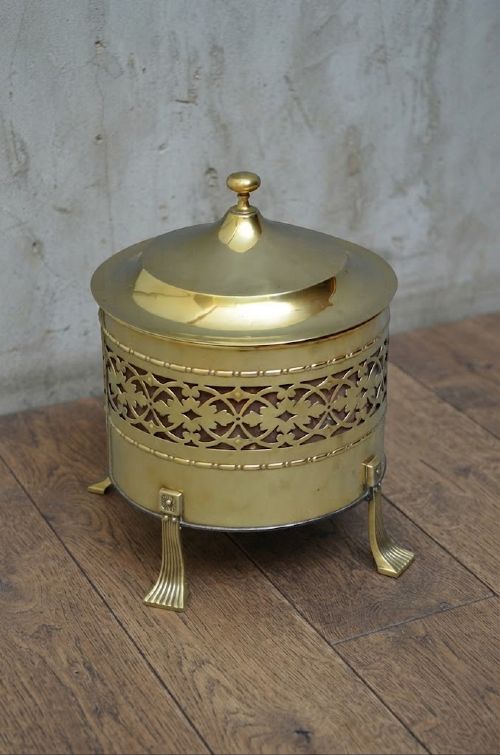
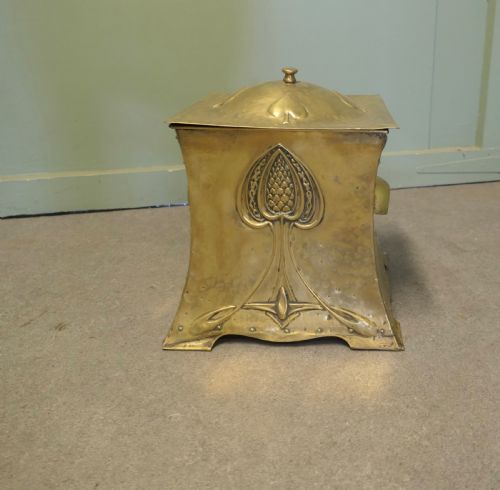
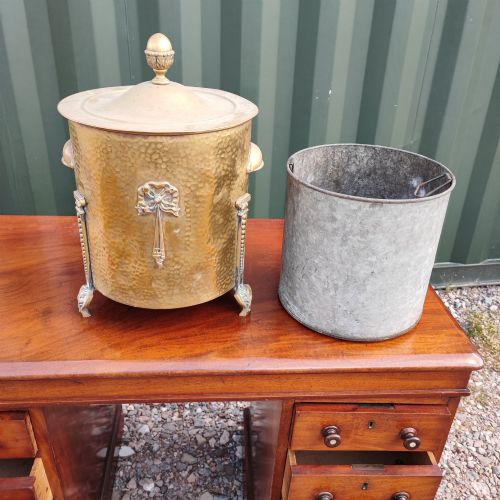
Many brass and copper bins include removable metal liners to catch debris and protect the outer structure from moisture and ash. Surface decoration ranges from plain polished metal to intricate fretwork designs and motifs inspired by the Arts and Crafts and Art Nouveau movements.
Materials recorded across the inventory include brass, copper, galvanized metal, iron, mahogany, oak, walnut, and general wood.
What varies in quality
The standard of materials and surface embellishment dictates the overall caliber of each piece. Heavier gauge metal, substantial timber framing, and intact interior liners distinguish superior bins from lighter, purely utilitarian alternatives.
Artistic execution also separates the ordinary from the exceptional. Pieces displaying thoughtful details such as hand-hammered surfaces, Ruskin-style decoration, or refined mahogany inlay demonstrate a higher level of craftsmanship than plain, mass-produced containers.
The Edwardian Brass Log Bin Glossary
- Log bin
- A sturdy container designed for storing firewood near a fireplace. These vessels often feature metal construction and sturdy carrying handles.
- Purdonium
- A specialised coal box or cabinet, usually featuring a sloping front door and a dedicated interior shovel compartment. They frequently incorporate brass handles and hinges.
- Coal scuttle
- A bucket-shaped vessel with a bail handle and a lip or spout for pouring fuel. They are typically fashioned from brass or copper.
- Coopered
- Constructed from vertical wooden staves bound together with metal bands, similar to the technique used for barrels. This method appears on Scottish peat buckets.
- Fretwork
- Openwork ornamentation carved or pierced through wood or metal. It appears on the bodies of certain Edwardian bins for decorative effect.
Edwardian Brass Log Bin: Frequently Asked Questions
What is an edwardian brass log bin used for?
These vessels store firewood, logs, and other solid fuels conveniently close to the hearth. They keep the fireside tidy while presenting a polished metal exterior.
Many owners also utilise them as indoor planters or general storage baskets when they are not holding fuel.
How do I identify an edwardian piece?
Edwardian items often display characteristic design elements from the period around nineteen hundred, including light mahogany inlay and specific brass ornamentation. Stylistic touches from the Arts and Crafts and Art Nouveau movements frequently appear.
Comparing construction techniques and materials with Victorian or later twentieth-century examples helps confirm the date.
Can these bins hold logs directly?
Many bins feature removable metal liners designed to contain the dirt, bark, and debris associated with raw firewood. These liners protect the outer brass, copper, or wooden structure from wear and moisture.
If a liner is missing, placing logs carefully or using an internal bag prevents interior scratching.