

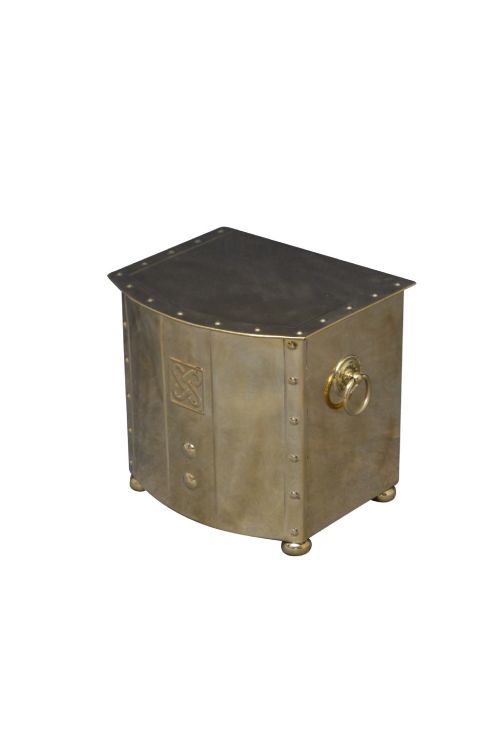


Arts and Crafts Coal Bin
These arts and crafts coal bin examples combine practical fireside utility with the hammered metalwork and honest construction characteristic of the movement.
Arts and Crafts Coal Bin
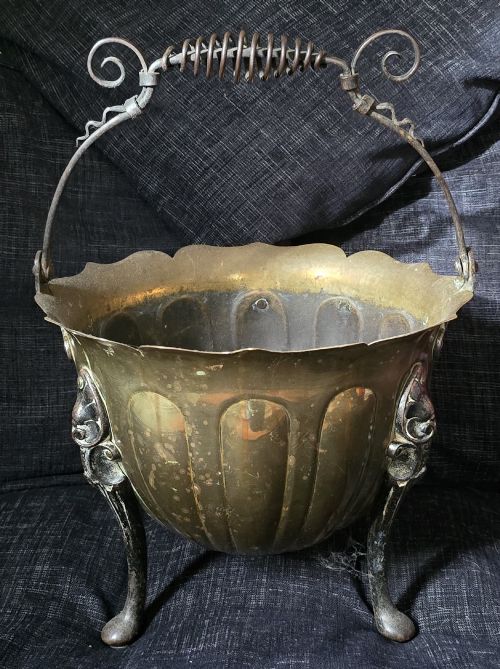
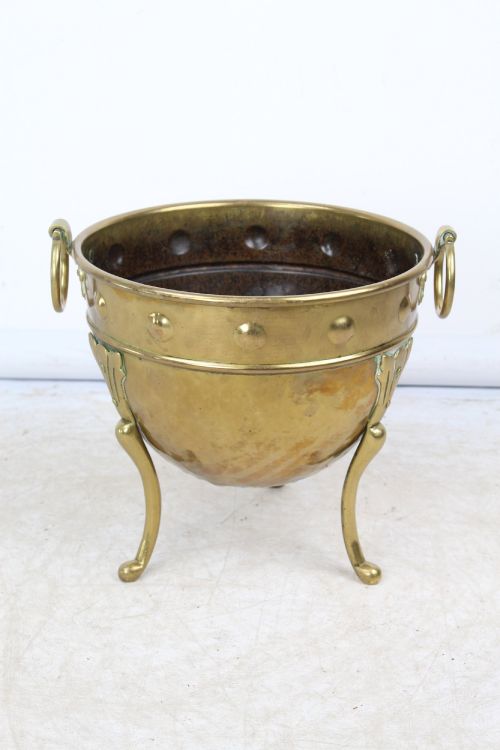
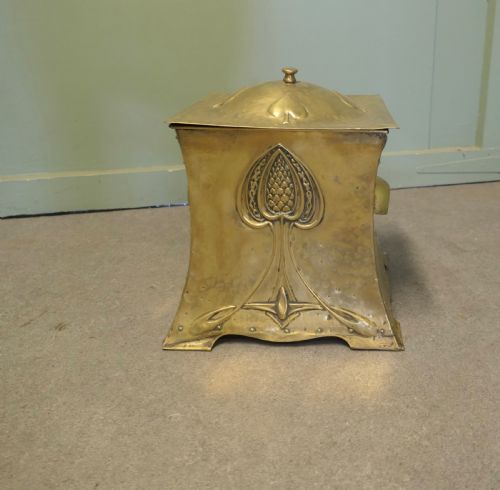
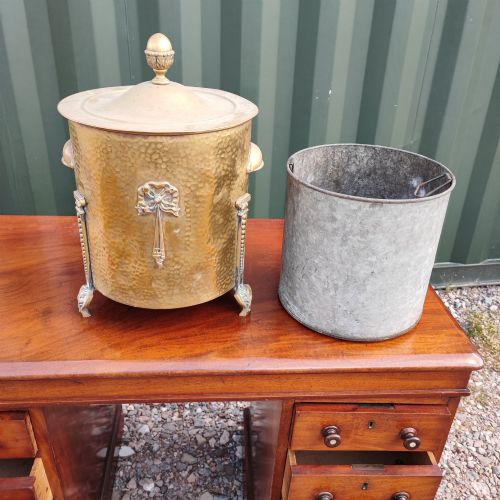
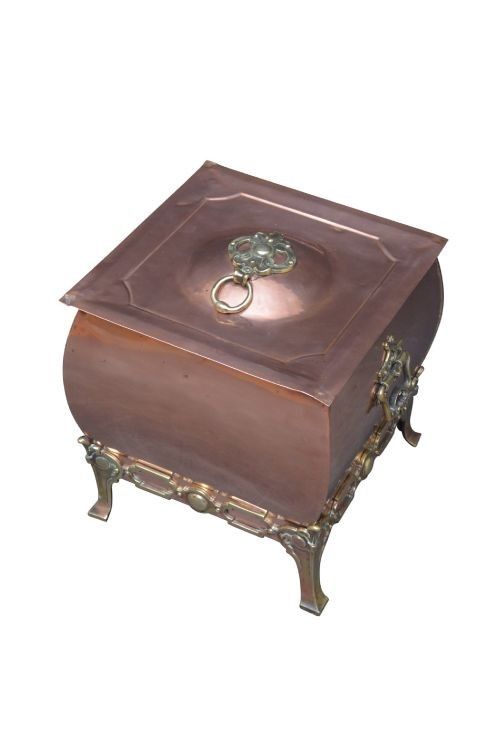
An arts and crafts coal bin serves as a fireside container designed to hold fuel near the hearth while displaying period decorative arts qualities. You will frequently encounter copper and brass versions shaped as buckets, scuttles, and rectangular boxes from the Victorian and Edwardian eras.
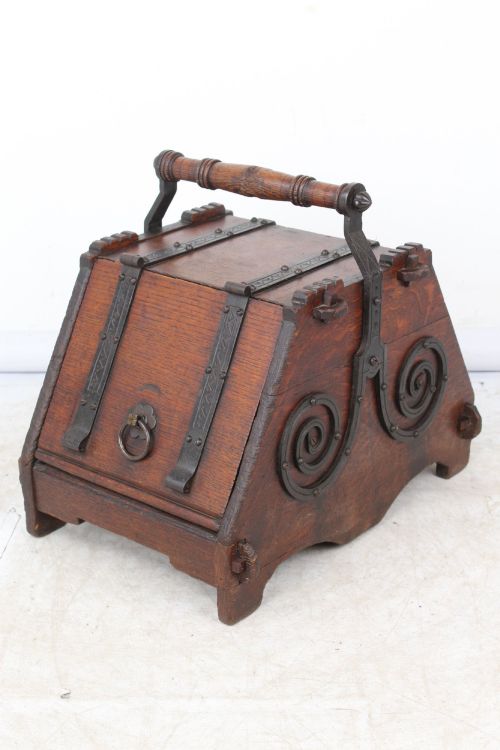
The form bridges utilitarian function and artistic design, often incorporating hinged lids, swing handles, and applied metal decoration. Many pieces utilise sturdy iron or oak frames to support polished metal bodies intended for daily domestic service by the fireplace.
Materials and construction
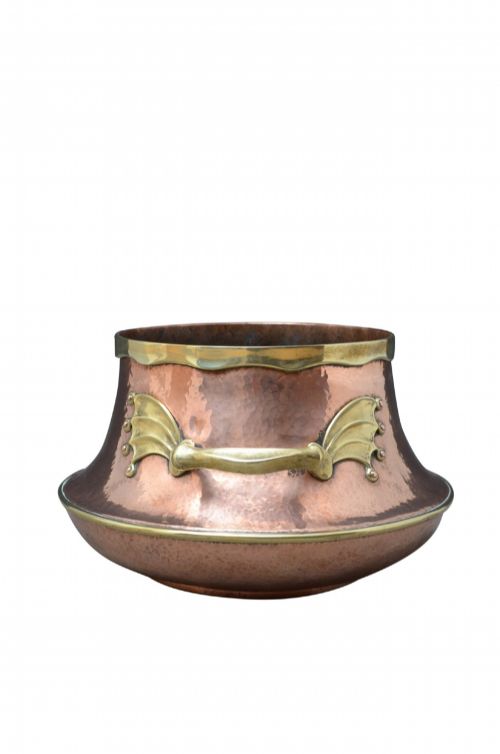
The makers formed these containers primarily from sheet copper and brass, frequently combining them with wrought iron frames or oak cabinetry. Metal surfaces often display visible hand-hammering or planishing marks left by the artisan.
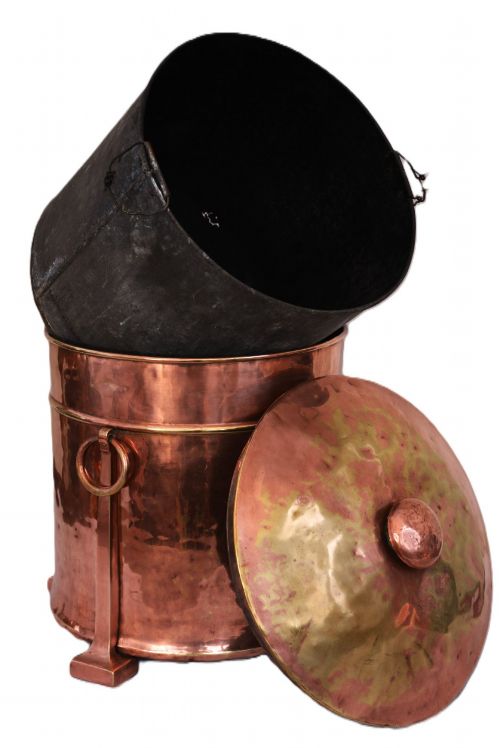
Rivets, strapwork, and reinforcement bands provide structural strength while doubling as decorative elements. Interiors often retain galvanised metal liners designed to contain coal dust and moisture.
Materials documented across the listings include copper, brass, wrought iron, and oak.
Quality differences
Quality rests on the weight of the metal gauge, the crispness of any hammered decoration, and the integrity of the structural frame. Thicker copper and solid brass retain their shape better under heavy daily use.
Design sophistication also separates standard production items from pieces bearing distinct stylistic influences like Gothic Revival or Art Nouveau. Original iron framing and intact interior liners contribute significantly to a piece's completeness.
Henry Loveridge·Christopher Dresser
The Arts and Crafts Coal Bin Glossary
- Purdonium
- A specialised domestic coal box, usually featuring a sloping front drop-down door and an internal metal scoop or liner. This form gained popularity during the late Victorian period for tidy fireside fuel storage.
- Planishing
- A metalworking technique involving smooth-faced hammers used to finish sheet metal surfaces. It creates a subtle faceted texture that catches the firelight.
- Scuttle
- A deep bucket or container traditionally shaped with a lip or spout for pouring fuel. These often include a swinging bail handle for carrying coal from the cellar.
- Repoussé
- A metalworking method where the artisan hammers the design from the reverse side to form raised relief patterns on the front. It frequently appears on copper coal box panels.
Arts and Crafts Coal Bin: Frequently Asked Questions
How do I clean an antique copper coal bin?
Wipe the exterior gently with a soft cloth to remove dust while preserving the aged patina accumulated over decades. Avoid harsh chemical polishes that strip the historic surface character.
Dry the metal thoroughly after cleaning to prevent spotting, particularly on pieces positioned near damp hearths or unheated rooms.
Can I use these for logs instead of coal?
Many examples function equally well as log bins or purdoniums due to their generous proportions and sturdy metal construction. Check the interior dimensions and liner condition to ensure suitable capacity for firewood.
Original iron frames and wooden bases easily support the weight of logs when placed beside a modern or period fireplace.
How do I tell Victorian from Edwardian pieces?
Victorian examples often lean towards heavier Gothic Revival influences with dark brass or iron elements. Edwardian pieces tend to feature lighter oak cabinetry combined with bright hammered copper panels.
Stylistic overlaps remain common because workshops continued producing transitional designs across the turn of the century.
Are original liners usually included?
Many surviving bins retain their original galvanised metal inner buckets, though some have lost them over a century of use. Replacements or missing liners do not diminish the decorative value of the outer copper or brass vessel.
Inspect the internal base for wear if you intend to store actual fuel rather than using the piece solely for display.