

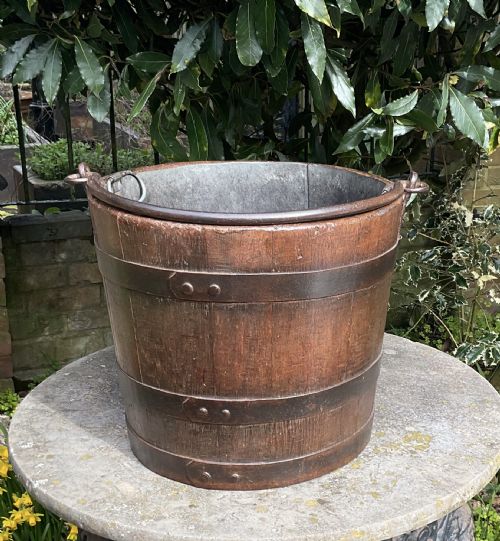


Brass Coal Bucket Liner
A brass coal bucket liner is a practical fireside accessory that keeps fuel contained while protecting the main timber or metal container from wear.
Brass Coal Bucket Liner
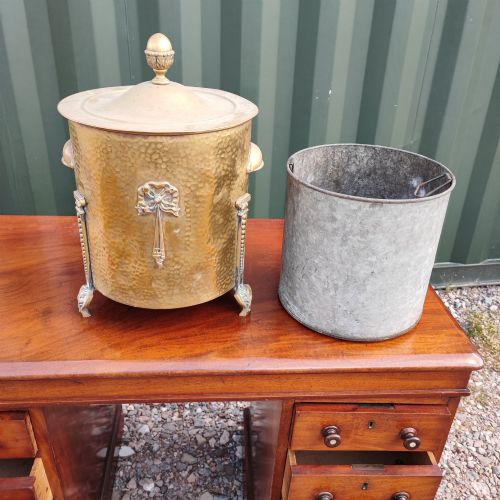
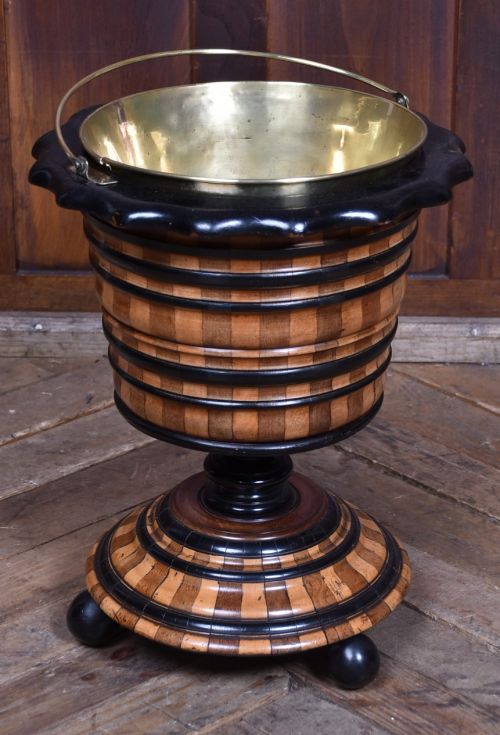
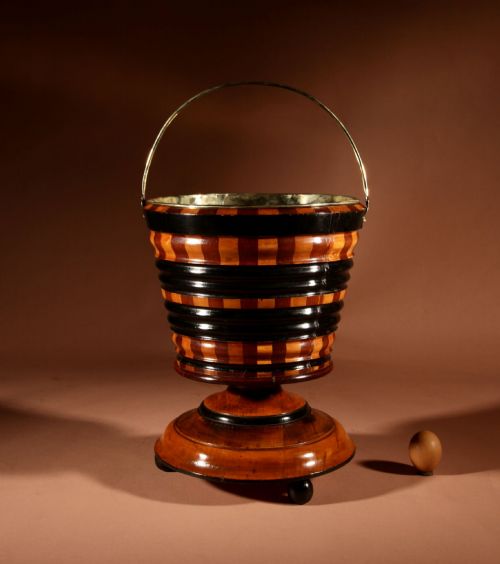
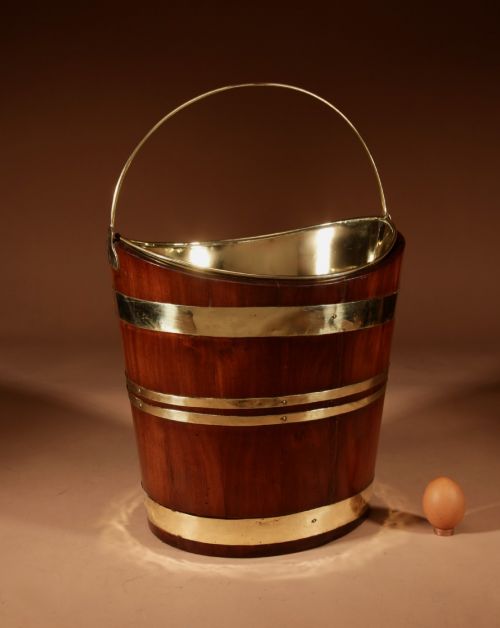
When you search for a brass coal bucket liner, you are looking at functional metal inserts designed for hearthside storage vessels such as coal buckets, peat buckets, and log bins. These pieces serve to hold fuel or act as watertight inners for planters and jardinières, appearing in forms ranging from boat-shaped peat buckets to traditional cylindrical coal bins.
You are most likely to meet Victorian and Edwardian examples on this page, alongside pieces spanning the nineteenth and early twentieth centuries. The selection encompasses English traditional and Dutch traditional styles, often associated with coopered wood outer containers made from mahogany, oak, or mixed hardwoods.
The objects bridge utilitarian fireside utility and decorative craftsmanship, appearing alongside purdoniums, tea stoves, and hearthside stores. Their presence reflects period domestic routines where coal, peat, and logs required neat containment beside the fireplace.
How they were made
The materials recorded in these pieces rely heavily on brass for the liners and structural banding, paired with timber bodies such as mahogany, oak, and ebonised wood. Coopered wood construction appears frequently, utilising wooden staves bound together with metal hoops to form cylindrical or boat-like vessels.
Metalworking techniques shape the standalone galvanised metal and brass inserts, while turned elements like mahogany spindles and brass mounts add decorative detail. Artisans combined durable sheet metal with traditional carpentry to withstand the heavy weight of coal and moisture from peat.
Listings feature periods from the nineteenth century through the 1930s, encompassing Victorian, Edwardian, and late Georgian eras alongside Arts and Crafts designs.
What varies in quality
Quality in these pieces rests on the weight of the metal and the precision of the woodwork, distinguishing solid construction from lighter utilitarian ware. Fine examples display robust brass gauges, careful joining in coopered staves, and well-fitted liners that sit flush within their mahogany or oak outer buckets.
The refinement of decorative elements, such as brass banding, swing handles, and turned spindle work, separates standard hearth storage from finer display items like boat-shaped peat buckets and Dutch teestoofs. Well-preserved surfaces on both the timber and the brass retain their character through age without losing structural integrity.
The Brass Coal Bucket Liner Glossary
- Coopered wood
- Construction method using narrow wooden staves fitted together and bound with metal hoops, typical of bucket and tub manufacture. This technique ensures the vessel remains stable and capable of holding loose material.
- Purdonium
- A type of coal box, often featuring a sloping front and a drop-down lid designed to house a removable metal liner and a coal shovel. It represents a more formal Victorian evolution of hearthside fuel storage.
- Teestoof
- A Dutch foot warmer or small stove, historically used with peat or embers, frequently incorporating a brass liner and associated with bucket forms. These pieces often double as decorative jardinières.
- Jardinière
- An ornamental pot or stand for indoor plants, sharing similar construction and liner requirements with coal and peat buckets. They often utilise the same coopered wood and brass materials found in fireside accessories.
Brass Coal Bucket Liner: Frequently Asked Questions
What is a brass coal bucket liner used for?
A brass coal bucket liner sits inside a wooden or metal outer bucket to hold coal, peat, or logs safely. It prevents dirt, dust, and debris from spilling onto the floor and protects the outer container from knocks.
Many of these liners also act as watertight inserts when the outer vessel is used as a planter or jardinière. Their removable design makes emptying and cleaning ash or fuel residue straightforward.
How do I tell a Victorian liner from a later piece?
Victorian and late Georgian pieces often feature heavier gauge brass, hand-beaten construction details, and rich timber outer containers like mahogany with coopered staves. The methods used to join the metal seams and shape the handles typically show older hand-craft traditions.
Later Edwardian and twentieth-century examples tend to show standardised machine rolling in the metal components and sometimes utilise oak or mixed hardwoods. Examining the wear patterns and construction joints helps clarify the period of manufacture.
Can I use these liners for logs today?
These liners are robust enough to hold logs, kindling, or coal beside a working fireplace just as they did historically. Their metal construction handles the weight and abrasive nature of solid fuel without difficulty.
If the outer bucket has lost its original liner or if you are using a standalone metal bin, ensure the dimensions match to prevent strain on the surrounding timber staves. Regular cleaning keeps the brass and metal surfaces in good condition during daily use.
What is a coopered fire bucket?
A coopered fire bucket is constructed using curved wooden staves joined side by side, bound tightly with metal hoops in the manner of a barrel. Oak and mahogany are common woods for this style of heavy-duty fireside storage.
These buckets were built to be durable and often incorporate a metal liner to contain fuel safely. The visible stave construction gives them a distinctive ribbed exterior texture.