


Embossed Brass Log Box
An embossed brass log box brings heavy metal texture and fireside utility together, offering a practical hearth container with patterned panels.
Embossed Brass Log Box
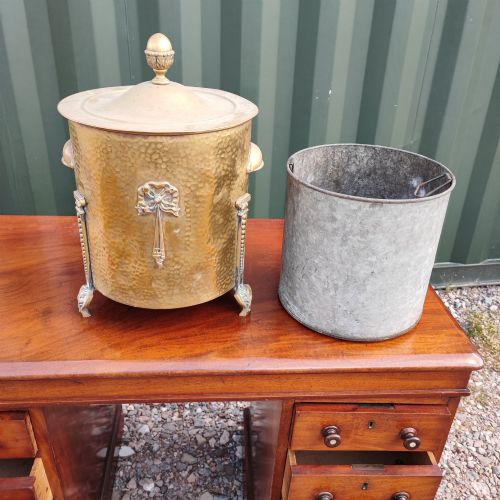
An embossed brass log box provides sturdy fireside storage for fuel while displaying decorative metalwork around the hearth. These containers appear in forms such as coal scuttles, slipper boxes, and double-lidded buckets.
The pieces on this page span the Victorian and Arts and Crafts periods, alongside examples from the Regency era and the 1930s Art Deco period. Buyers encounter both British craftsmanship and continental European pieces originating in France and Belgium.
Makers utilised timber, copper, iron, and galvanised metal alongside the characteristic brass plating or sheet metal. These materials combine to create heavy containers designed to withstand daily use beside an open fire.
Materials and construction methods
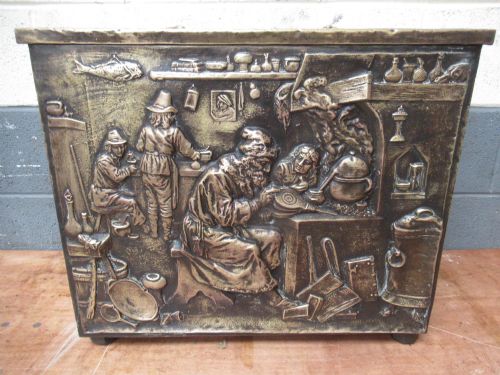
Workshops constructed the bodies primarily from wood or heavy sheet metal before applying hammered or stamped brass panels. Artisans used relief techniques to press heraldic motifs, tavern scenes, and country landscapes directly into the metal surface.
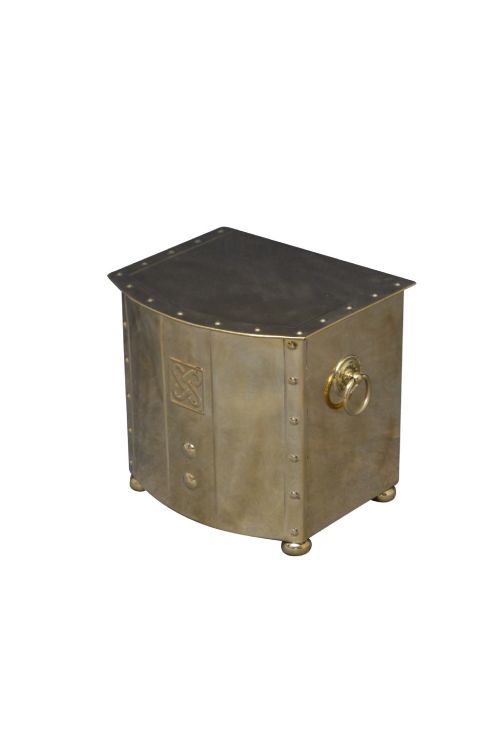
Many examples incorporate copper details, iron fittings, or oak structures to reinforce the inner storage compartment. Handles, lids, and hinges utilise cast brass or iron to support the weight of heavy logs and coal.
The recorded forms range from traditional coal scuttles and slipper boxes to large double-lidded fireside storage bins.
Distinctions in quality and finish
The depth and clarity of the metal relief separate standard production items from finer decorative work. Crisp detailing in tavern scenes, coats of arms, and country landscapes indicates superior craftsmanship during the stamping process.
Structural integrity depends on the original timber lining and the strength of the internal metal container. Pieces that retain solid oak bodies and original iron or brass hardware demonstrate higher grade construction.
Henry Loveridge
The Embossed Brass Log Box Glossary
- Embossed
- A technique where a design is raised above the background surface using metalworking tools or stamping presses. This method creates tactile surface patterns on brass and copper panels.
- Arts and Crafts
- A design movement valuing handcraftsmanship and traditional materials over industrial mass production. Pieces from this era often display simplified forms combined with hand-beaten metal surfaces.
- Slipper box
- A covered fireside container featuring a sloping lid that resembles the shape of a traditional slipper. These boxes were commonly utilised for storing kindling or coal near the hearth.
- Coal scuttle
- A bucket or container designed specifically for carrying and holding coal for an open fire. Many versions include a swinging handle and a tilted opening for easy access.
- Regency
- A period of British design spanning the early nineteenth century known for classical restraint and revived antique forms. Items from this era often incorporate crisp geometric lines and sturdy metal construction.
Embossed Brass Log Box: Frequently Asked Questions
What were embossed brass log boxes used for?
These containers served practical roles beside the hearth by holding wood logs, kindling, or coal for the fireplace. Their decorative metal exteriors allowed homeowners to store fuel in the main living rooms without cluttering the hearth.
Beyond simple storage, the detailed brass panels added reflective warmth and visual interest to nineteenth-century and early twentieth-century interiors. They functioned as both heavy-duty utility items and ornamental fireside furnishings.
How do I date a brass log box?
Dating relies on stylistic clues, construction methods, and materials such as the presence of oak linings or iron framing. Victorian and Arts and Crafts examples often feature distinct floral, heraldic, or tavern embossing.
Later pieces from the 1930s tend to show Art Deco geometric influences or simpler bucket forms. Comparing the style of the handles and the thickness of the sheet brass also helps narrow down the period of manufacture.
Are these boxes suitable for actual log storage?
Most pieces remain structurally capable of holding logs or coal due to their robust metal and wood construction. The internal galvanised metal or timber liners were specifically built to handle rough fuel.
Buyers should inspect the interior condition and lining to ensure it can manage debris and weight. Gentle cleaning preserves the exterior brass relief while maintaining daily functionality.
How do French and British boxes differ?
French and Belgian examples frequently incorporate country scenes or distinct continental proportions compared to British pieces. Continental workshops often utilised heavier relief work depicting rural life or tavern gatherings.
British production frequently leaned towards classical Victorian forms, heraldic motifs, or Arts and Crafts simplicity. Both traditions relied on similar brass and copper materials mounted over sturdy internal frames.