


Vintage Metal Log Tub
A vintage metal log tub brings substance to a fireside, holding heavy fuel with honest industrial character.
Vintage Metal Log Tub
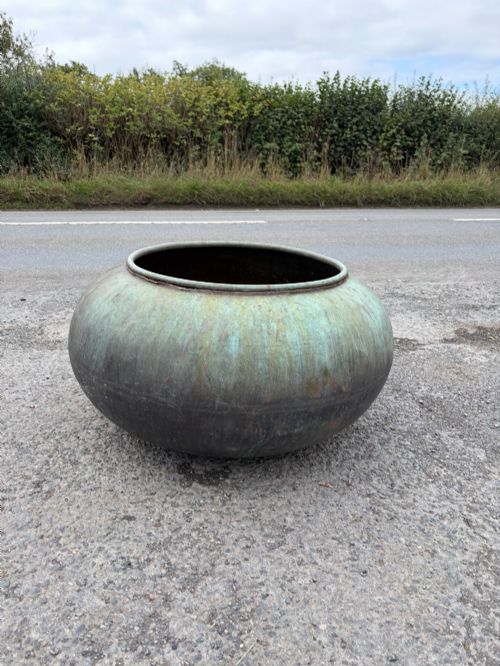
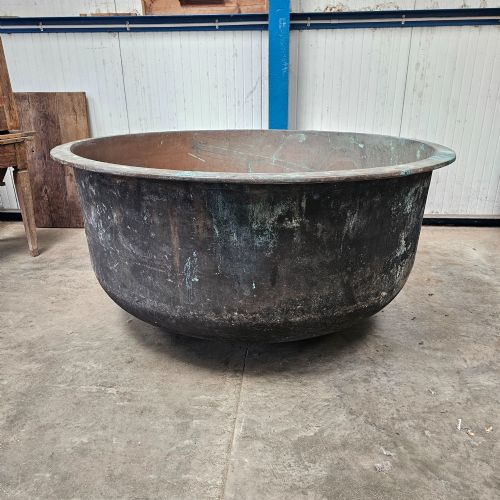
A vintage metal log tub is typically found in heavy copper, brass, or galvanised iron, originating from nineteenth-century domestic, agricultural, or utilitarian contexts. These vessels range from converted wash tubs and cheese vats to dedicated coal scuttles and campaign buckets.
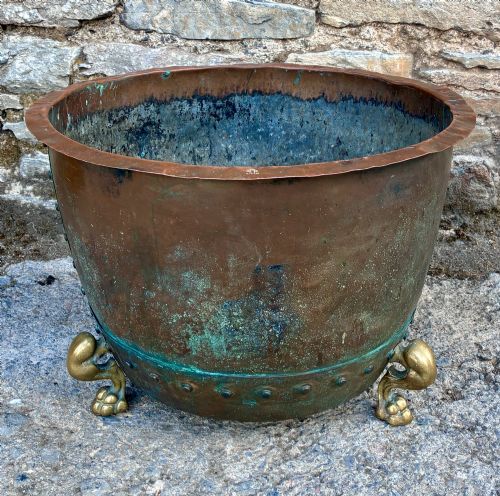
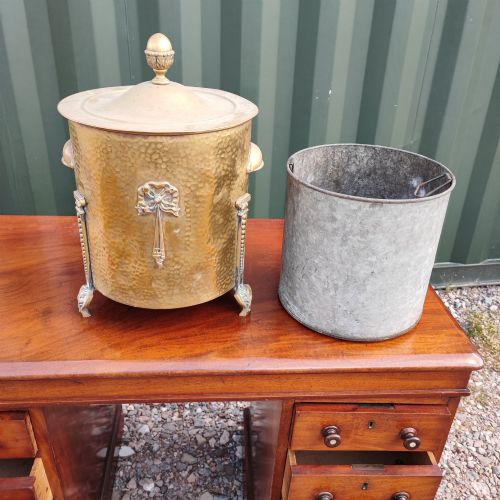
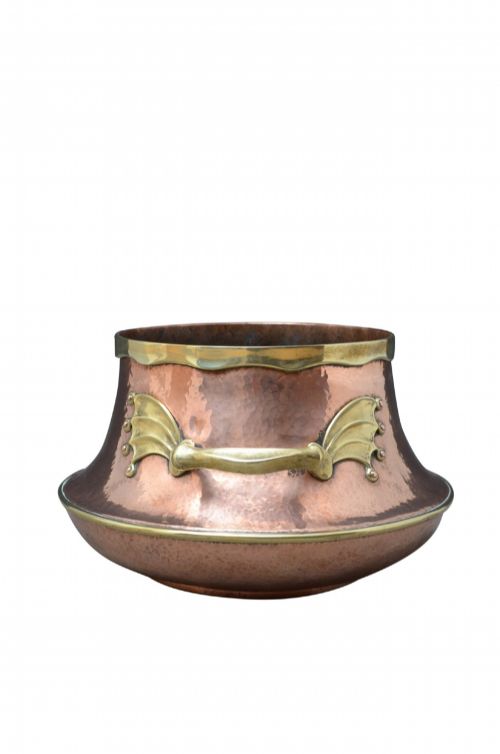
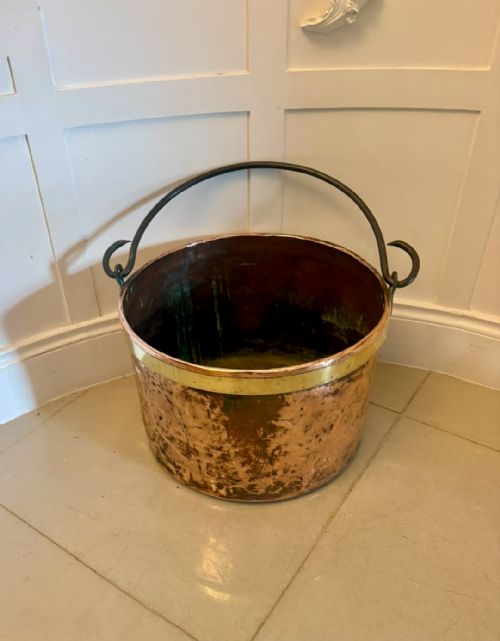
Buyers are most likely to encounter nineteenth-century English and French examples, often detailed with contrasting brass bands, iron swing handles, or hand-hammered surfaces. Many pieces double as garden planters, having transitioned from interior hearth use to outdoor display.
Materials and Construction
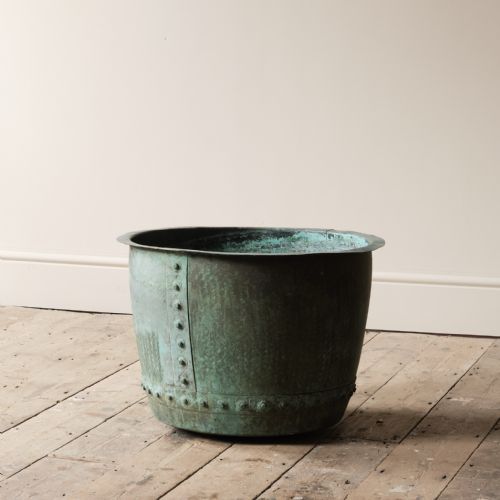
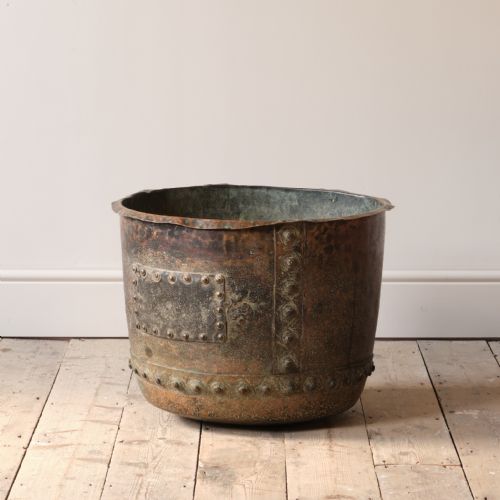
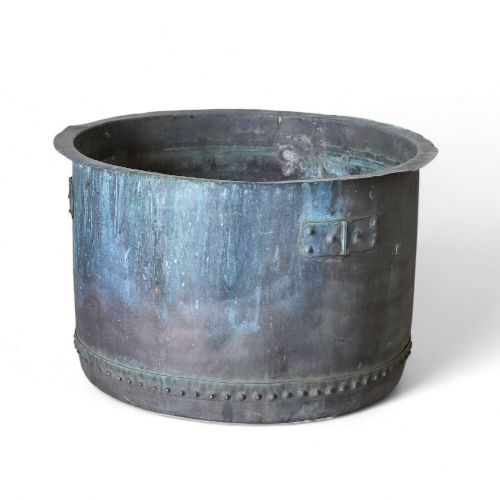
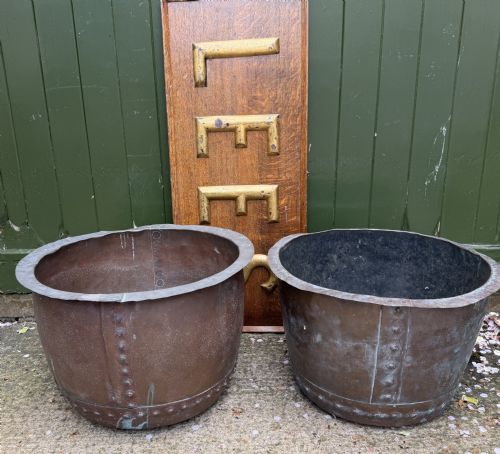
Construction relies heavily on sheet copper and brass joined by visible hand-riveting, which provides structural integrity for heavy loads of wood and coal. Wrought iron is utilised for sturdy swing handles and rim reinforcements, while galvanised metal appears in later twentieth-century iterations.
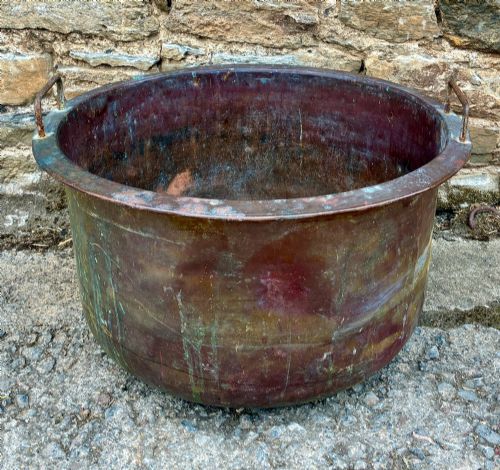
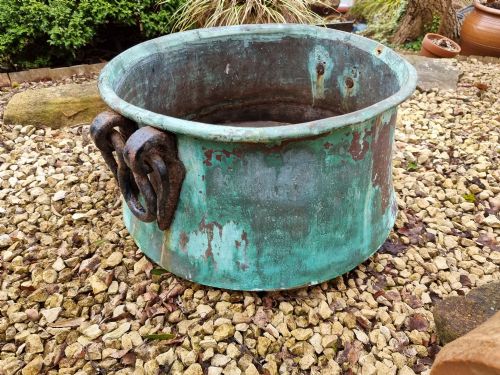
Surfaces frequently show the marks of hand-hammering, alongside natural patination, verdigris, and polished finishes developed through generations of use and maintenance.
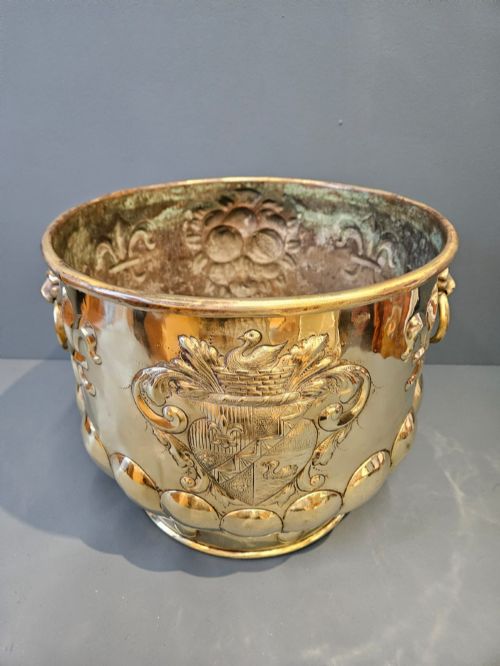
Some vessels bear unexpected royal or civic crests stamped to the front, adding a touch of pomp to humble coal storage.
Evaluating the Pieces
Quality rests in the weight of the metal gauge and the integrity of the original joints, riveting, and handles. Thicker walls and substantial wrought iron attachments indicate utilitarian objects built to endure heavy daily service.
The character of the surface finish also distinguishes examples, where honest patination, natural verdigris, and intact maker embellishments like crests elevate the visual depth of the vessel.
The Vintage Metal Log Tub Glossary
- Patina
- The surface sheen and colour acquired by metal through age, handling, and environmental exposure. It develops naturally over decades of use.
- Verdigris
- A green patina or crust that forms on copper, brass, or bronze when subjected to atmospheric oxidation or moisture.
- Ferrat
- A traditional French metal vessel or tub, often utilised in agricultural settings for gathering produce or liquids.
Vintage Metal Log Tub: Frequently Asked Questions
What were metal log tubs originally used for?
These vessels served practical domestic and agricultural purposes, functioning as coal scuttles, wash tubs, grain measures, or boiling coppers before finding a place by the fireside.
Many of the items listed started life as French cheese vats, large garden pots, or utilitarian storage containers.
Can these tubs be used outside in the garden?
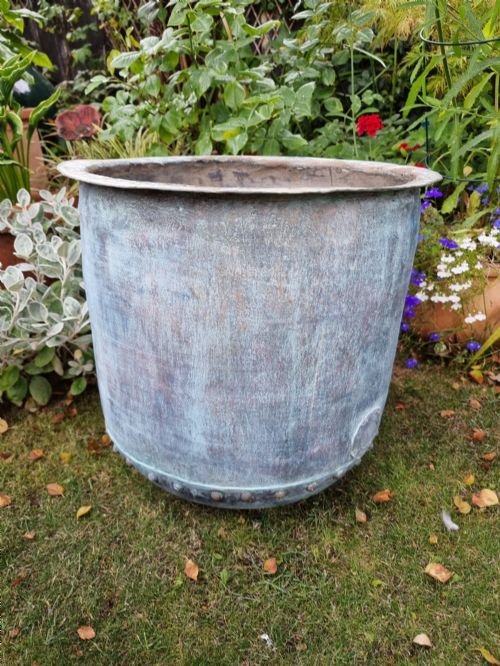
Many examples are suitable for outdoor placement and function well as large planters or garden display pots.
Copper and galvanised metal weather naturally outdoors, developing further surface patination over time.
How do I clean a copper log tub?
Maintenance depends on the desired appearance, as some buyers prefer to leave the aged surface and verdigris untouched.
Gentle washing with warm soapy water removes dust, while proprietary metal cleaners can restore a bright copper shine if desired.
How are nineteenth-century copper tubs constructed?
Construction typically involves heavy sheet copper joined by hand-riveting along the seams, often strengthened with brass bands or iron rims.
Wrought iron handles are securely attached to the sides to support the weight of heavy fuel.