
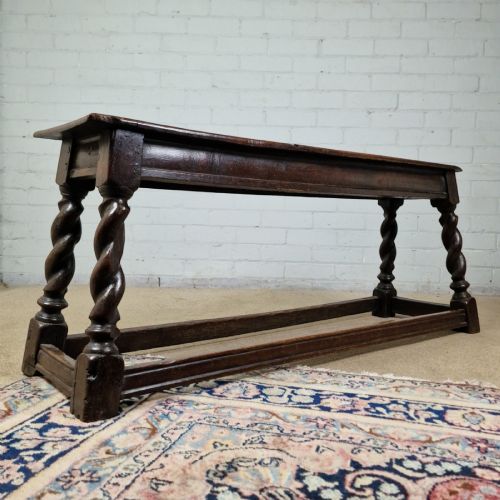
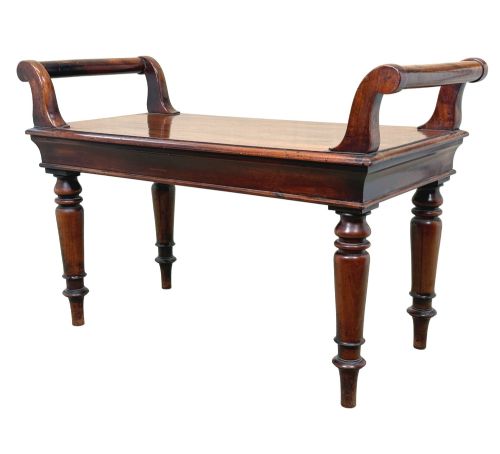

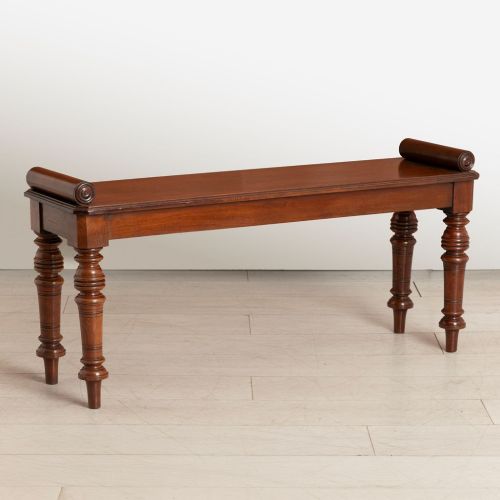
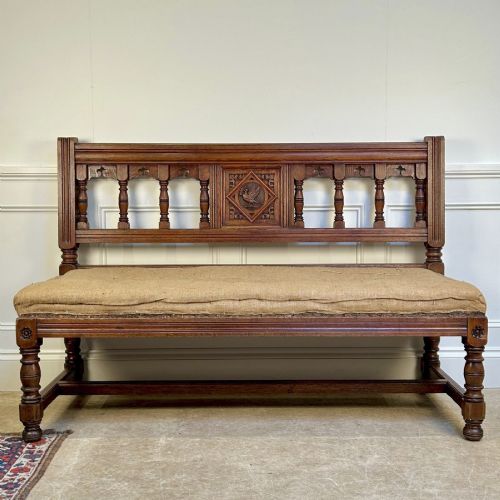
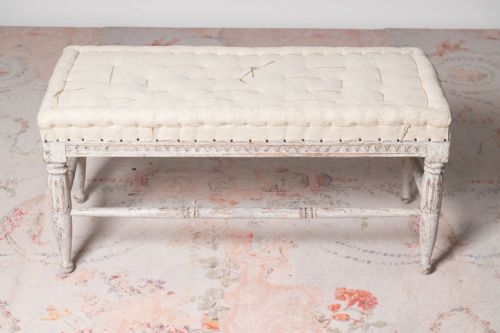
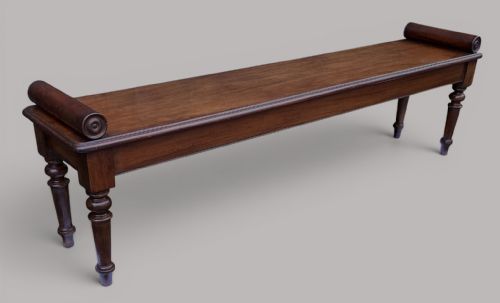

Hallway Window Seat
A hallway window seat provides a practical perch in a passage or beside a pane, combining timber frames with upholstered comfort.
Hallway Window Seat
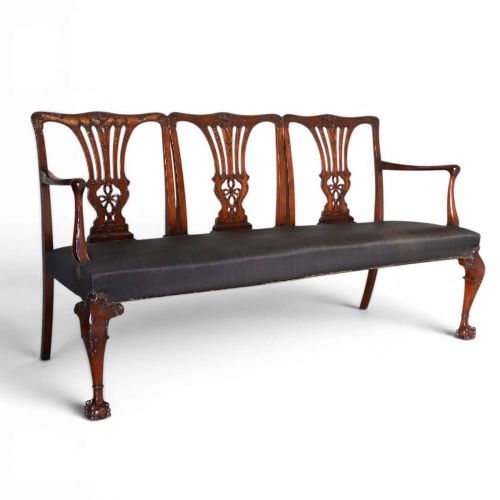
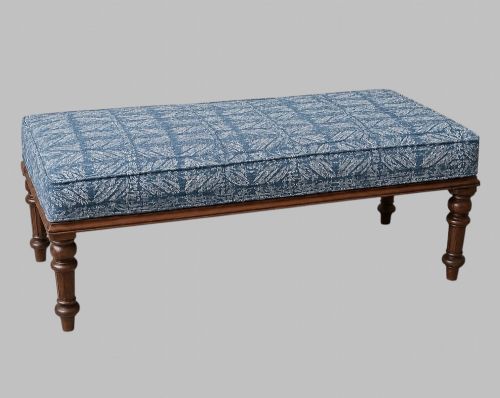
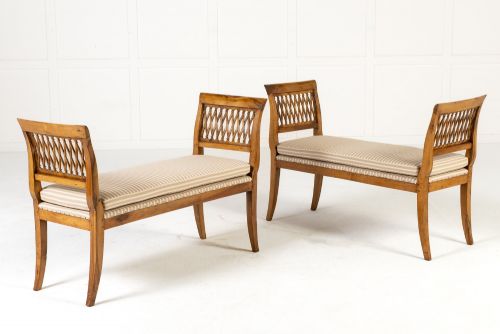
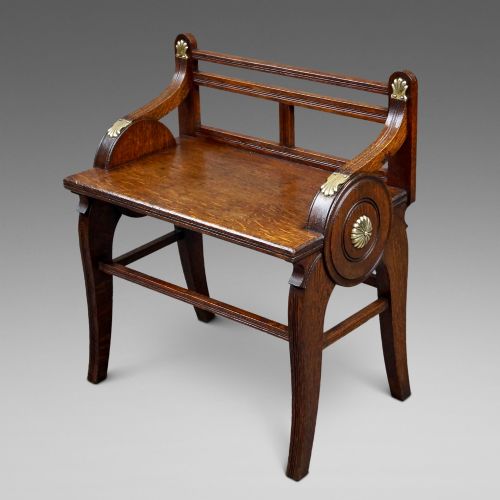
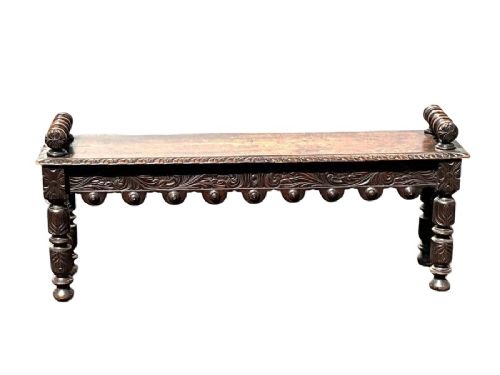
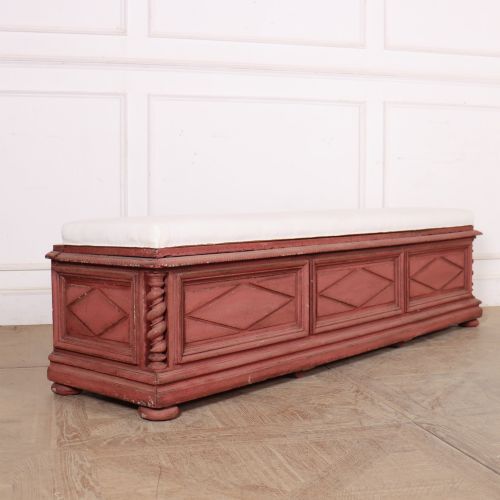
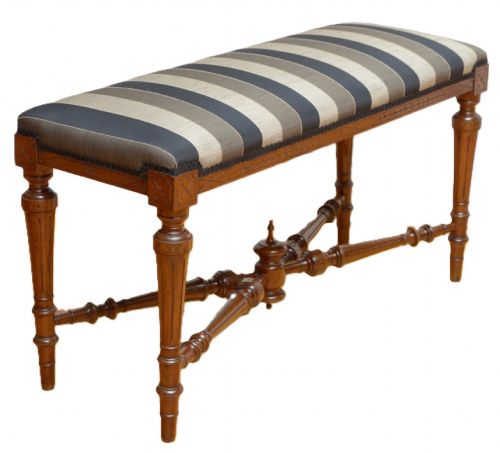
A hallway window seat serves as a dual-purpose bench designed for corridors and rooms, drawing from nineteenth-century forms up to the Edwardian era. These pieces appear in long bench configurations, duet stools, and settee formats suited to narrow spaces.
The materials span mahogany, oak, and walnut, frequently paired with fabric, velvet, or linen upholstery. Makers built these items to bridge the transition between formal reception rooms and entrance halls.
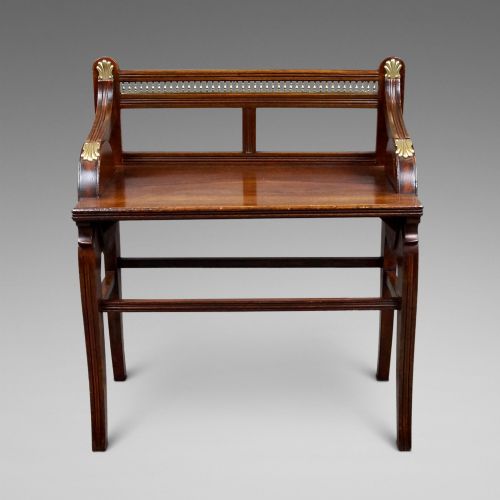
Most examples encountered on this page date from the Victorian and Edwardian periods, alongside Regency and earlier oak specimens. They range from simple turned-leg stools to carved mahogany or brass-mounted designs.
How they were made
Cabinetmakers utilised hardwoods such as mahogany, oak, and walnut for the structural frames, employing traditional joinery and carved ornamentation. Wood surfaces received polished finishes, while oak examples occasionally display bleached or painted treatments.
Upholstery techniques involved supporting fabric or velvet over padded seats, sometimes secured with brass mounts or decorative studs. Frames often incorporated turned or fluted legs, carved backs, and inlaid details depending on the prevailing style.
Certain hallway seats doubled as boot stores or tweed compartments for muddy country pursuits.
What varies in quality
The refinement of the timber carving and the integrity of the frame construction set examples apart, distinguishing workshop pieces from standard output. Cabinetmakers with established reputations applied meticulous joinery and balanced proportions.
Upholstery choices and the preservation of original wood surfaces influence the character of each piece. Later re-covering sits alongside period textile choices, affecting how closely the seat matches its original design.
Gillows·James Shoolbred and Co·Jas Shoolbred
The Hallway Window Seat Glossary
- Duet stool
- A wide stool designed to seat two people simultaneously, commonly found in nineteenth-century music rooms or hallways.
- Hall bench
- A rigid wooden or upholstered seat placed in entrance passages for callers to wait upon.
- Settee
- A small sofa with upholstered back and arms, sharing proportions with long window benches.
- Brass mount
- Decorative metal fitting applied to timber frames for structural reinforcement or visual accent.
- Inlaid mahogany
- Furniture decorated with contrasting woods set into the primary mahogany surface.
Hallway Window Seat: Frequently Asked Questions
Where should a hallway window seat go?
These seats suit narrow entrance corridors, beneath ground-floor windows, or placed at the foot of a bedroom bed. Their shallow depth allows them to fit against walls without blocking movement.
They offer a convenient spot for putting on shoes or resting brief parcels as people enter the house.
How do I identify a Victorian piece?
Victorian examples often employ heavy walnut or mahogany frames, deep upholstery, and robust turned or fluted legs. Carved ornament tends to be dense and prominent.
Construction methods from this era involve machine-sawn timber components alongside hand-finished joints.
What is the difference between a bench and a window seat?
Window seats generally feature upholstered tops designed for extended sitting near glass panes, while traditional hallway benches rely entirely on wooden surfaces.
Many nineteenth-century pieces blur these distinctions, serving both functions interchangeably in domestic interiors.
Are these seats suitable for daily use?
Sturdy hardwood frames constructed from oak or mahogany provide durable foundations for everyday sitting. Modern upholstery updates help maintain structural support.
Care should be taken with antique polished finishes when placing items in high-traffic corridors.