
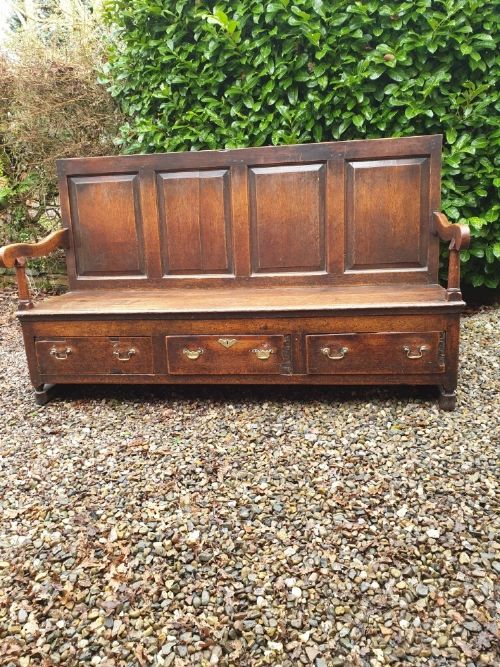
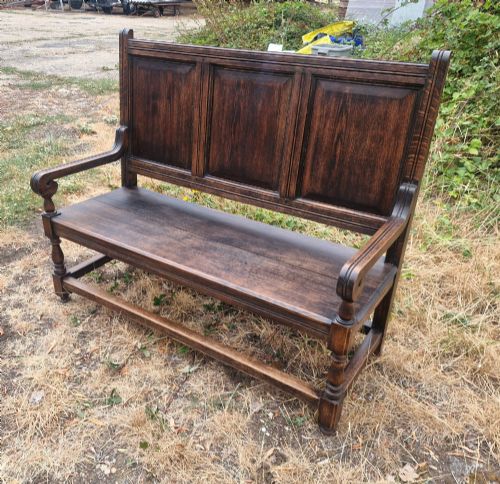
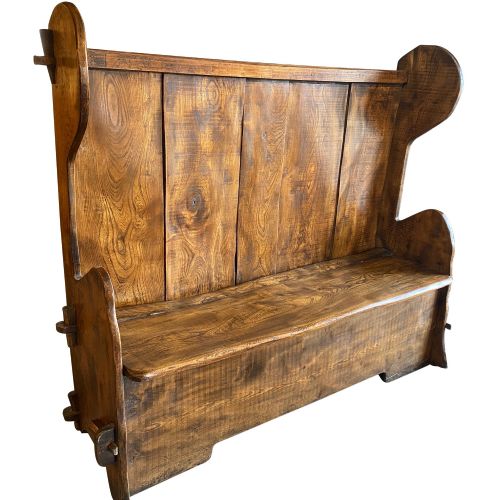
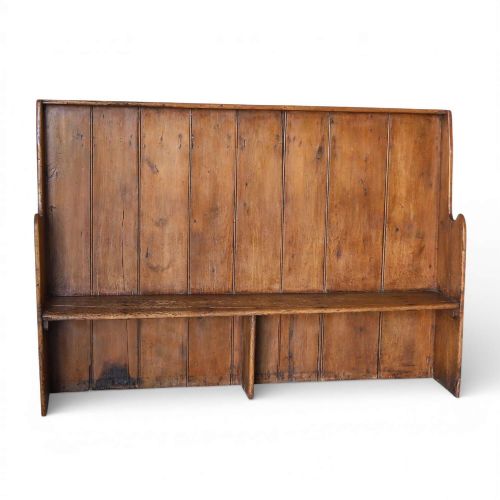



Hallway Timber Seat Bench
A hallway timber seat bench brings practical seating and period character to an entrance, offering sturdy utility shaped by centuries of country and formal woodworking traditions.
Hallway Timber Seat Bench
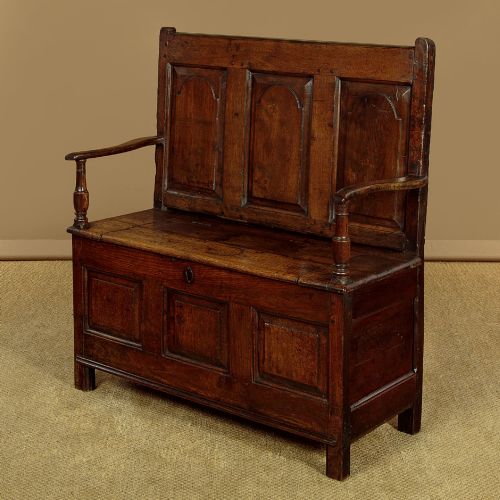
When you search for a hallway timber seat bench, you encounter a diverse selection of practical seating ranging from rustic country settles to structured oak hallway benches. These items serve the dual purpose of providing a place to sit while entering or leaving the home and offering functional solutions for household organisation.
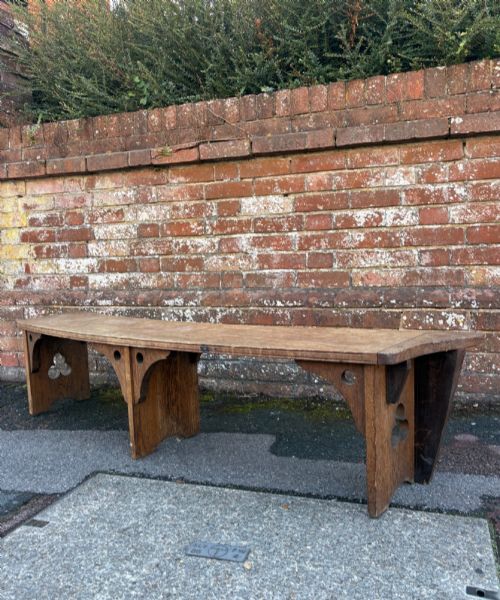
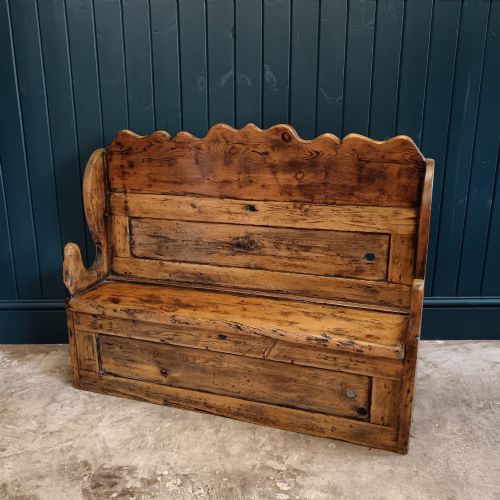
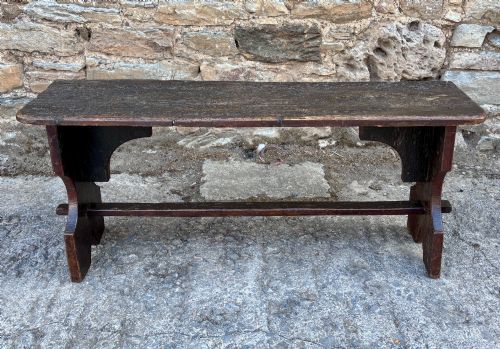
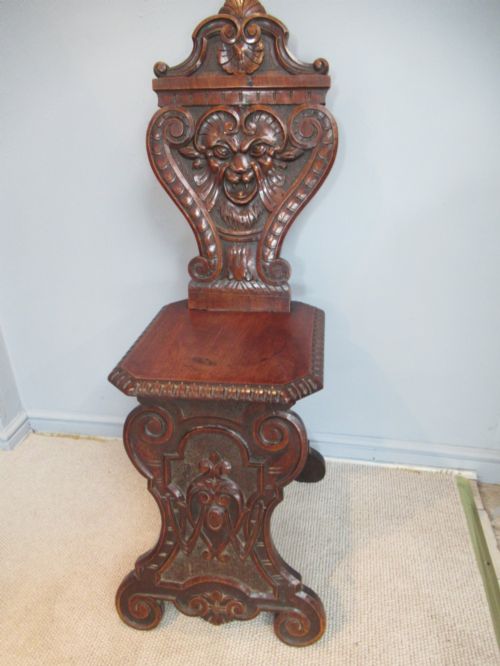
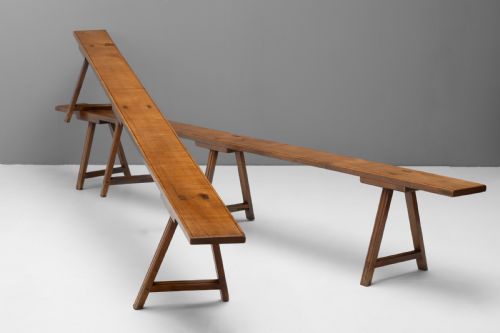
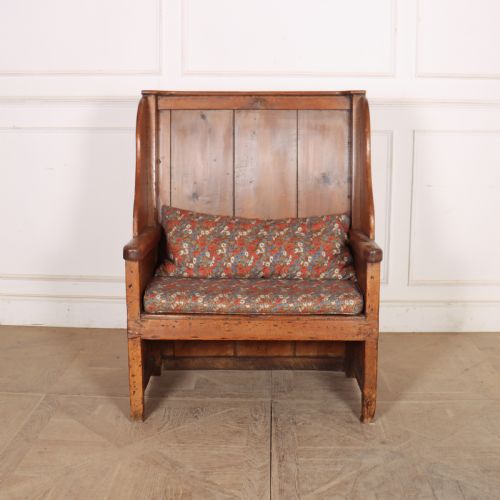
The pieces on this page span several distinct periods, most notably the nineteenth and eighteenth centuries, alongside Victorian and Edwardian examples. You will frequently find robust elm and pine country benches, high-back settles with integrated storage, and carved oak Gothic revival forms designed specifically for hallway placement.
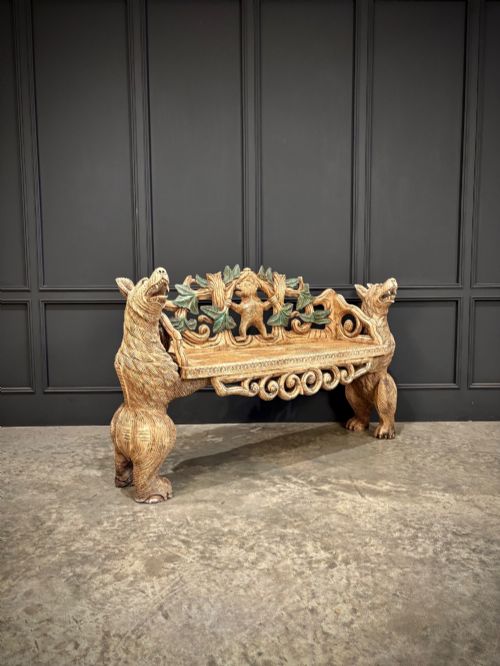
Regional variations appear regularly, from English and Welsh country pieces to Austrian, French, and Black Forest variants. Whether you need a slim hallway bench for a narrow passage or a large box settle with lift-up storage, the selection reflects both utilitarian origins and decorative craftsmanship.
How they were made
Traditional makers relied heavily on solid hardwoods and softwoods such as oak, elm, pine, walnut, and cherry to construct these benches. Joinery techniques typically involved pegged mortise and tenon joints, panelled construction, and robust framing designed to withstand heavy daily use.
Surface treatments vary from natural waxed patinas and honey brown finishes to original painted coats. Additional elements such as iron and brass hardware, carved trefoil supports, and upholstered velvet panels appear across specific stylistic traditions.
Listings feature eighteenth and nineteenth-century pieces alongside Victorian and Edwardian examples, constructed from pine, oak, elm, mahogany, and painted timber.
What varies in quality
The distinction between standard examples and superior pieces rests largely on the integrity of the timber and the depth of the patination. Denser hardwoods like early oak and figured elm command attention for their durability and the rich character developed over generations of use.
Construction methods also dictate quality, particularly the presence of hand-cut joinery, integrated storage compartments that retain original hinges, and finely executed carving work. Pieces that maintain their original surface finish without excessive modern intervention demonstrate a higher degree of historical integrity.
The Hallway Timber Seat Bench Glossary
- Settle
- A wooden bench with a high back, solid arms, and often a box base used for storage. This form protected sitters from draughts in older hallways and domestic rooms.
- Box settle
- A variation featuring a hinged seat that lifts to reveal a storage compartment beneath. These pieces doubled as blanket chests or boot repositories.
- Patina
- The surface sheen and colour acquired by wood through age, handling, and regular waxing. A desirable patina shows genuine historic wear rather than artificial distress.
- Gothic Revival
- An architectural and decorative style popular in the nineteenth century that utilised medieval motifs such as trefoil carvings and pointed arches. It appears on ceremonial and domestic seating alike.
- High-back
- A design featuring an extended vertical back panel intended to block cold air currents. These variants provide a strong visual anchor in an entrance hall.
Hallway Timber Seat Bench: Frequently Asked Questions
How do I use a settle in a hallway?
A settle fits well against a blank hallway wall where it provides an immediate spot to sit when removing shoes. Many examples include integrated box storage beneath the seat for stashing everyday items out of sight.
Because high-back versions can be visually dominant, ensure your hallway has adequate clearance and light. Pairing the bench with simple hooks above creates a traditional boot-room arrangement.
What woods were commonly used for hallway benches?
Oak was the preferred choice for earlier and more formal settles due to its strength and durability. Softer timbers like pine and fruitwoods appeared frequently in regional country workshops.
Elm was also widely utilised for seats because of its interlocking grain, which resisted splitting under heavy use. Walnut and cherry occasionally feature in specific continental or regional English pieces.
How can I tell an 18th-century settle from a Victorian copy?
Examine the construction marks, timber movement, and overall wear patterns across the frame. Eighteenth-century pieces typically display hand-riven boards, pegged joints, and uneven shrinkage consistent with age.
Victorian revival pieces often employ more uniform machine-sawn timber and standardised fixings. The character of the surface patination also offers strong clues regarding the true age of the piece.