




Hallway Cane Storage Rack
A hallway cane storage rack keeps walking sticks and umbrellas orderly, bringing practical utility and period character to an entrance.
Hallway Cane Storage Rack
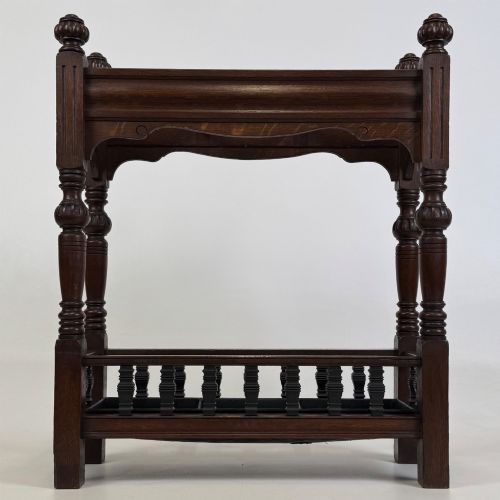
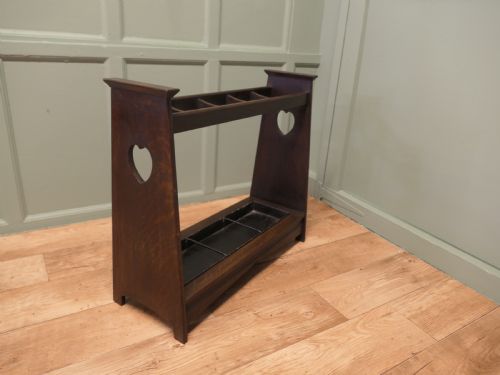
When you search for a hallway cane storage rack, you encounter umbrella stands, stick stands, and combined umbrella and stick stands designed for domestic hallways. These pieces originate across the Victorian, Edwardian, and Art Deco periods, spanning the nineteenth and early twentieth centuries.
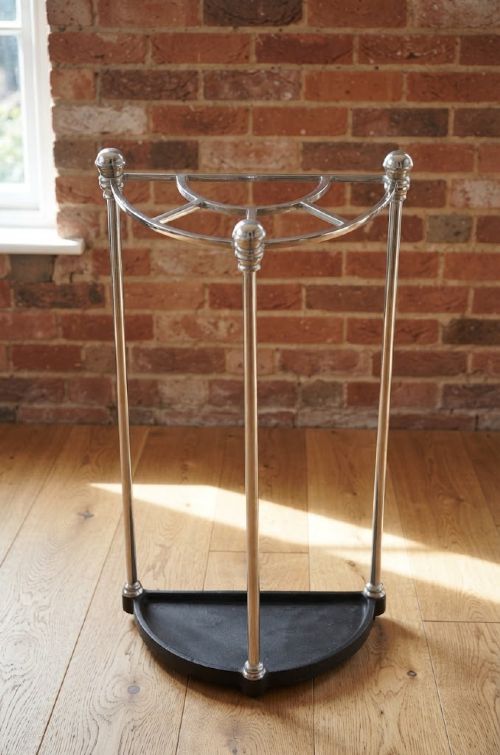
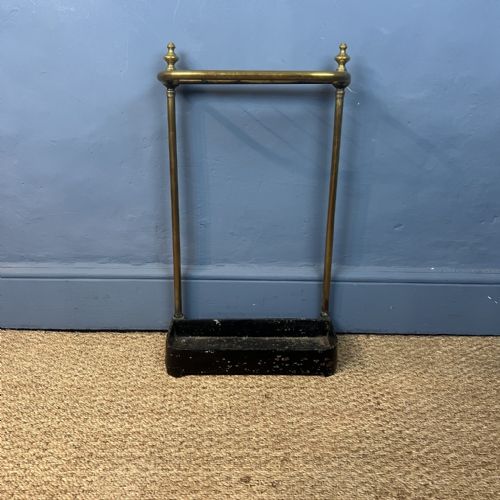
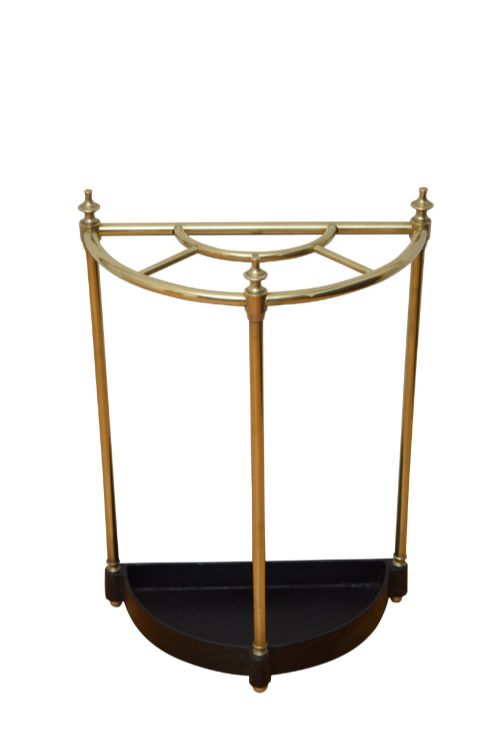
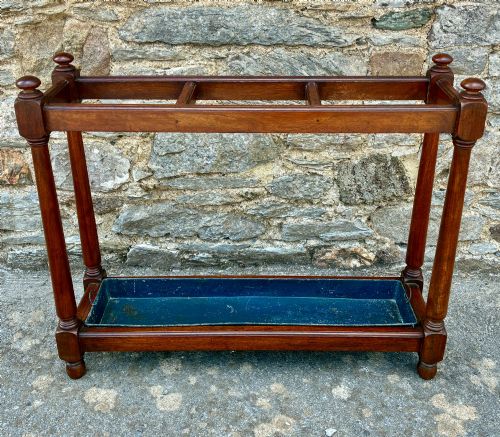
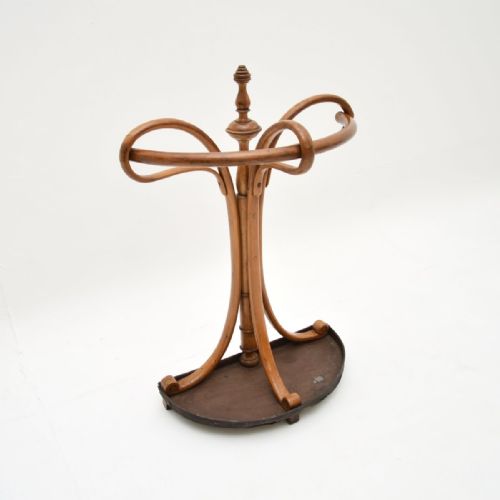
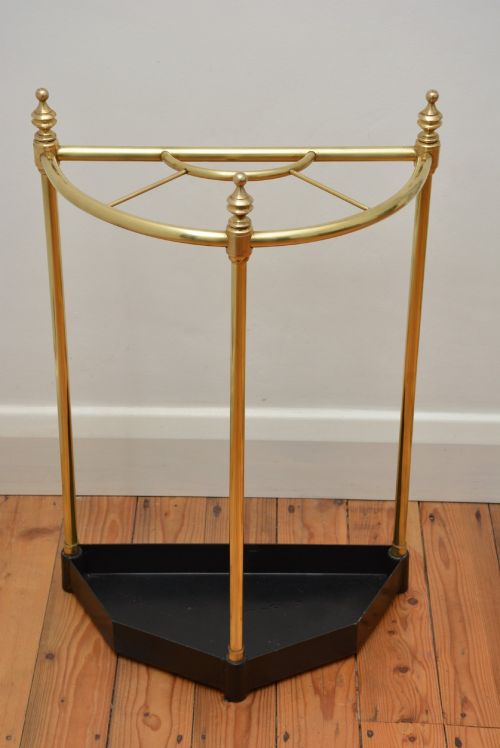
The version you are most likely to meet on this page is the classic demi-lune brass or cast iron stand, alongside robust oak and mahogany wooden frames. Styles range from plain English country house designs to ornate Gothic Revival, Arts and Crafts, and Jacobean Revival creations.
Materials and construction methods
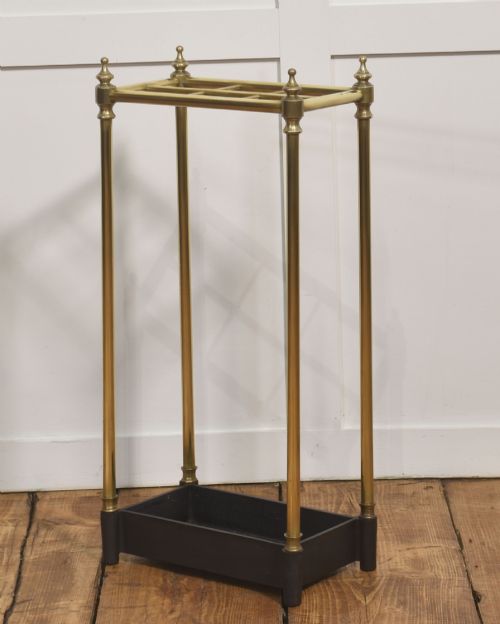
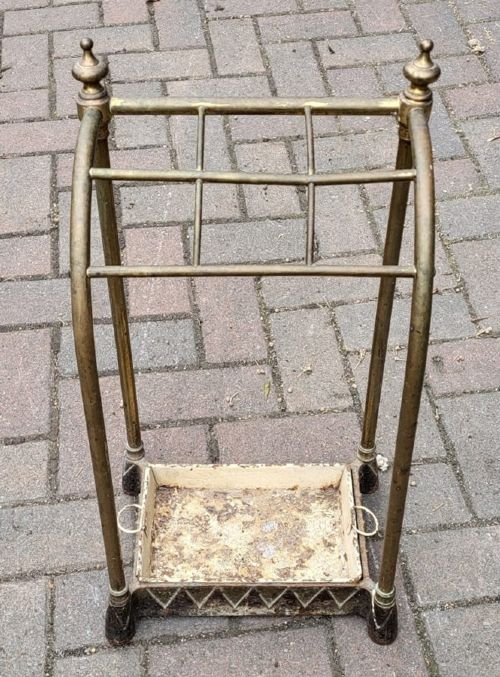
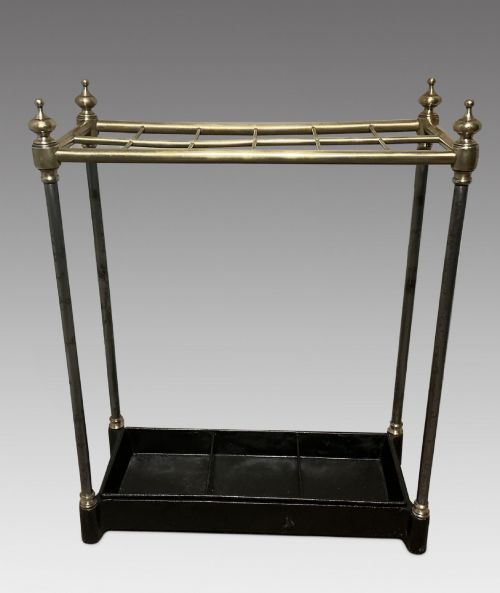
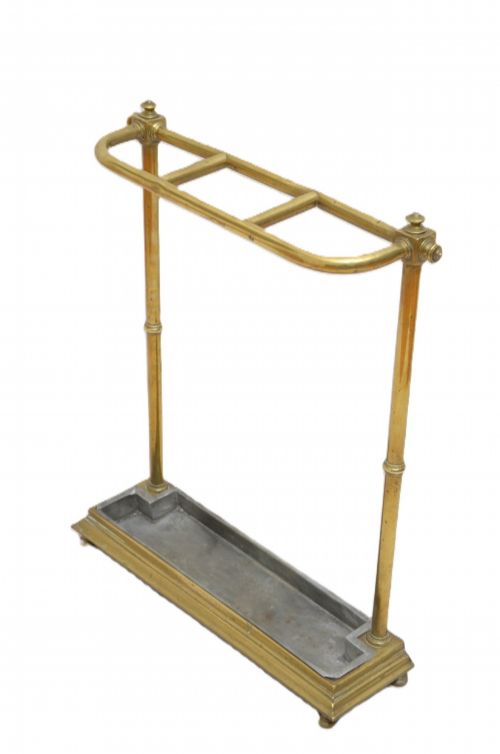
Metal stands rely heavily on cast iron, brass, and nickel plating, frequently paired with steel or zinc drip trays to catch rainwater from wet umbrellas. Foundries shaped these metals into intricate pierced patterns, demi-lune loops, and sturdy frames designed to support heavy walking sticks.
Wooden examples utilise timber such as oak, mahogany, walnut, pitch pine, and bentwood, sometimes employing coopered barrel construction or faux bamboo turning. These wooden frames combine structural joinery with metal rails, brass mounts, and carved details suited to grand or modest entrances.
Listings feature pieces from the Victorian and Edwardian periods alongside 1930s Art Deco designs, constructed from oak, mahogany, brass, and cast iron.
Assessing quality in construction and design
The distinction between ordinary and superior pieces rests on the weight of the castings, the crispness of the chasing on brass work, and the integrity of the timber joinery. Finer stands feature substantial cast iron bases, heavy gauge brass loops, and well-fitted original drip trays rather than flimsy replacement parts.
Design ambition further separates the range, with workshop-attributed pieces and distinct Arts and Crafts or Art Deco styling showing greater attention to proportion and detail. Simpler utilitarian hallway racks exist alongside statement pieces bearing maker signatures or sophisticated decorative motifs.
Thonet·A. Kenrick & Sons·Coalbrookdale·Shoolbred
The Hallway Cane Storage Rack Glossary
- Demi-lune
- Half-moon shape designed to sit flat against a hallway wall. This profile saves floor space while securely holding multiple sticks and umbrellas.
- Drip tray
- Removable metal pan placed at the base of a stand to catch water. It protects hallway flooring from moisture.
- Coopered
- Method of construction using tapered wooden staves bound by metal hoops, resembling a small barrel. This technique appears in specialised antique stick stands.
- Bentwood
- Wood softened by steam and bent into curved shapes, famously utilised by makers like Thonet. It creates lightweight yet resilient frames.
- Faux bamboo
- Wood carved, turned, or painted to imitate natural bamboo stalks. This decorative finish enjoyed popularity during the Victorian era.
Hallway Cane Storage Rack: Frequently Asked Questions
How do I protect my floor from wet umbrellas?
Most traditional stands incorporate an integrated metal drip tray at the base. These removable zinc or brass pans catch rainwater and prevent moisture from damaging wooden hallway floors.
Ensuring a stand retains its original tray helps maintain both function and historical authenticity.
Are these racks suitable for modern hallways?
These compact storage pieces integrate easily into contemporary homes because their vertical orientation demands minimal floor area. They offer practical organisation for daily umbrellas and walking canes while adding historical texture.
Different materials like polished brass, dark oak, and nickel-plated metal suit various interior design schemes.
How do I distinguish Victorian from Edwardian stands?
Victorian pieces often display heavier cast iron ornamentation, Gothic or Jacobean Revival styling, and rich mahogany or oak timbers. They tend toward ornate detail and substantial construction.
Edwardian and later twentieth-century examples frequently exhibit cleaner lines, lighter oak frames, or streamlined Art Deco metal forms.