

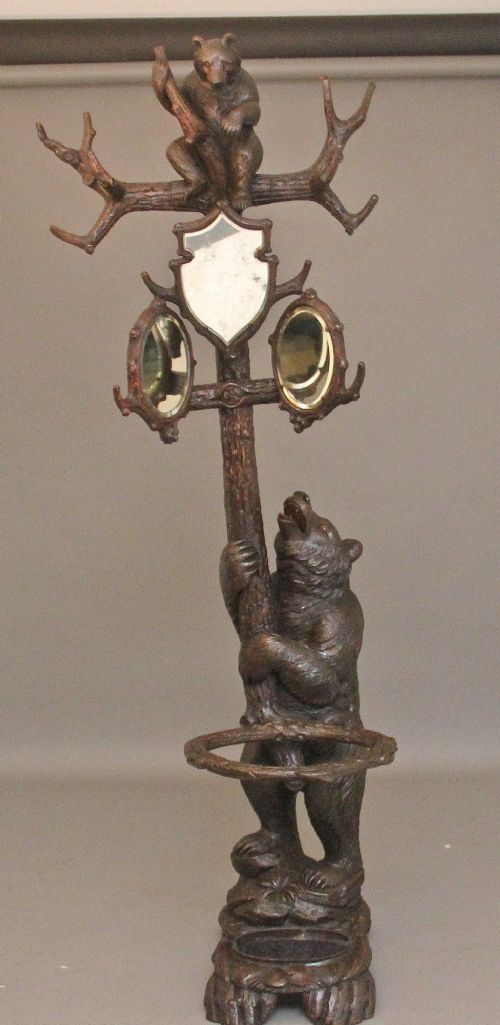


Brown Wood Stick Stand
A brown wood stick stand organises hallways with natural character, offering sturdy timber architecture for everyday canes and umbrellas.
Brown Wood Stick Stand
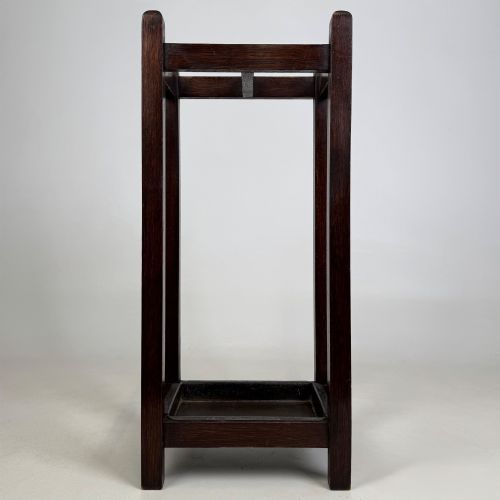
A brown wood stick stand serves as a functional hallway piece designed to hold umbrellas, walking sticks, and canes. The examples on this page span the nineteenth and early twentieth centuries, encompassing the Victorian and Edwardian eras alongside Arts and Crafts designs.
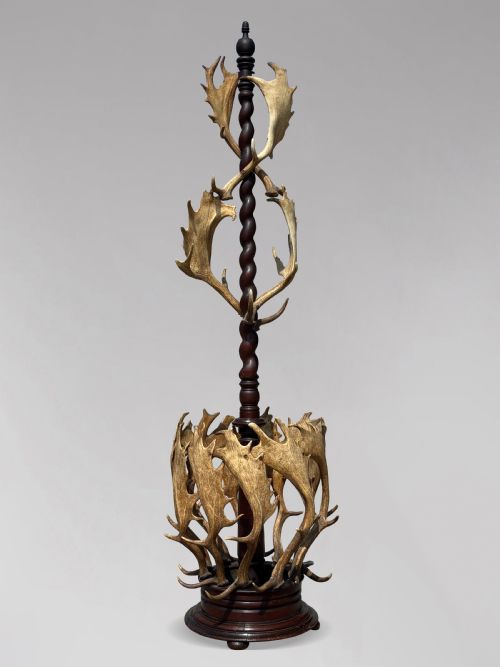
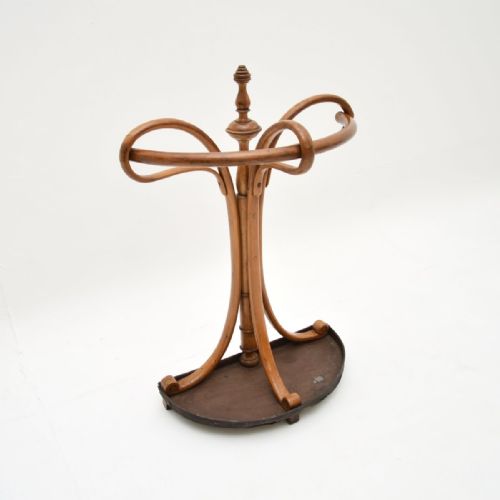
Most items take the form of dedicated umbrella stands, stick stands, and larger multi-purpose hall stands. Buyers frequently encounter carved oak and walnut furniture, alongside distinct regional styles such as Black Forest Linden wood carvings and bentwood pieces.
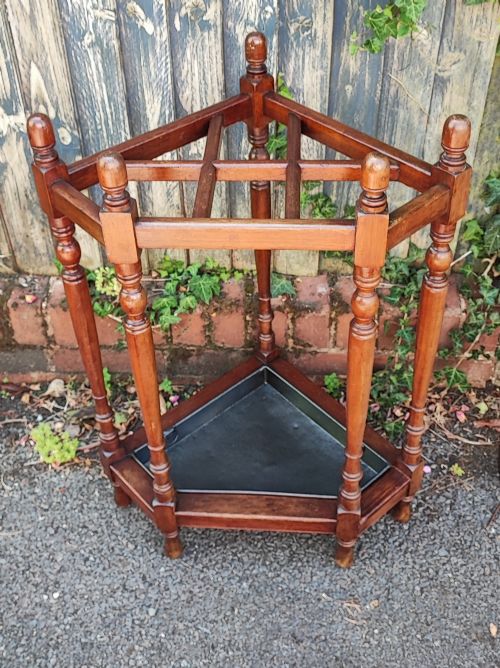
Makers utilised timber varieties including oak, mahogany, walnut, and cherry wood, often incorporating metal liners or drip trays. Functional forms range from corner units and turned wood structures to large country house designs featuring barley twist supports.
Factors that distinguish quality
Quality rests upon the depth and precision of the woodwork, particularly in carved pieces where crisp detail defines superior craftsmanship. The choice of primary timber influences the piece, with dense walnut and figured oak representing higher tiers of production.
Structural integrity and the retention of original hardware, such as internal metal drip trays, separate well-preserved examples from altered items. Finer pieces demonstrate careful joinery and balanced proportions, whether executed in simple Arts and Crafts styles or elaborate Black Forest carvings.
Brown Wood Stick Stand Retail Price Guide 2026
Typical asking prices for brown wood stick stand among the pieces listed under this phrase on Sellingantiques today, from the lower quarter to the upper quarter. They describe what is for sale here now, not the wider market.
Listings feature oak, walnut, mahogany, and linden wood across Victorian, Edwardian, and Arts and Crafts periods.
J. Parker of Woodstock·Thonet
The Brown Wood Stick Stand Glossary
- Hall stand
- A large hallway item combining a stick stand with coat hooks, a mirror, and a glove drawer. These multi-functional pieces organise outer garments in entrance halls.
- Bentwood
- Timber shaped by exposure to steam, allowing makers to create continuous curved forms. This technique appears frequently in lightweight umbrella stands.
- Black Forest
- A nineteenth-century carving style originating in central Europe, renowned for realistic depictions of bears and forest flora. These stands utilise Linden wood and oak.
- Barley twist
- A decorative turning technique resembling a spiral rope. This shape appears on the upright supports of country house stick stands.
- Bergere
- A woven cane panel used in furniture upholstery and decorative framing. This material occasionally accents the sides of larger hall stands.
Brown Wood Stick Stand: Frequently Asked Questions
What is a brown wood stick stand?
A brown wood stick stand is a piece of hallway furniture built to hold walking sticks, canes, and umbrellas upright. These items keep entryways tidy while displaying traditional timber craftsmanship.
Most examples utilise woods like oak, walnut, or mahogany, and date from the Victorian and Edwardian periods.
How do I date an antique stick stand?
Dating relies on stylistic clues, timber choice, and construction techniques associated with periods such as the nineteenth century or the Arts and Crafts movement. Aesthetic markers like Black Forest carving or bentwood framing also indicate specific eras.
Examining the fixings, secondary woods, and wear patterns helps confirm the age of the piece.
Where should I place a hall stand?
These stands suit entrance halls, porches, or corridors where visitors arrive and remove outer garments. Their vertical orientation makes them efficient for narrow spaces.
Placing them near the main entrance provides practical access for daily umbrellas and walking sticks.
How do I care for antique wood?
Antique wood requires stable indoor humidity away from direct heat sources to prevent timber splitting or warping. Regular dusting with a soft cloth maintains the surface finish.
Applying appropriate wax occasionally preserves the natural sheen of woods like oak and walnut without harming the original patina.