
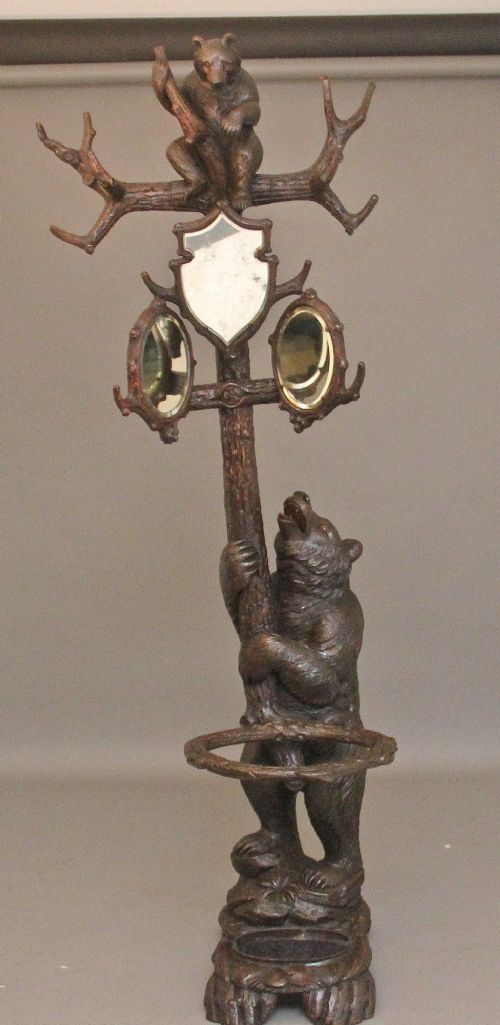
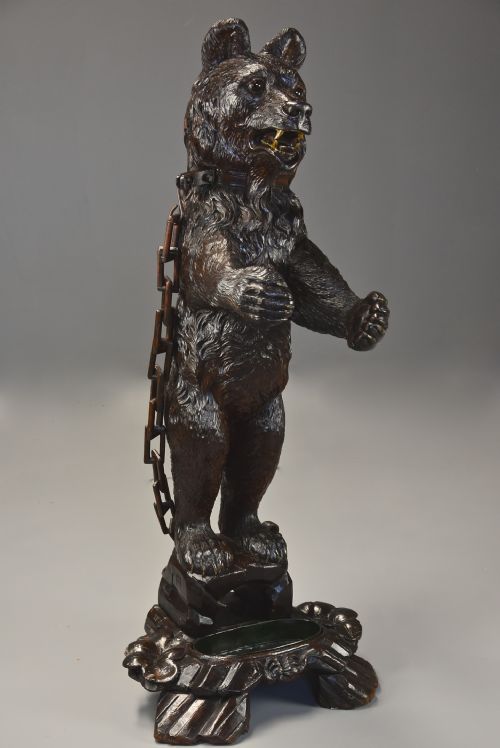


Black Forest Umbrella Stand
These black forest umbrella stand pieces bring carved animal figures directly into the hallway, combining functional storage with striking naturalistic sculpture.
Black Forest Umbrella Stand
A black forest umbrella stand serves primarily as a hall stand or stick stand, designed to hold walking items while anchoring the entryway with heavy timber sculpture. The pieces found here date from the 19th century through to the early 20th century, spanning Victorian production and later decades up to 1920.
Most examples take the form of bears carved from lindenwood, linden wood, walnut, or carved hardwood, often incorporating metal liners or glass and mirror components. Variations include double stick stands and unusual combinations featuring foxes and eagles alongside the traditional bear motifs.
How they were made
Carvers shaped these works primarily from lindenwood and carved hardwood, utilising skilled hand-chizzling techniques to render realistic fur, muscle, and facial expressions on the animal figures. Oak trees and structural timber elements were frequently integrated into larger hall stands to support the weight of hanging items and umbrella basins.
Metal liners were fitted into the base compartments to catch rainwater from wet sticks, while mirror plates were sometimes embedded into the upright backing boards. The timber received dark staining and wax finishes to achieve the characteristic deep brown tones associated with the style.
The listings here span the 19th century up to 1920, predominantly featuring carved lindenwood and walnut fashioned into bears, foxes, and eagles.
What varies in quality
The anatomical precision of the carved animal sculpture determines the upper tier of quality, where fur texture and expression appear lifelike rather than stiff or simplified. Scale also plays a role, with large double stick stands and complex multi-animal compositions demanding greater technical mastery from the woodcarver.
Exhibition quality pieces display ambitious detailing such as integrated oak trees and varied wildlife like foxes and eagles, distinguishing them from standard single-bear stick stands. The integrity of the underlying hardwood and the presence of original metal drip pans further separate superior examples from more basic utilitarian items.
The Black Forest Umbrella Stand Glossary
- Lindenwood
- A pale, close-grained timber favoured by carvers for its cooperative texture and lack of prominent grain. It allows for deep, detailed undercut carving without splitting.
- Hall Stand
- A substantial piece of hall furniture combining umbrella storage, coat hooks, and frequently a mirror. These items greeted visitors at the entrance of a home.
- Stick Stand
- A dedicated piece designed solely to hold walking sticks, canes, and umbrellas upright. They feature open frames or partitioned bases above a drip tray.
- Carved Hardwood
- Dense timber selected for structural durability and sculptural longevity. It withstands the daily wear of heavy walking items placed into the base.
- Drip Pan
- The metal basin inserted into the base of the stand to catch water. This practical addition protects the surrounding wooden floorboards from moisture damage.
Black Forest Umbrella Stand: Frequently Asked Questions
What is a black forest umbrella stand?
A black forest umbrella stand is a carved wooden hall piece, typically shaped as a bear or other animal, designed to hold walking sticks and umbrellas in an entryway.
Originating in the 19th century, these items combine practical drainage vessels with intricate wildlife sculpture.
How do I care for carved wood?
Keep the carved timber away from direct heat sources and strong sunlight to prevent the wood from drying out or splitting.
Apply a light microcrystalline wax occasionally to nourish the surface and maintain the dark finish.
Where were these stands placed?
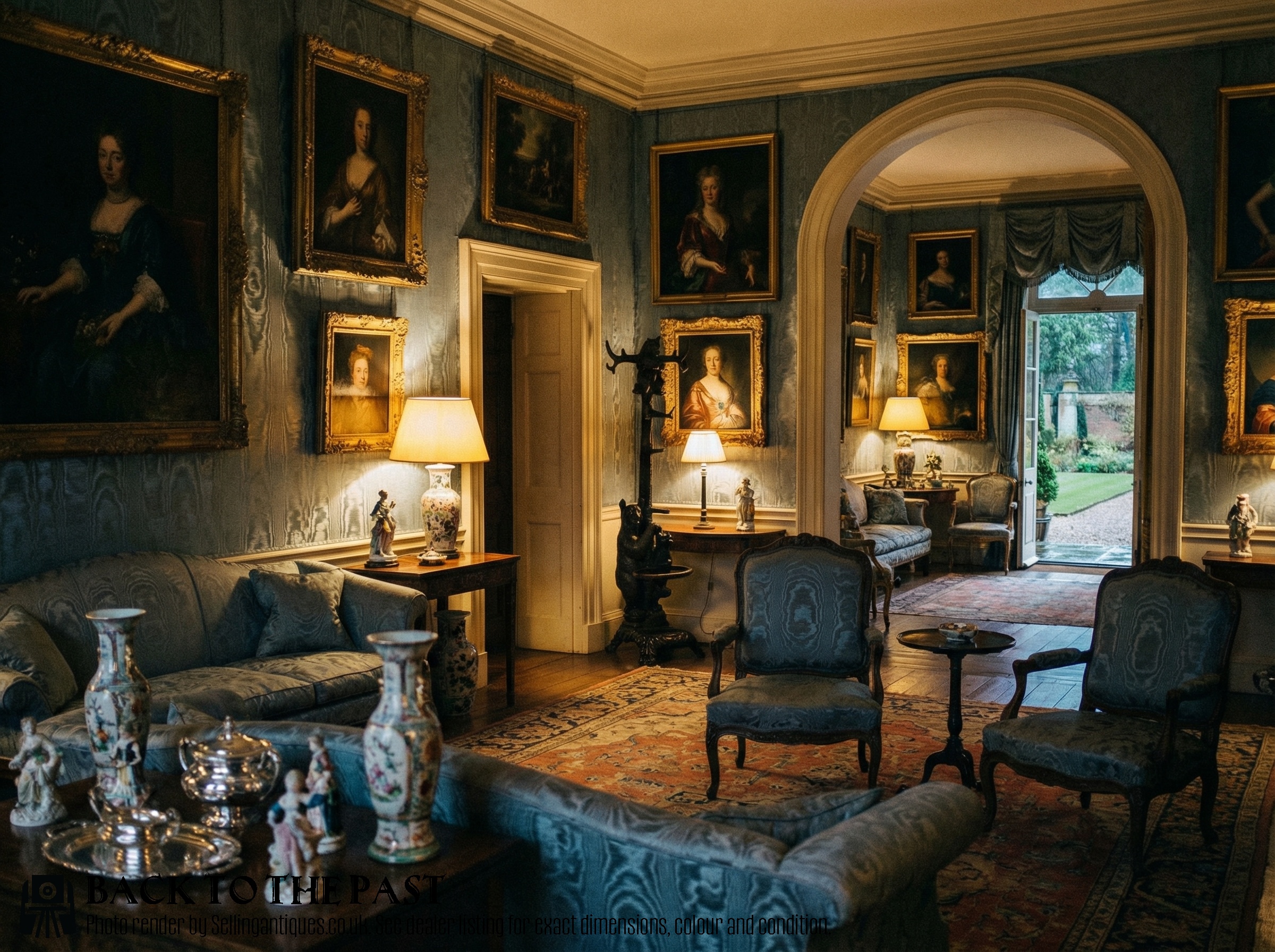
These stands traditionally stood in the entrance hall or vestibule of a Victorian home to greet guests and receive wet outdoor gear.
Their substantial weight and sculptural presence suited large, high-ceilinged hallways.
What animals are carved on these stands?
Bears are the most common animal depicted, often shown standing upright or guarding a hollowed-out tree trunk.
Other rarer compositions feature combinations of foxes, eagles, and detailed oak tree structures.