


Carved Bear Hall Stand
A carved bear hall stand brings the striking presence of Black Forest animal carving directly into an entranceway, offering both practical utility and distinct sculptural character.
Carved Bear Hall Stand
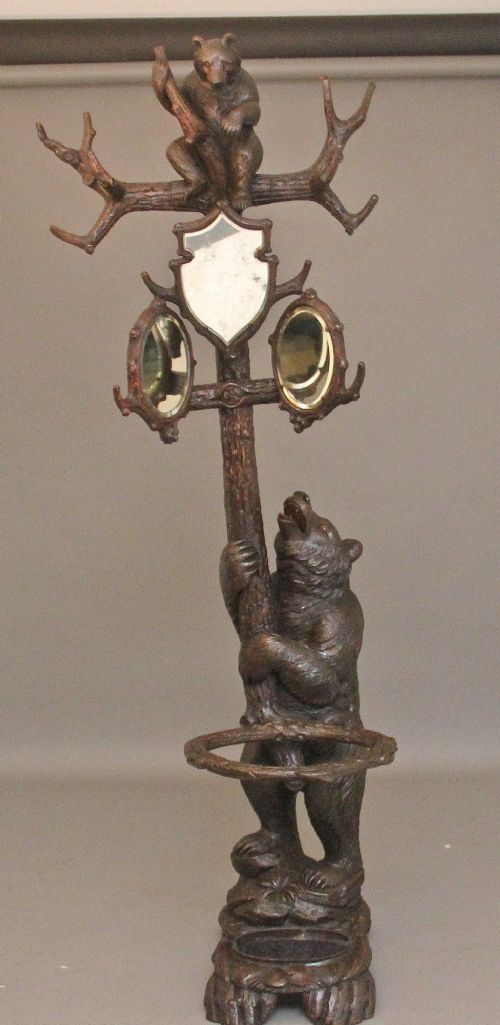
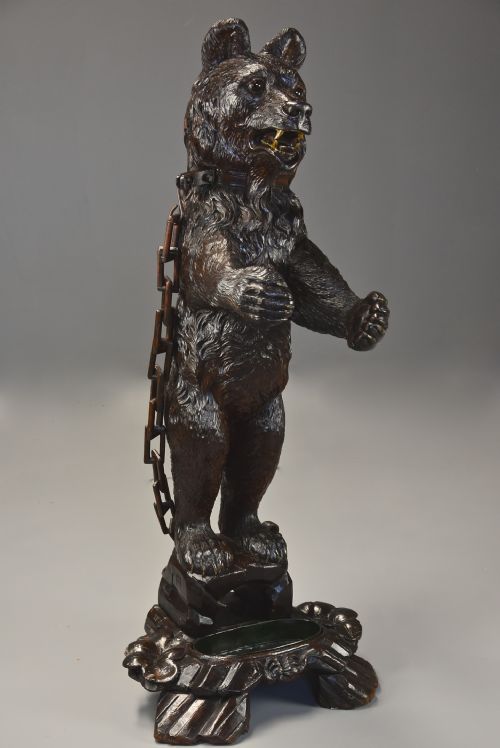
A carved bear hall stand is a substantial piece of entranceway furniture designed to hold coats, hats, sticks and umbrellas, dominated by realistically carved wooden bears. These sculptural items usually incorporate umbrella wells, drip pans and coat hooks into an integrated timber structure.
You are most likely to meet nineteenth-century examples on this page, as the majority of pieces date from that era. They often emerge within the Black Forest style tradition, showing the characteristic naturalistic animal forms associated with this region.
The forms vary between hall stands, coat stands and dedicated stick or umbrella stands, though all share the central motif of carved bears. They function as both heavy-duty hallway furniture and prominent sculptural woodwork.
How they were made
These stands are constructed primarily from carved wood, featuring specific timbers such as lindenwood, lime wood, oak and other carved hardwoods. Makers shaped these materials using traditional hand-carving techniques to create the detailed fur, lifelike expressions and muscular forms of the bears.
Functional elements like metal drip pans, glass mirror plates and iron coat hooks are integrated directly into the carved wooden frameworks. The timber components are assembled to support the substantial weight of heavy garments and walking sticks.
The listings span the nineteenth and early twentieth centuries, featuring forms executed in lindenwood, lime wood, oak and other carved hardwoods.
What varies in quality
Scale and complexity also define the better items in this category, with larger dual-bear compositions or pieces incorporating natural oak tree forms representing the upper end of the range. The integration of auxiliary materials like original glass mirrors and metal hardware further distinguishes the more ambitious workshop productions.
The Carved Bear Hall Stand Glossary
- Black Forest
- A style of wood carving originating from the mountainous region in central Europe, famous for naturalistic animals, particularly bears. Pieces in this tradition often combine deep relief carving with functional household objects.
- Lindenwood
- A pale, fine-grained timber commonly used by carvers because it accepts intricate detail without splintering. It serves as the primary material for many detailed animal figures.
- Hall stand
- A piece of entranceway furniture combining coat hooks, a hat shelf, a mirror and umbrella or stick holders. In these examples, the carved bear forms provide the structural support or decorative backing.
- Stick stand
- A dedicated receptacle for walking sticks and umbrellas, often featuring a metal drip tray at the base to catch moisture. Versions listed here integrate the bear sculpture directly into this storage form.
Carved Bear Hall Stand: Frequently Asked Questions
What is a carved bear hall stand?
A carved bear hall stand is a functional piece of hallway furniture featuring sculptural wooden bears designed to hold coats, hats, and walking sticks.
These items combine practical entranceway storage with detailed animal wood carving originating mainly from the nineteenth century.
How were these stands used originally?
They stood in entrance halls to receive wet umbrellas, walking sticks, hats, and heavy outerwear upon entering a home.
The integrated metal pans caught water from wet umbrellas while the hooks held outdoor garments for daily use.
What wood are they made from?
They are typically fashioned from solid timber, most notably lindenwood, lime wood, and oak.
Carvers selected these woods for their ability to hold fine detail and support the heavy weight of the structure.
How do I date a Black Forest hall stand?
Dating relies on stylistic markers, construction methods, and materials such as the type of mirror glass and metal hardware used.
Most examples seen here originate from the nineteenth century and the early twentieth century.
Where did the Black Forest carving style come from?
The style developed in the wooded mountain region overlapping parts of central Europe, where local woodcarving traditions flourished.
Craftsmen produced elaborate animal sculptures and decorated furniture that gained widespread popularity during the Victorian era.