


Wooden Umbrella Drip Tray
A wooden umbrella drip tray provides a practical hallway anchor, catching wet weather at the threshold with honest period craftsmanship.
Wooden Umbrella Drip Tray
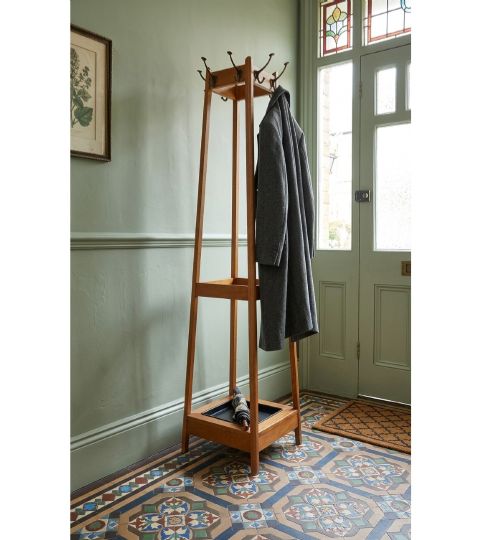
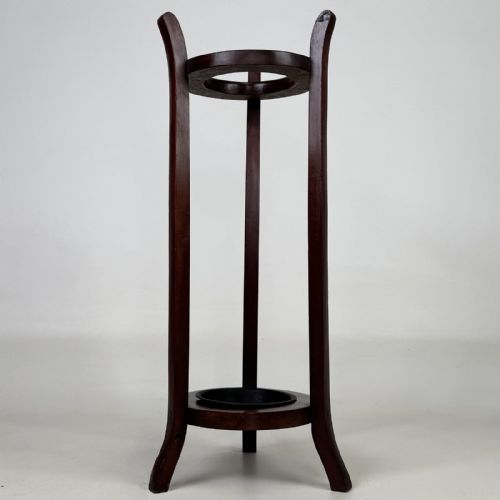
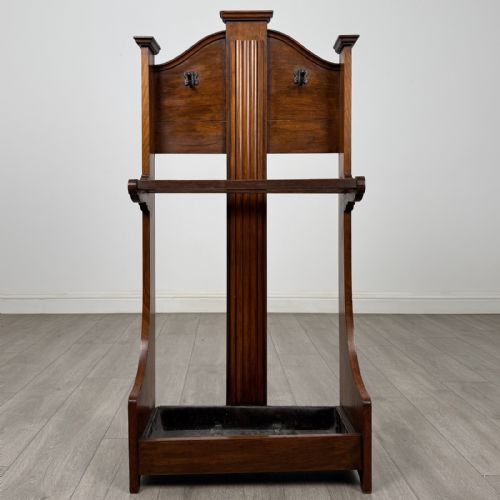
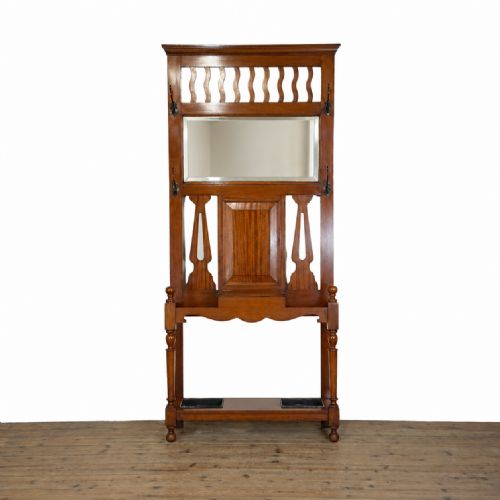
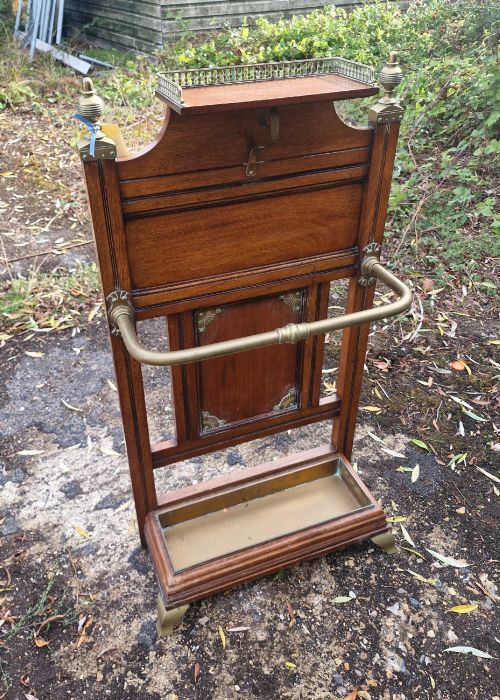
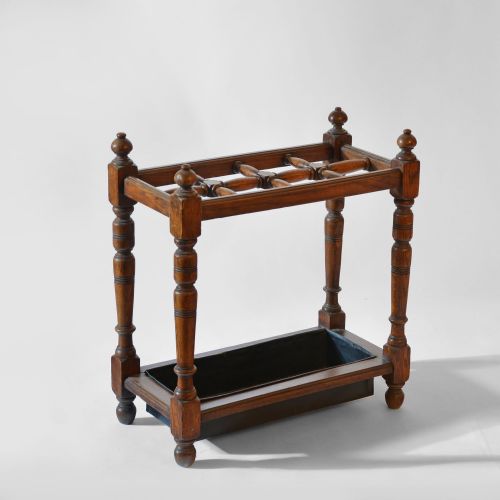
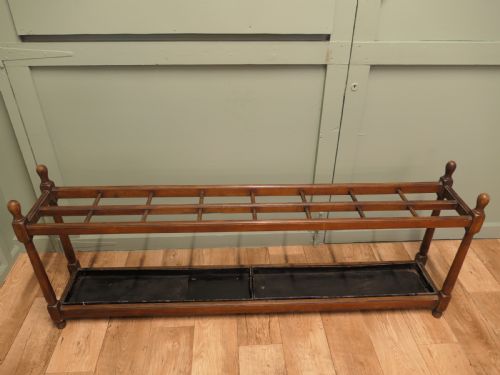
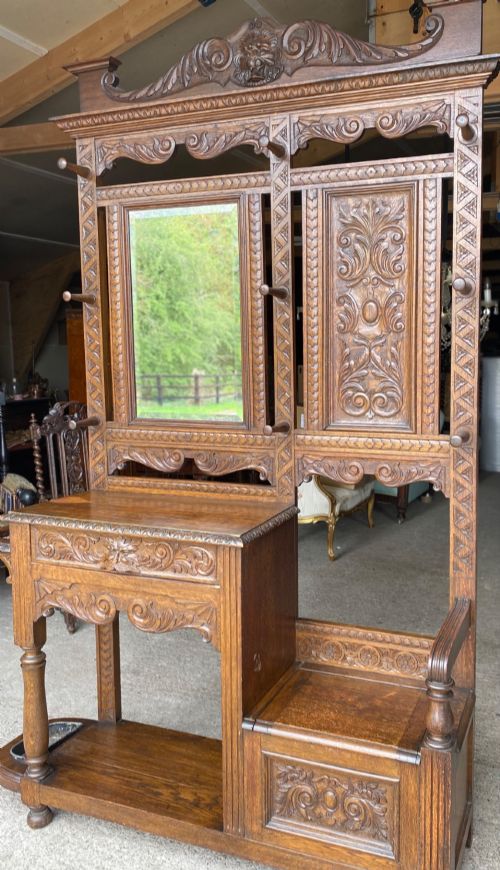
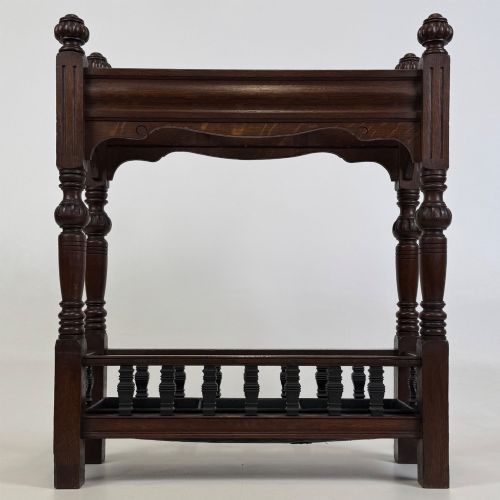
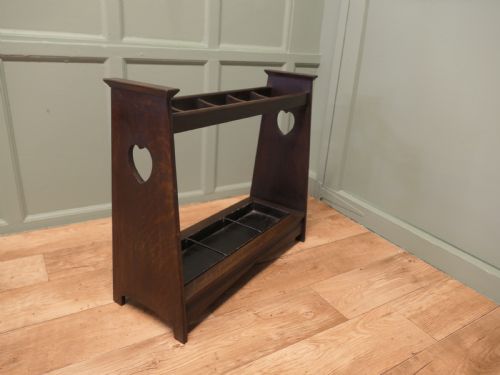
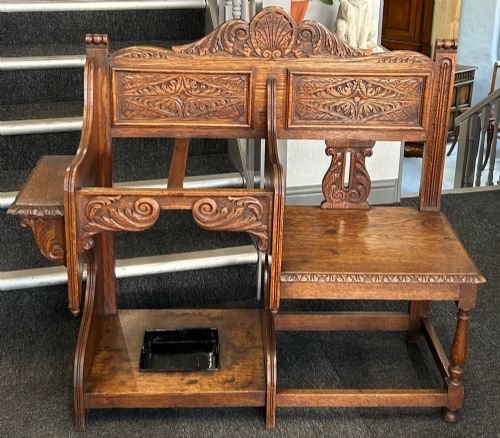
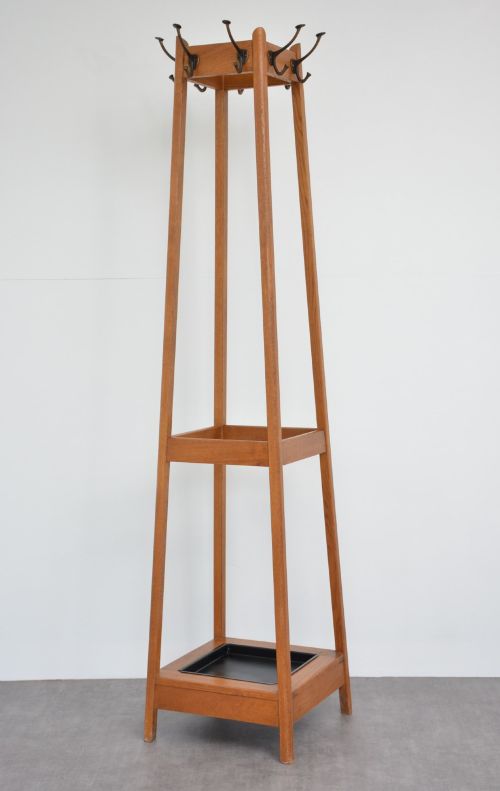
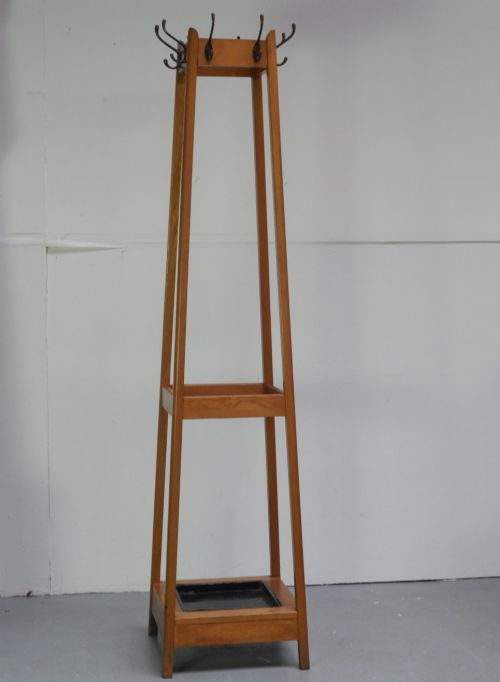
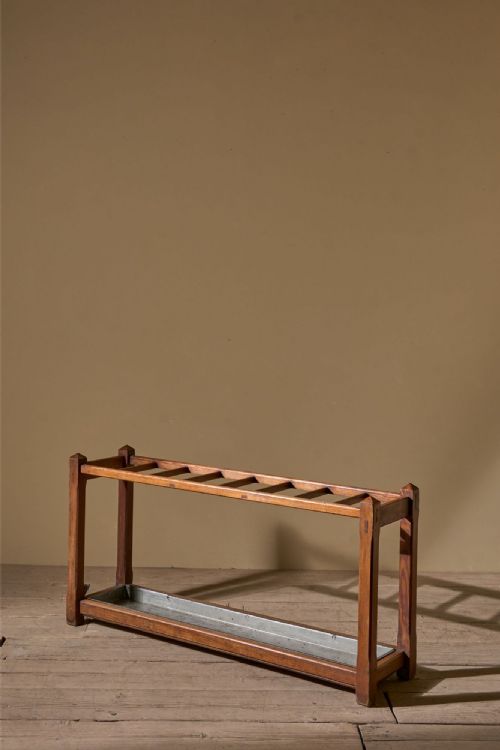
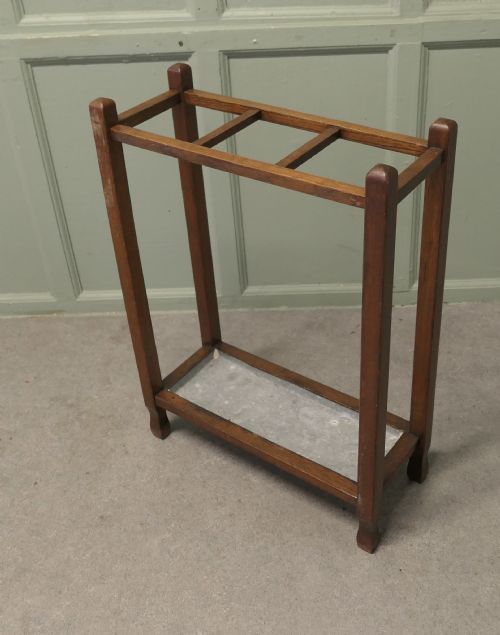
A wooden umbrella drip tray appears as a dedicated standalone stick stand, a corner vessel, or integrated directly into larger hall furniture such as coat racks and hall seats. These pieces organise wet walking sticks and umbrellas while protecting hallway floors from moisture.
The versions most commonly met on this page span the nineteenth and early twentieth centuries, fashioned primarily in oak and mahogany across Victorian, Edwardian, and Arts and Crafts aesthetics.
Makers ranged from large commercial London retailers to regional cabinet makers, producing both utilitarian country house designs and stylised aesthetic movement pieces.
Materials and construction
Carpenters constructed these stands predominantly from solid oak and mahogany, occasionally employing pitch pine or bentwood for specific regional and stylistic requirements. Joinery techniques included robust framing to support the weight of heavy wooden and metal walking gear.
Metal components played a vital functional role, incorporating brass, iron, zinc, or cast iron inserts to form the actual waterproof drip tray at the base. These removable pans prevented rotting in the wooden framing by containing standing water from wet weather.
Wooden Umbrella Drip Tray Retail Price Guide 2026
Typical asking prices for wooden umbrella drip tray among the pieces listed under this phrase on Sellingantiques today, from the lower quarter to the upper quarter. They describe what is for sale here now, not the wider market.
Some nineteenth-century halls required twenty-four separate umbrella divisions to accommodate large Victorian dinner parties.
Judging quality and craftsmanship
Quality rests upon the selection of timber and the integrity of the original metal liner, with superior examples retaining their bespoke zinc or brass trays rather than modern replacements. Finer pieces demonstrate considered joinery, such as panelled backs and substantial framing, rather than hasty pegged construction.
Design ambition separates standard utility items from notable decorative works, particularly where Arts and Crafts or Gothic Revival movements influenced the carving, brass hardware, and overall architectural proportion of the stand.
Thonet·Heals of London·GW Evans·Shoolbred
The Wooden Umbrella Drip Tray Glossary
- Drip tray
- A removable metal or glass liner placed at the bottom of a stand to catch water from wet umbrellas. It protects the timber floor of the stand from dampness and decay.
- Hallstand
- A large piece of hall furniture combining umbrella holders with coat hooks, a mirror, and sometimes a seat or glove box. It served as the central reception hub in a period home.
- Bentwood
- Wood heated with steam and bent into curved shapes, notably utilised by makers like Thonet. This technique created lightweight, durable frames with graceful lines.
- Arts and Crafts
- A design movement prioritising traditional craftsmanship, visible construction, and simple forms over mass-produced ornamentation. Pieces often feature plain oak surfaces and subtle hand-carved details.
- Aesthetic Movement
- A late nineteenth-century design approach focused on visual beauty and artistic expression rather than narrative or moral function. Furniture from this style often embraces clean lines and honest materials.
Wooden Umbrella Drip Tray: Frequently Asked Questions
What is a wooden umbrella drip tray?
A wooden umbrella drip tray is the foundational waterproof base or the entire stand designed to hold wet walking sticks and umbrellas in a hallway.
These items range from dedicated floor-standing vessels to integrated trays within larger coat and hat racks.
How were these stands used historically?
Visitors and residents placed wet umbrellas and walking sticks into the stands immediately upon entering a Victorian or Edwardian home.
The integrated metal tray caught the rainwater, keeping hallway floors dry and protecting wooden floorboards.
How do I live with an antique stand?
Place the stand near your primary entrance on a level surface, ensuring the interior metal tray is clean and dry before use.
Period stands handle modern umbrellas well, provided you empty the collected rainwater from the tray regularly.
How do I tell Victorian from Edwardian stands?
Victorian stands typically feature darker timbers, heavier carvings, and elaborate Gothic or country house proportions.
Edwardian pieces tend to display lighter oak tones, simpler geometry, and cleaner Arts and Crafts or Art Nouveau influences.