


Antique Cane Rack Holder
These antique cane rack holder pieces organise walking sticks and umbrellas neatly in a hall.
Antique Cane Rack Holder
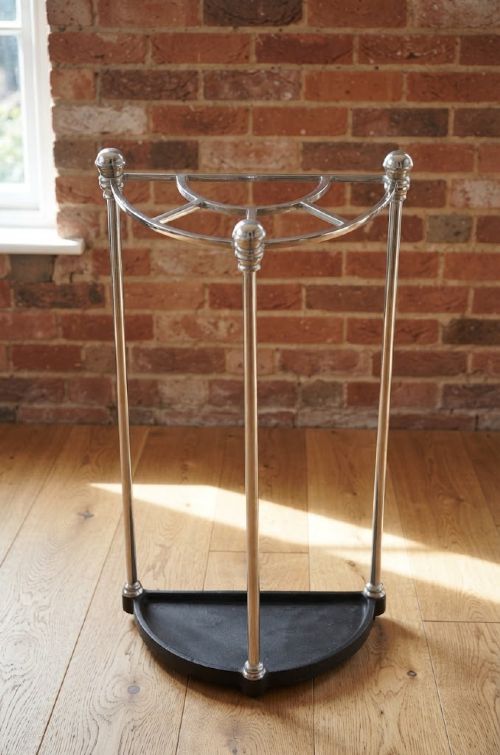
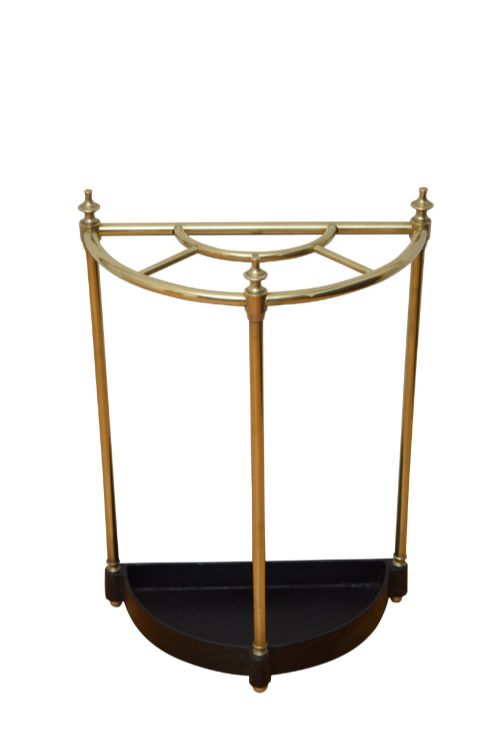
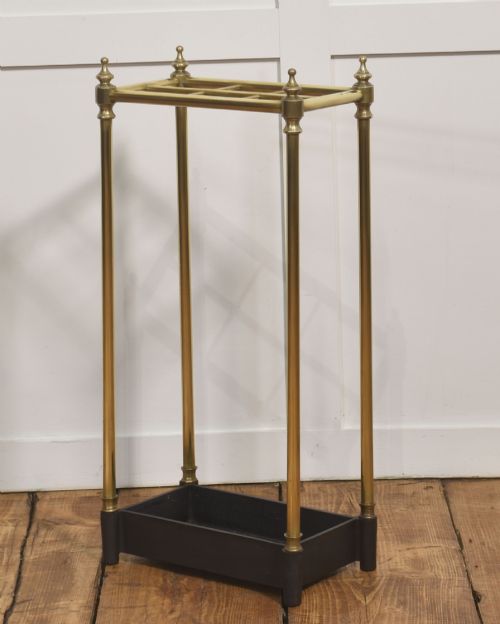
An antique cane rack holder provides a dedicated place to store walking sticks, canes and umbrellas within a hallway or entrance space. These pieces range from compact half-moon designs to substantial hall stands.
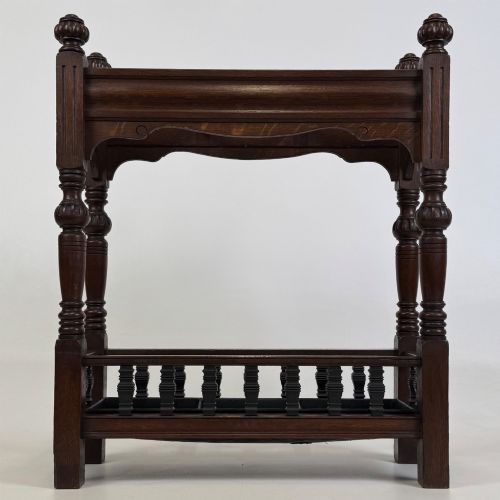
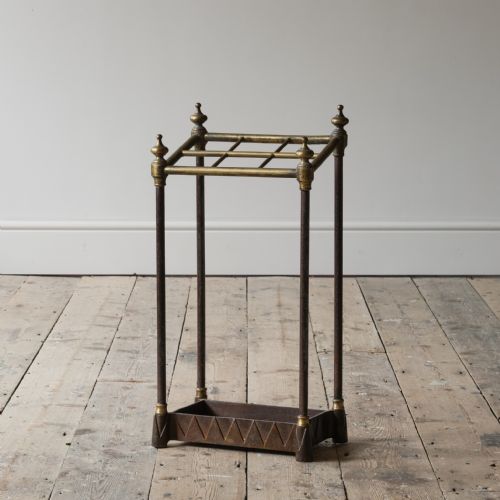
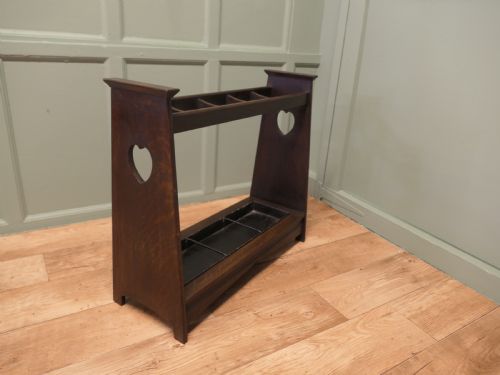
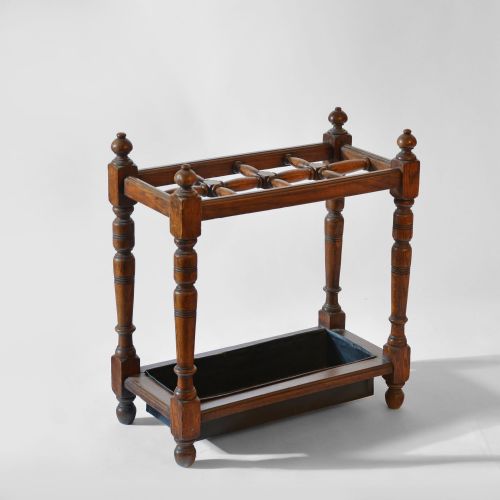
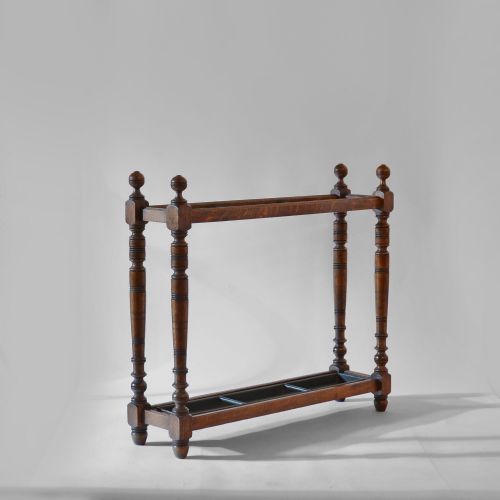
The version most commonly met on this page is the freestanding umbrella and stick stand, originating from the Victorian and Edwardian periods. They appear frequently in oak, mahogany and cast iron forms.
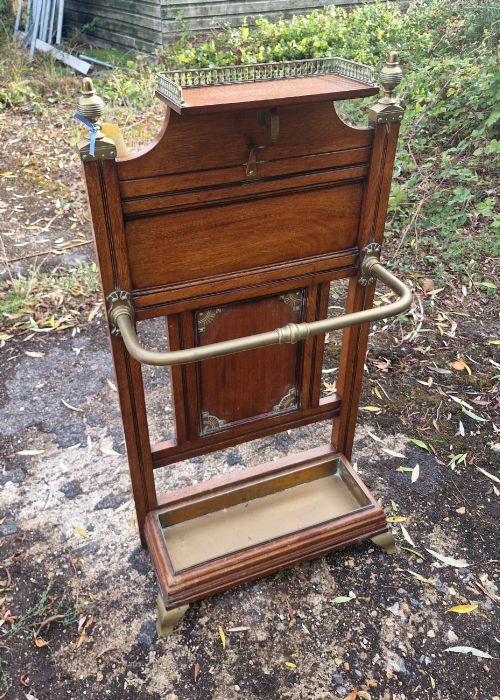
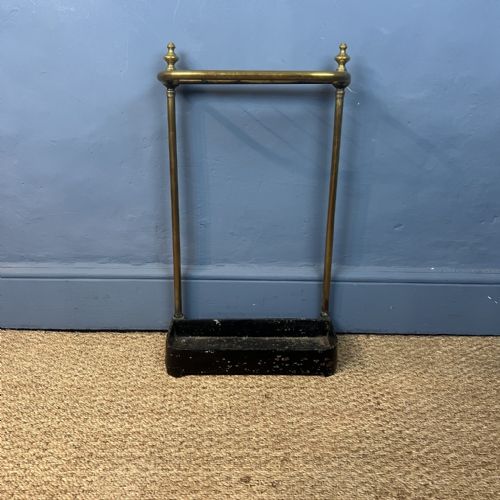
Makers designed these items to manage wet weather gear and everyday walking aids efficiently. They often incorporate integrated drip trays to protect entrance flooring from moisture.
How they were made
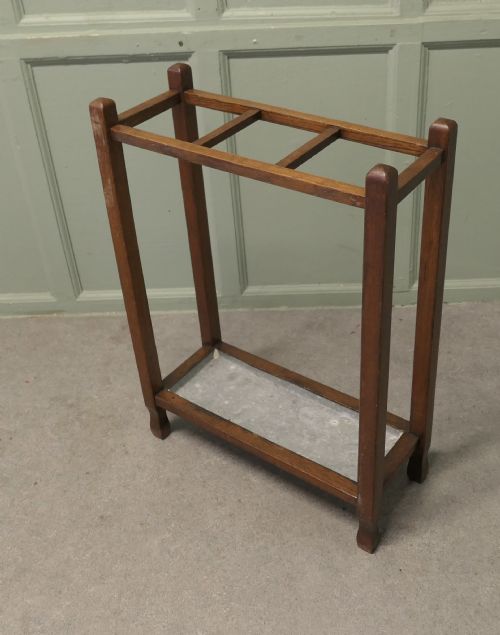
Cabinet makers utilised solid hardwoods such as oak and mahogany, joining them with traditional methods to construct sturdy frames for daily domestic use. Bentwood techniques also appeared in later pieces.
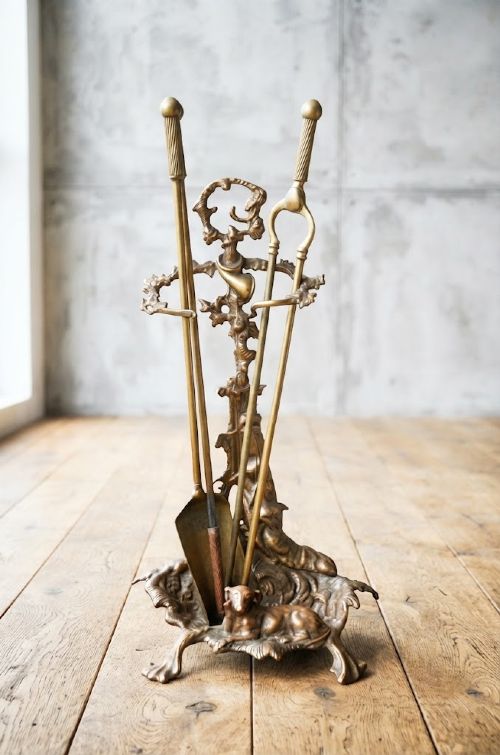
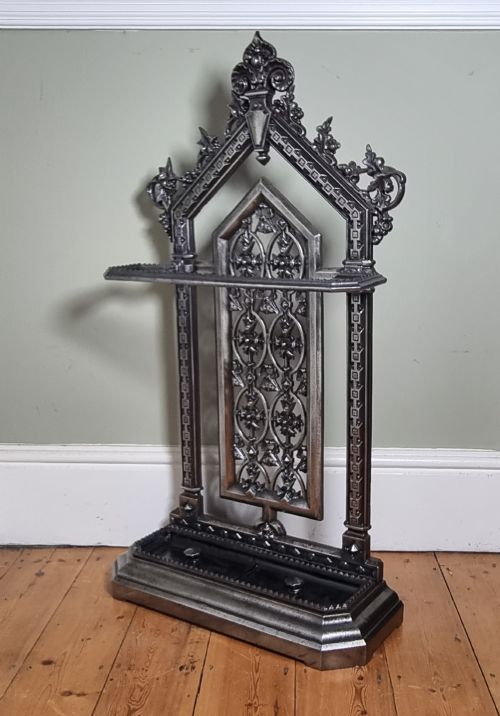
Foundries produced heavy metal framework utilising cast iron, brass and zinc. These components were often moulded into ornate decorative patterns, including Aesthetic Movement motifs and bamboo simulations.
Makers fitted many metal and wooden stands with removable drip trays made from zinc or brass. These trays caught rainwater runoff from wet umbrellas.
What varies in quality
The standard of a cane rack holder depends largely on the weight and integrity of its primary materials. Heavy cast iron examples with crisp, clean moulding sit at a higher level than lighter, simplified metal versions.
Joinery and structural stability define the better wooden examples. Solid oak and mahogany stands with well-fitted dividers and original, intact drip trays demonstrate superior original craftsmanship.
Decorative ambition separates standard utility items from finer pieces. Holders that incorporate distinct artistic styles, such as Art Nouveau plant motifs or specific foundry markings, reflect higher grade production.
Coalbrookdale·Thonet·Heals of London
The Antique Cane Rack Holder Glossary
- Demi-lune
- A half-moon shape used for stands designed to sit flush against a hallway wall. This profile saved valuable floor space in narrow Victorian corridors.
- Drip tray
- A shallow metal basin placed at the base of a stand to catch water from wet umbrellas. These are often removable for easy emptying and cleaning.
- Aesthetic Movement
- A late nineteenth century design style emphasising visual beauty over narrative function. Pieces from this movement often feature stylised natural forms and geometric simplicity.
- Faux bois
- A technique where metal or lesser wood is painted or moulded to resemble natural wood grain. This finish was popular in cast iron garden and hall furniture.
- Bentwood
- A process of steaming timber until pliable and bending it into curved shapes. This method created lightweight yet resilient frames.
Antique Cane Rack Holder: Frequently Asked Questions
Where were these stands traditionally placed?
These holders stood primarily in entrance halls, porches and vestibules. Households used them to keep walking sticks and wet umbrellas organised immediately upon entry.
Their compact footprints allowed them to fit neatly against walls or into corners without obstructing narrow hallways.
How do I identify a Victorian piece?
Victorian examples often display heavier cast iron construction, darker woods like mahogany, or ornate Aesthetic Movement detailing. Look for traditional proportions and construction methods typical of the nineteenth century.
Maker marks, registration numbers and stylistic motifs specific to the period help confirm the date of manufacture.
Are these stands suitable for modern walking sticks?
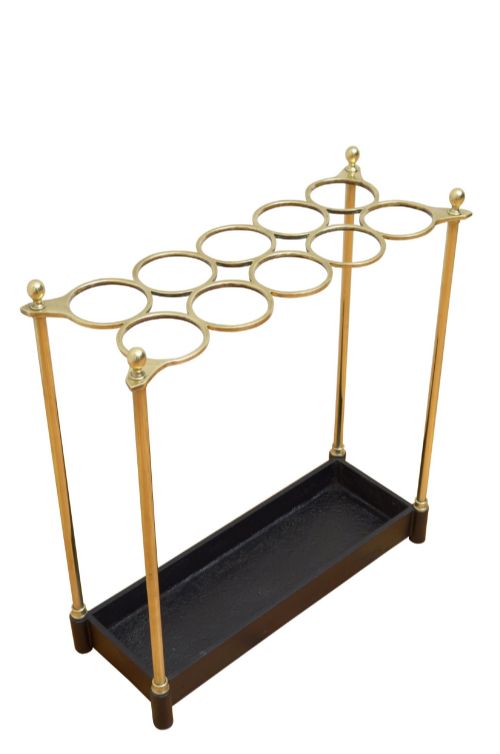
These holders accommodate modern walking sticks, umbrellas and canes just as effectively as nineteenth century accessories. The individual ring divisions and internal frames suit standard shaft diameters.
Ensure the base dimensions and height match the specific lengths of the walking aids you plan to store.
What is the purpose of the metal tray?
The metal tray at the base catches water dripping from wet umbrellas. This protects wooden flooring and carpets from moisture damage.
Most trays lift out independently so accumulated water can be emptied without moving the entire stand.